UA-141369524-4

Wild Thing Pose to Get Your Wild Creativity Back

Wild Thing Pose is one of the most interesting name yoga poses. And it’s a beautiful pose like this wild natural artwork up the side of a bridge.

Sometimes you just need to let your hair down. So today I’m sharing two yoga poses that let you do just that, and maybe give you a few minutes of creative joy if you haven’t felt that in a while. One is called Wild Thing pose.

You may know the pose (or vintage song titles 📼 with the same name). The Wild Thing pose helps unleash your creativity, especially if you feel like you’re in a rut or ready to pivot. This pose can help you feel a little happier.

…On Fridays especially, don’t you feel like a little weight has been lifted off your shoulders from the weekly grind?

With more freedom where you can express your more fun side, in friendly conversation, wearing fun clothing, or even get around on different wheels 🛼 🛹 🚲

People on the receiving end are even in a better mood if you work in customer service. Friday makes up for Monday when stress is highest.

And it’s not easy to be creative when you’re feeling stressed. So, you may need to unwind between the two opposing moods.

If you feel irritated, anxious, or resistant (that’s Vata, Pitta, and Kapha all rolled up in one in varying degrees), then your body may be playing detox wellness catchup. There’s a delay in the mind-body connection.

So whether you’re ready to try the Wild Thing pose has a lot to do with how you’re feeling. Relaxed, calm, and a bit daring is a better time. It’s also a great pose to do after you’ve fully woken up and taken a shower to stretch your body and mind.

When you’re present in this moment, then this is a great way to celebrate. If say you’re still rehashing what happened or how a day or a happening could’ve gone better, then you’re probably better off to calm your mind down first and wait until later to do this pose.

And when you’re ready and refreshed, then you can start with a blank slate that works best for most creative endeavors.

At corporate work and public environments, they love rules, structure, and close-ended goals. In creativity work, it’s a white piece of paper or canvas waiting for you to come up with something new and unique.

So, the Wild Thing Pose is a great way to get in the spirit of your creative intention. Especially if you’re a content creator or share artistic expression, and today is a creative day. Anything goes.

You ready? 

How to Do the Wild Thing Yoga Pose:

Basically, the Wild Thing pose is a backbend and you decide what it looks like. It can be easier said than done…

One foot, two feet, and one hand or on all fours. It’s up to you. One way to find your Wild Thing pose, is starting in Downward Dog and then you peel one arm off your mat and look up or face up to the ceiling or sky.

Reach that arm up in the air. The other arm is grounded on the mat or floor. Then you decide how you position yourself and the rest of your body. There’s no definite structure. This is a common start. And you can work on your Wild Thing (but it shouldn’t feel like work).

For a present awareness move, then plant the foot already closer to the floor flat down. And you could rest the other leg out with the outer foot touching or resting on the floor.

There are no limitations or rules. And you can also get into this pose from Wheel Pose. Gymnasts do really well with these poses as it helps to be flexible. But not needed for home or studio yoga.

One thing’s for sure though… in the Wild Thing pose, you will definitely get off your mat, a metaphor for thinking outside the box. You get to express freedom and creativity.

And if you have a chance to look around at another Wild Thing pose like I did in a yoga studio and saw other Wild Things in the class, you see how differently wired and designed we are as unique humans. Use your Wild Thing pose as your creative expression that stretches your body, sides, and mind.

And when you’ve had enough of your Wild Thing pose, you may not want to stop just yet. You can find your Falling Star pose from there.

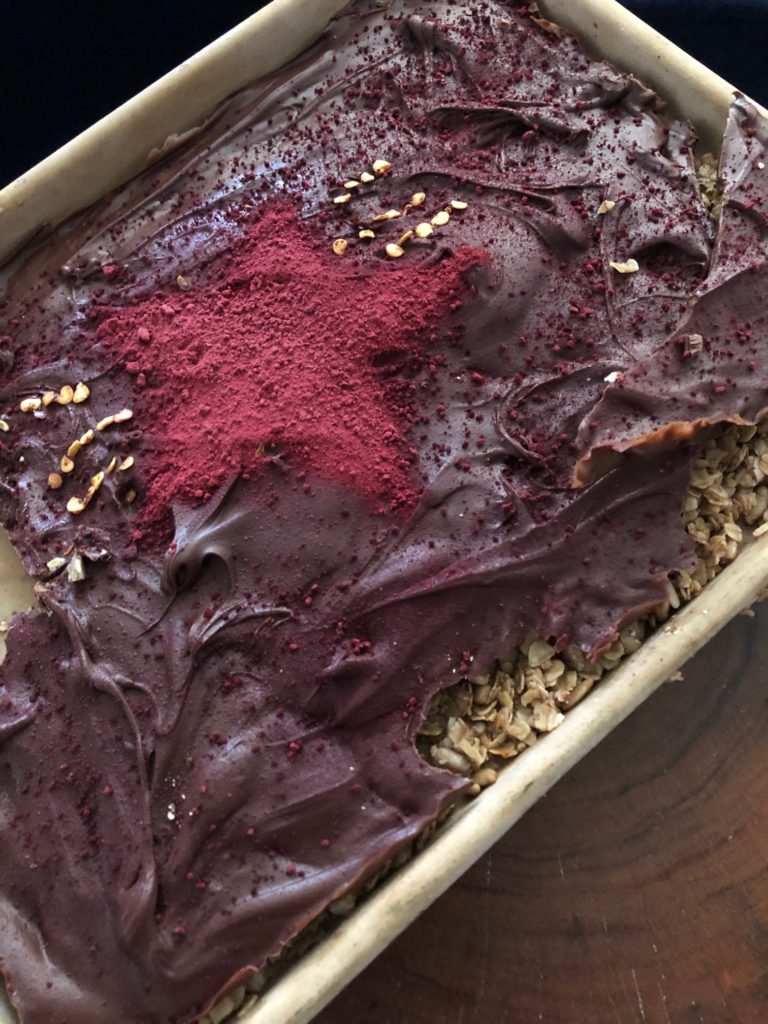
A falling star has a curvy trajectory so you could model after that. Like these curves made with chili pepper flakes for a chocolate granola snack. I made the star from beetroot powder that’s a great balancing ingredient.

Falling star beet granola
Falling star beet granola recipe below. 🌟

In the Falling Star pose, like the  Wild Thing pose, you choose. You can slightly adjust your Wild Thing pose into a Falling Star to get pose variations. Vatas love that 😊.  You can stay on the floor with your legs and arms widely spread out… or leave just one foot and one arm touching the mat.

When mindfully present, this is a great way to empower yourself and use your body and yoga pose to show off your intention in case you’re wondering what practical application this pose has.

And you can also choose to start over in a grounded standing position. Start in a Five-Pointed Star Pose where your two legs are spread wide apart beyond hip width, two arms stretched out to the sides. And your head makes up the fifth-star point.

You are a star! ⭐️

For your freestyle Falling Star, maybe you’re leaning or swaying even if ever so gently to one side, comfortably balanced, and letting go of the opposite leg and foot from resting on the floor beneath you. You don’t need a mirror to feel lighter and to trust your instincts.

This is a good metaphor for how letting go can be freeing in your life. You can fall away from getting in your own way of anything holding you back.

Letting go of outcomes is one of the hardest things in life I found. It’s not easy to let go of something you want to happen, especially when all your life you’ve been groomed to be in control. But that openness allows for something better to come along.

Sometimes we’re not thinking big enough. So in those times especially, being in a Falling Star yoga pose can be therapeutic and a good reminder.

Another Falling Star variation is to sway and bend your torso to the side a little or a lot (like how a palm tree can bend to withstand tropical storms). 🌴

You can also reach your helicopter arms out or up to help you balance. It’s not about how bendable you are. It’s that you’re willing to even try it!

You’ll get more flexible as you stay in the pose longer. It’s your unique Falling Star creation. 💫Just be sure to have fun! 🌟

And you can do that with this fallen star beet granola pan you can make in minutes with a few ingredients.

beet granola
Print

Star Beet Granola Pan

Author Brandy @ Healthy Happy Life Secrets

Equipment

  • plastic wrap

Ingredients

  • 2-1/2 cups oatmeal
  • 1/2 tsp cinnamon
  • pinch of salt
  • 1/2 cup light olive oil
  • 1/2 cup raw honey
  • chocolate, melted
  • beet powder
  • crushed red pepper flakes

Instructions

  • Combine dry ingredients and then mix in wet ingredients.
  • Bake granola for about 25-40 minutes at 325°F or until toasted.
  • To make chocolate topping. Prepare chocolate on display pan you will be using. Take a piece of plastic wrap and put on top. Add melted chocolate and pour onto plastic wrap. Refrigerate until chocolate is hard. After granola is baked and cooled, you can pour into the pan and then add the hardened chocolate ontop removing the plastic.
  • To make beet heart: take a star stencil or make a star cutout with cardboard. Add beet powder to create star shape. For fallen star effect, use tweezers to pull out the yellow pepper flakes (found in crushed red pepper flakes) to make a fallen line.

Kitchen Food Pantry Checklist

Kitchen food pantry is a must whether it’s shelves or bins if you want to maintain a healthy eating lifestyle and not have to run out to the grocery store every time you need an ingredient 🤔

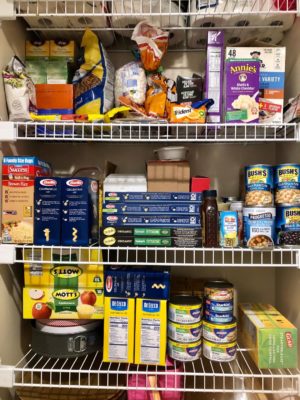
my kitchen food pantry in 2020.
The 2020 Pantry that started it all. It wasn’t all healthy, but then gradually as the world became more social healthy… so did my kitchen. 😊

It’s smart these days to have a running house kitchen food pantry, especially with all the grocery store shortages and shipping dilemmas.

What you store in your kitchen food pantry ends up being part of your diet (the same concept as: what you bring home from the grocery store or delivered ends up on your plate).

So, I started a household kitchen food pantry at the start of 2020 because I’m a planner and that makes food conveniently available in real-time.

Real food is a basic need, and no metaverse can change that (zero taste would never last on our planet 😊).

Plus, having a personal kitchen food pantry lets you bypass the panic buy waves that seem to run rampant.

And you can find yourself cooking and baking more, just in case you’re looking for homemade-cooking inspiration.

But even if you’re not a planner, the checklist ✅ below can help remind you of healthy pantry food items to stock up on when you’re running low.

One recent item I found interesting that made the trending grocery shortage list along with chicken is cinnamon buns.

Cinnamon I think I sweet, and no heat, but if you’re not used to it, can kinda feel that way.

Ceylon cinnamon is the kind you want to add to your healthy beverages. The regular or traditional cinnamon is Cassia cinnamon that’s often used in baking.

So, anyway… Here’s a kitchen food pantry idea list that can come in handy (from my pantry to yours maybe?):

✔️ Nuts, Seeds, and Dried Fruits (ex: raisins, craisins, dates, papaya, almonds, walnuts, sunflower seeds, flax seeds) come in handy as snack fillers between meals. You can make a trail mix or use them to bake with.

They’re dry ingredients so they water down baking, that’s working to dry what’s baking in the oven. If you have temperature-sensitive nuts like macadamia or Brazil nuts, you can keep them in the fridge to give them a longer life.

✔️ Canned Beans and Other Legumes (ex: white beans, black beans, peas, edamame, chickpea-garbanzo beans) you can use for every meal or straight out of the can.

You can run water inside the open cans to rinse out some of the preserving salts/sodium, or you can use the can liquid for soups and dips. You can even use the chickpea aquafaba liquid as an egg white substitute. There are no rules. But once cans are opened, it’s smart to refrigerate and use ’em within a few days.

✔️ Packaged Fruit (or what I call pantry shelf fruit, ex: unsweetened applesauce, cherries, pineapple) come in handy for baking.

Btw, I try to buy the unsweetened (or unsalted) versions if there’s a choice for all food goods ready-to-eat or for baking. ‘Cause then you can choose what sweets or salts to add back in, and control how much. And that’s part of the benefits making your own bakes and dishes.

✔️ Canned Proteins (ex: tuna, sardines, clams) make great snacks and lunch meat. You can add to almost any carb meal.

✔️ Shelf-ready Non-dairy milks (ex: almond milk) are good to keep around, plus a can of coconut milk and evaporated milk for easy baking or soups. Best expiration dates are usually over a year out.

✔️ Comfort Food Boxed Pasta make a pantry shelf look organized (that probably wasn’t your first thought, lol). There seems to be a new pasta shape out every year and in panic-buy shortages, the whole aisle empties fast (and ends up in pantries!).

So it’s good to have a couple of uniform boxes with different pasta shapes on hand. Larger pasta surfaces like shells will hold onto sauces better when you’re deciding what shapes and types to go with (ex: traditional spaghetti, macaroni, whole wheat).

Veggie pasta doesn’t need a fancy sauce and can taste light and elegant with the right EVOO.

✔️ Canned Tomatoes or Tomato Sauce go hand and hand in your pantry for a weekly Italian meal. But the cheese doesn’t belong there and I agree with the Italians that parmesan (America’s cheese) is not high quality once you get a taste of the better stuff.

You can opt to store nutritional yeast as a dry, cheesy alternative. It’s called “nutritional” because it’s full of nutrition (vitamins and minerals).

✔️ Slow Cooking or Old-Fashioned Oats and Grits. Good for breakfast but they can be substituted instead of flour for some bakes, and if you want to do gluten-free.

✔️ Other Whole Grains: (ex: brown rice, quinoa, barley, farro). Just look for “whole” in front of grains.

✔️ Drinks: (ex: unsweetened cocoa for baking and hot cocoa and ground coffee.) Even if you don’t drink these often they come in handy for occasions. You can always make healthy cold brew coffee if you don’t have a coffee machine.

The best drink for your body (water) isn’t in the pantry.

✔️ High Bran/Whole Grain Cereal: Processed cereals (including fortified ones) have gotten a bad rap. Some you may have heard we grew up with are even linked to having traces of weedkiller.

But if you find the right fortified cereal, that can be a good daily fiber source and a possible better sweet substitute.

✔️ Chocolate chip morsels: You can always find some chocolaty-way to bake them in or enjoy in a no-bake trail mix.

I learned in my Doubletree catering management experience that chocolate chips will get you far… and chocolate chip cookies will get you even further! 🍪

This is the easy and healthy low sugar chocolate chip oatmeal cookie version and a cool-star cookie design chocolate oatmeal soft recipe.

And of course sugar is paired well with none other than salt…

✔️ Salts: (ex: kosher, coarser sea salt, regular sea salt). Kosher is good for some bakes while coarser salts are a great finishing touch for veggies (almost like a salt garnish).

They allow you to appreciate your foods better at the moment when they activate on your tongue ...remember the different taste regions on the tongue?

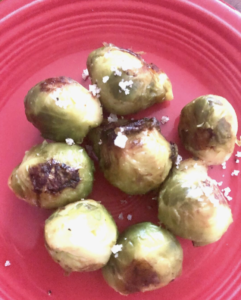
Coarse salt on Brussels sprouts can change your opinion of the healthy veg.

✔️ Vinegars/Condiments: (ex: apple cider vinegar, red wine vinegar, white wine vinegar, Worcestershire, and soy sauces).

These are versatile ingredients you can use to dress up your dishes, dressings, and sauces.

✔️ EVOO: keep a medium and a lighter version for cooking vs. baking (if you like the scent and taste, chances are you’ll love it in your dishes).

✔️ Flours: all-purpose, whole wheat, bread, corn, gluten-free (ex: almond, coconut, and buckwheat can be used in baking). Gluten-free flours are better preserved in the fridge than in a pantry.

✔️ Baking agents: cornstarch, baking powder, baking soda-the orange box in your fridge not to be confused with slightly different baking powder in baking, yeast packets for breads, sugars sparingly used for baking (ex: powdered sugar, monkfruit sugar, and brown sugar). You can learn to add less sugar and crave less.

✔️ Soup: before 2020, I used to buy canned low-sodium soups, and learned to cut down the sodium even more by making soups adding your own amount of salt, and from fresh kitchen food pantry ingredients.

With fresh and root veggies, you can almost make any kind of warm soup you want. Same concept with fresh fruits where you can make no-added sugar juices and low-sugar orange juice.

✔️ Variety of anti-inflammatory herbs and spices: for every day you want to have a variety of spice such as: oregano, turmeric, cayenne, cumin, black pepper, cinnamon.

For Thanksgiving and Christmas holidays, you want to take a look at your spice options, and add spices such as thyme, rosemary, nutmeg, anise, allspice, cardamom, cinnamon, ginger if those aren’t fresh.

✔️ Loose leaf and tea bags: from an herbal list, peppermint is always good to have on hand for aches.

Floral and fruity tea is also favorable. Black  (ex: cinnamon, Earl Grey, chai), green, and red/rooibos are antioxidant wonders.

✔️ Breads: Where is the best place to preserve bread longer… pantry, fridge, or freezer?

It’s the freezer. The fridge hardens and dries out your bread, but a freezer will keep it from undesirable changing properties after 2-3 days at room temperature.

You’ll know when freezer bread has eventually turned stale as it has a freezer-burn, cardboard-like but that doesn’t usually happen for months or longer.

If you’re wanting to freeze bread, slice it up at room temperature first before freezing, so you can pull out the slices you need without de-thawing the entire loaf.

Pop frozen toast in your toaster, and it’s just as fresh.And with the list above you have your own pantry where you can make fresh home bakes and meals. That’s something to be happy about 😊

Healthy Foods Substituting Ingredients

Healthy foods can substitute processed and other ingredients that your body doesn’t use as nutrition.

The Great British Bake Off does substituting ingredients. But healthy substituting, I’m not so sure about 😊 because that’s not their point.

Getting to love healthy foods can take gradual changes.

And food variety and curiosity can create opportunities.

Eating healthy got me interested in cooking healthy foods and using healthier ingredients later in life post-catering management work days.

Those days, I rarely cooked as I was always around decadent foods from a hotel kitchen.

And then stepping away from party planning and then into the pandemic days, I started to home cook and bake daily.

One ingredient at a time, I exchanged filler and not so great ingredients for healthy ones.

It started with interest and fascination with  exchanging a simple ingredient like  yeast for eggs, gives  you risen bread instead of pasta.

That’s the same sort of small ingredient change that you can make in daily meal planning (even if you don’t cook today), that can make a big difference in your health.

But first, you need to know what to do.

“When you know better, you do better.” -Maya Angelou 

Btw, as of today, Maya Angelou is now appearing on minted quarters (so her legacy advice is even more valuable!).

But anyway… long before I learned to cook, I didn’t care so much about the quality of ingredients as I did the final product taste.

And for work, I planned catering events in hotels and restaurants, and I can’t think of a single instance where there was a request for a full-on healthy party menu (over good tasting meals).

That theme never came up in conversations. In throwing successful events, enjoyable and making happy memories in those situations means serving an unforgettable mouthful of delicious.

Once in a while, sprinkled in the mix, there would be a request for healthier alternatives because of food allergies, or for a raw vegetable crudite platter that was considered veg-forward, and to start the party off on a light note.

Or for conference event planning, where the catered food was the main daily food the guests were eating and the host planner wanted healthier energy and “brain food” served. But those were the exceptions.

And that’s partly because eating rich foods for a day or eating out for a few days doesn’t have the same consequences as it does for daily eating that become the routines and habits.

When you have an overall goal to stay healthy or be health-conscious, you care about the overall weekly diet and the ingredients.

And if you’re the one cooking and adding the ingredients, you get to decide how much of this or that you add to meals. That can very rewarding and I share a few tips below whether or not you cook today.

…You just never know what will be a good source of inspo to get you cookin’ and as I found on my journey.

I never say never, but if you live near a city especially, gardening isn’t usually the main source for full-on meals.  But many of us cook regularly as we want to learn how to make new dishes and develop cooking skills confidence.

So that’s my first tip for anyone: to try and cook more often even if you don’t think you can boil an egg or make a box of pasta. We all start somewhere!

When you make, cook, or bake your food, you start to think about your foods more than when you’re just eating, heating, or ordering food in.

Then that brings more awareness to eating healthy foods if that’s a goal you have.

And in that case, making everyday recipes that have sticks of butter or shortening just won’t cut it.

At first, you can be feeling at odds following recipes that have a mix of healthy and not-so-healthy ingredients. That’s part of the journey.

I always start with the ingredients.

If I don’t like what’s in it, then I just skip the recipe or food. But when you’re starting out, following a recipe is easier and can be more fruitful… just in case you needed some cooking encouragement to keep trying.

Our olive oil EVOO society has also made it easier. That’s what I call it because EVOO (thank you to the Mediterranean diet) is often used in restaurants over butter, that used to be the standard.

Healthy fat foods and  healthy monounsaturated fat like EVOO (as in EVeryday olive oil + extra virgin) used with a light hand drizzle is going to be a good substitute for your body health.

Just add a few drops and then spread it around the pan with a baton flick of the ninja cooking wrist 😊. Just sayin’ too much of a good thing is too much.

But a little bit benefits your cooking too. Besides food flavor and a glisten, this keeps your food and pans from cooking heat burns.

The biggest goes to body health of course. So, my second tip is to substitute butter with healthier ingredients like applesauce or yogurt for baking, and ghee or EVOO for cooking when you can.

Traditional Christmas Cookies are the sweet recipe exception I have found that isn’t the same without the buttery taste-texture.

But even in that context, I still think (and from my own baking experiments) know that butter can be substituted, and still be just as delicious and enjoyable.

You may just have to get a ‘lil more creative with the cookie decorating.


…I made these (above photo) bak-love-a layers with light EVOO (that’s great for sweet and savory baking). I only used butter to add on the top layer glaze to please my younger self.🤷🏻‍♀️

Just an example that balanced moderation can be effectively added into recipes where it doesn’t have to be all or nothing.

I find hard and fast rules can fall flat and in the category elimination diet that I tend to stay away from.

I think eating diverse, mostly plant-based, and moderation for most everything else is the way to go and the way I go. Especially if you have food allergies and sensitivities.

But, this is a healthy leap from when I started my baking journey using ingredients like shortening that you still see in Southern comfort cooking recipes.

Aah… but, when I knew better, I did better. And that could be your journey.

Like I learned butter is made from heavy cream and if you keep whipping, it easily turns to butter.

It’s lessons like this where you can get revelations like I did, that an ingredient’s makeup and consistency is (ex)changeable. And so, ingredients are not fixed as what we know them as. They can be substituted and swapped in recipes.

A good example would be substituting sugar with healthy foods like dried fruits, fruit zest, or honey (that can help allergies too).

These types of little changes make big difference to health, and how you feel in your day. And, maybe the bottom line… or the waistline (yay!).

Or, maybe you’re a natural Vata (or know of some)…that’s me too 🙋🏻‍♀️, where you may have inherited the thinner genes and higher metabolism. You still have to watch the fats.

If you’re a female adult, you wanna make sure you’re not “skinny fat” that’s a good healthy measurement.

You can do this by comparing your waist to hip ratio (where most women can aim for under 80%).

There are no shortcuts to good health as your body has a different opinion on what it needs that’s different than our tastes and wants.

Another healthy substitute is oats and grits for pie crusts, cookies, and brownies mixed with apple sauce or yogurt and honey. When you bake, then you can make these swaps pretty easily, both butter and gluten-free (without flour).

Healthy foods like grits can be used as the pie base.

But when you shop from grocery shelves that’s a different story as pie shells look harmless, despite not-so healthy ingredients. And healthy foods don’t jump off the shelves either.

That’s how I started, not really paying attention to nutrition labels and ingredients.

Then along my healthful journey, I decided not to choose Mister Donut of any kind, fresh or not, because I knew and know what’s in them.

Besides taste, very little. And lots of sugar and fat. And I trained myself from awareness to look at them like that, and see the missing-ness through the hole in the middle.

But for others, and you, that could just as easily be another processed food item where the consequence is known and inevitable.

When a tradeoff is determined as individually undesirable, then you beneficially want to give it up (and don’t HAVE to give it up that can cause an internal conflict).

These btw (below) are healthy “donut hole” inspo w-hole bites and balls of energy that anyone can bake and substitute for high-sugar and fat.

When you pause on the processed foods, you can gradually not desire to eat the super-sweet stuff anymore. It can work if you work it. And then you actually like the taste of healthy foods.

Your habits then become your choices.

If you’ve ever fasted, then you probably know the feeling… because after a while you can stop caring or obsessing about eating (like I did in fasting experiences). I’m not a good faster but I’ve attempted fasting sweets.

After a day or so, you can stop craving whatever you’re fasting from because you, your mind, and your body are in agreement that you don’t need those foods (at least not now).

So, then you’re satisfied.

And that’s all you need to care about when it comes to eating enjoyment. Being content to be happy.

…I remember the days when I got teased by friends for eating healthy and selecting healthy food choices. I felt bad they didn’t know what I knew in nutrition, and sadly, that adds aging stress on the body.

Our bodies are tricky and complex and has a different daily systematic agenda that doesn’t necessarily like our unhealthy choices after swallowed or initial taste bud food changes that we choose (that can be unhealthy or healthy foods).

I knew back then (even if it was subconscious) that I wanted to live without eating regrets or damaging the one body we’re given, so I followed my instincts and those became habits.

When you don’t take for granted your body’s resiliency, that can help you to want to be healthier.

Plus, we have so much more food sources and healthy information available to us now that allows us to buy ingredients in person, online, and from global sources.

When your body is used to you eating healthy, another healthy food strategy (and final tip) is to switch up the healthy foods and ingredients regularly. Switching up foods is fun.

It’s an enjoyable game you can play that you’ll never get sick of and is what your body wants for you as it craves good taste and healthy variety.

Plus, if a food is labeled bad or good and that evolves or changes, like nuts used to be deemed bad and now are great healthy fats, then you haven’t put all your eggs in one basket 🥚🥚… you know what I mean, Jelly Bean 😉.

Low Sodium Healthy Soup Recipes

Low sodium healthy soup is easy when you make your own!  

I have 3 recipes below with carrots, mushrooms, and potatoes that you can make (with  low sodium and sea salt if you like).

Before 2020, I never made my own soups. And today, I only keep a backup can in my pantry.

low sodium healthy soup recipes

And you can too!… if that’s what you aspire to even if you don’t know how JUST YET.

But with delicious plant-based ingredients, you can make soup broths that you easily turn into clam chowder with a potato soup base.

You impress yourself and everyone you make the soup for!

After you learn to make homemade soups in simple steps, you’ll probably not go back to store soup cans as these have delicious natural flavors without all the sodium!

And you’re doing your body healthy good. And probably saving a few dollars if that matters.

And these are the 3 easy healthy soup recipes I’m sharing below:

1. Mushroom soup (with old-fashioned but not-out-of-style oats)

2. Carrot soup (with digestive-wonder root, ginger) 

3. Clam chowder (New England style that’s my personal favorite made from potato soup)

At this time, I’m involved in a Beta chef’s cooking healthy eating group collaboration with RDs that provides culinary teaching and recipe input to a healthy strategy program.

I love food, and my background includes working with thousands of party planning events (and started my career in hotel catering that you already know if you’ve been reading some of my previous blog posts).

I’d hardly consider myself a chef-ette, but I have always had an adult culinary arts interest. 🧑‍🍳

…after hotels, I left the hospitality industry and went into more traditional Corporate America work, and then came back to the hospitality working world doing  Mediterranean-cuisine (Lebanese, Spanish, and Italian) event planning for about a dozen foodie restaurants.

That’s really when my good food (gastronomy) tastes and senses were re-ignited and I had a chance to re-marry with my “food is medicine” approach to life.

And marry salt from two food worlds.

Salt Talk For Your Low Sodium Healthy Soup Making

For soups, I avoid iodized salt. I don’t usually add table salt (like the ones in the packets) unless that’s all that’s available and the food isn’t already salted.

I alway buy “unsalted” ingredients when given an option.

If you eat out or eat prepared foods from groceries and restaurants, then you probably get enough salt. And probably more than enough salt in our highly processed foods.

On a DASH diet, lowering sodium is the recommendation.

When I’m cooking, I use sea salt (non-iodized) for everything and everyday use.

And then I use coarser natural sea salts like Celtic sea salt (or Himalayan or fleur de sel) for preparing meats to be baked in the oven, and for certain cooked vegetables.

Celtic sea salt is great for your rubs and on top as a garnish (not so much in mixing). The crystals are larger so they don’t blend as great as smaller salt granules. And I also Himalayan sea salt for additional healthy minerals.

And the gastronomic person in me, says coarser salt is absolutely necessary for the right flavor and texture on veggies like Brussel sprouts and edamame if you want a culinary meal experience (and not a bland one). Salt is as important as the veggie itself.

You can get away without using salt on certain veggies like broccoli or okra that hold their own tastes. If you add them to soups, the salt is usually already added.

So here are the 3 easy healthy soups that’ll help you with your salt cravings…

Easy Healthy Soup Recipes

Easy Low Sodium Healthy Soup #1: Mushroom Oat Soup

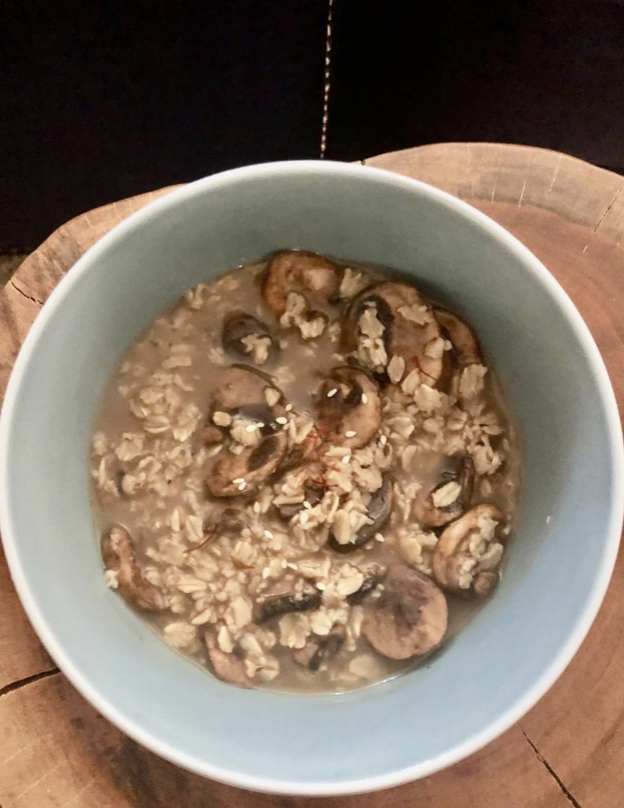
Cook mushrooms in a pot of covering water until soft, and add slow-cook oats. Mushrooms are immune-boosting and are alkaline. Cook until mushrooms are soft.

If you want, add a drizzle of cooking sherry, truffle oil, and saffron to get culinary fancy and balance umami tastes.

For more umami, add a dash of white pepper.

mushroom soup

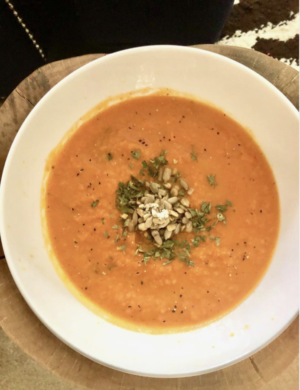
Low Sodium Healthy Soup #2: Carrot Ginger Soup

Print Recipe
carrot ginger soup recipe.
Print

Carrot Ginger Soup

Course Soup
Cuisine American
Author Brandy @ Healthy Happy Life Secrets

Ingredients

  • cooked carrots
  • ginger juice
  • ginger spice
  • ginger, chopped
  • sunflower seeds (optional)
  • dried parsley (optional)
  • cumin and Old Bay (optional)

Instructions

  • Cook carrots on medium heat. When soft, mash carrots. For smooth and easy-to-make soup, sdd to your Magic Bullet or blender and pulse a few times until it's to your smooth texture liking.
  • Add ginger spiced and chopped ginger bits (if you prefer for a more pungent bite good for Kapha). You can also use ginger juice for less chunks, and spices.
  • Zhugh with sunflower seeds and dried parsley if desired.

Cook carrots in water until soft, then mash and grate or squeeze ginger juices in the soup. You can finish off with alt-milk for a creamy-effect or  just leave as is. That’s probably the way a.k.a. without ginger I would’ve preferred as a child 🧒🏻).

healthy soup recipes

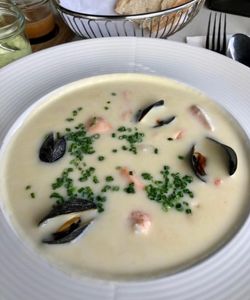
Easy Potato Soup or New England Clam Chowder

This low sodium healthy soup is easier to make than you may think! You can make delicious chowder from a simple potato soup base.

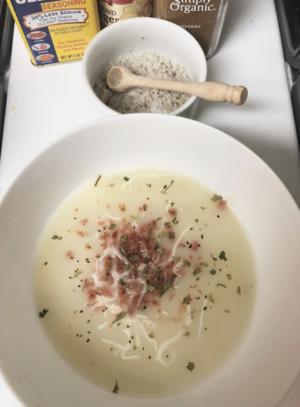
Peel and cook common Russet potatoes in a pot with water. You would do the same step if you were making mashed potatoes.

Then decide if you want a creamy soup. And if you do, pour out some of the water and then mash potatoes in the same stovetop pot.  Still with the stove heat on, add in your ready-to-eat clams (3 large potatoes to about 5 ounces of clams you can cook or use a can).

I like to zhugh up with aromatic herbs, either fresh or with ground herb spices like cilantro, parsley, oregano, and/or basil.

If you’re not sure if you should add any herbs into your soup (if you’re feeding others), then parsley and thyme spices are less strong (more universally likable) and can be added in of left to individual tastes.

potato healthy soup recipes
Potato base soup

If you’re looking for a few easy-to-make snack ideas to go along with your healthy soup recipes or just to eat on their own, you can try…

Baked kale chips…

Or, homemade baked crackers – zesty za’atar crackers…

Or, popcorn…

Another different twist and take on changing up tastes, is this idea… instead of adding salt, you could add a ‘lil vinegar to your potato snacks and soup.

I like to add ACV vinegar but you could also try malt, red, or white vinegar…  they’re healthier and also give the food a bit of a tangy bite.

I like to also add my daily spices (turmeric, black or white pepper once in awhile). I skip needing any salt after all those changes 😉.

So hopefully you are soup-er excited to make your comfort homemade and easy healthy soup recipes, and maybe you even choose to change up a way that you snack.

Hypochondria: Health Prevention vs. Health Anxiety

Especially if you’re predominantly a natural Vata body-mind, you’re likely sensitive to changing daily weather, body, and health conditions (and can have hypochondria or health worry tendencies).

To a sturdy, unaffected Kapha or a strong, enduring Pitta, your Vata body health thoughts could be seen somewhere between hypochondria thinking and healthy prevention.

We all have traces of each body type in us (air/space, water/fire, and earth/water in more eastern world dosha term descriptions), and at any time, any of us can get off-balance for a day, a season, or longer.

If you’re experiencing any natural body type imbalances these can start off as minor body annoyances, but that can gradually aggravate your quality of life as they grow and the season goes on–so it’s better to nip them in the bud and make the healthier lifestyle changes/choices now or asap.

Today I wanted to share how you can handle and next steps for any of your less-than feel-good (unhealthy) body symptoms (that we all will run into at some point in our lives).

If you’re a super sensitive person, seek healthy prevention ways, live a healthy, balanced lifestyle balance, or are even a slight germophobe, then you may have hypochondria tendencies that can be good and bad, and I wanted to delve deeper into how you can play up the good sides and get rid of the bad tendencies as a healthy lifestyle choice you make…

In some countries outside the U.S., like our sister countries, Italy and France, hypochondria ways of thinking are known to permeate the culture. So a French Vata person is more likely to be adaptive to healthy preventative ways and body health self-awareness. They can also get inside their minds a little too much, e.g. taking more than they need or before symptoms arise.

So let’s look at both sides.

The Good In Hypochondria

If you consider yourself a hypochondriac (or know of someone who is), you can help detect and prevent health issues with solid facts and knowledge, as you probably like to Google and research health symptoms and solutions, and read health articles to become aware of the latest trends and outbreaks.

You can replace old health beliefs with better ones as they evolve, a concept that’s never-ending.

You can be more in-tune with your body so that when you do have a health concern that needs to be addressed, you know which specialists to see over general help, as you’re been a researcher and live in and feel parts of your body.

You can also share helpful, health information with other people to bring awareness to better health ideas, such as OTC medicine knowledge and alternative medicine solution paths that you learn.

The Not-So-Good In Hypochondria

But then there’s the other side…

You can go down the wrong diagnosis rabbit-hole believing that something is causing your health issue that’s not based on all the facts.

You can falsely imagine your health scenarios worsening that cause anxious-worry energy, that further hurt your health or symptoms in our human bi-directional mind-body connections.

You can also become less productive and stressed as you believe yourself as a sick person or feeling less than 100%. Some of these thoughts can lead to chronic ailments or symptoms that last longer than a week.

So, the balance between healthy and unhealthy hypochondria thinking is doing and attempting the right things that don’t over or under-react to the symptoms you’re experiencing.

Observing your body, and gathering data from the opinions of others around you can be a good, first step sounding board. And of course, talking to a medical professional when it’s necessary.

Some people tend to go to the doctor for everything and anything, and then there are others who won’t tend to go unless they’re seriously ill and you have to convince them to go to the hospital. In general, you want to be somewhere in between these two extremes.

When you talk to friends and co-workers first, they will likely share their learned health journey experiences. They may advise seeing a doctor and that could be the next healthy step, but before that, here’s how you can handle almost any change in daily, health situation that comes up without a known cause and before you have a diagnosis.

And, before you consider seeing a doctor or reach for your medicine cabinet to treat symptoms with no known cause, you can ask yourself objectively:

On a scale of 1-10 — how severe (feelings, pain, and appearance) are your symptoms relative to your normal daily health?

Continue reading “Hypochondria: Health Prevention vs. Health Anxiety”