Matcha banana bread is an easy bread you can make for brunch. And this one is a mixed batter (and not a proofing bread dough) before it’s in the oven, so you’ll save hours! Think of it like a quick pancake batter.
…And you can make this simple, where all you need is a pancake mix and a banana.
…Oh, and then add a little milk and/or yogurt for moistness. You can also make your own easy banana bread mix with flour (gluten and gluten-free), baking powder, and choice of sweetness (such as maple syrup or honey that are good for breakfast and lower sugar than sugar).
You can also get your healthy ingredient adds in like matcha tea in banana bread. Matcha is a healthy anti-inflammatory green tea, good for calming that also supports weight loss. 🍵
…Where less sugar is also going to support those efforts.
I also added in healthy gluten-freebuckwheatflour to the mix, that’s high in protein and fiber… and good in healthier pancakes and a recipe like this.
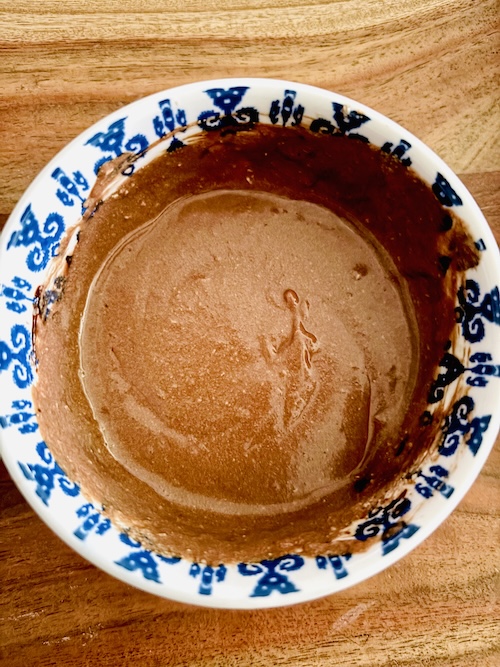
You can hide the healthy ingredients after you combine the ingredients. But I left a small trail of spring green matcha on the top of the batter, so you can see it’s there. The color will also blend in more after baked. 🌱
Only the banana bread will stand out in the end.
And that’s a good way to hide healthy ingredients for those who are picky eaters!
…But that you’ll feel better about it in there and anyone you’re sharing with!
The best part is: you can make healthier breakfast sweets like this matcha banana bread without compromising any tastes.
Virgin berry tea is a mocktail drink that can be made delicious for a special Mother’s Day drink.
Shaken, not stirred, you can easily make a mocktail drink like this with your Magic Bullet blender recipes and brunch waffles. You can shake the ingredients over your shoulder and this will create a smooth frothy tea beverage like this virgin berry tea drink that all ages can enjoy.
Btw, when my mom was with us on earth, she spent most of her working career as a dressmaker, so this light pink and purple color berry tea celebrates her life well and fits into the 2026 Met Gala’s Costume Art theme she would’ve liked. She never ate desserts with sugar, but had plenty of fruit.
…Oh, and if your mom is more a Mint Julep Kentucky Derby type, then you can try this Virgin Mint Julep tea drink anytime of day.
This is a virgin pink and lavender celebratory and festive mocktail drink with healthy notes that any mom would love! The drink checks the boxes for the service and quality time love language mom as she kicks up her feet to sip on this special mocktail that can be made into a cocktail.
Course beverage
Cuisine American
Author Brandy @ Healthy Happy Life Secrets
Equipment
martini strainer or other strainer
Ingredients
blueberry tea
hibiscus tea
can of coconut cream (or heavy cream)
blueberries and strawberries
lavender tea bag
Instructions
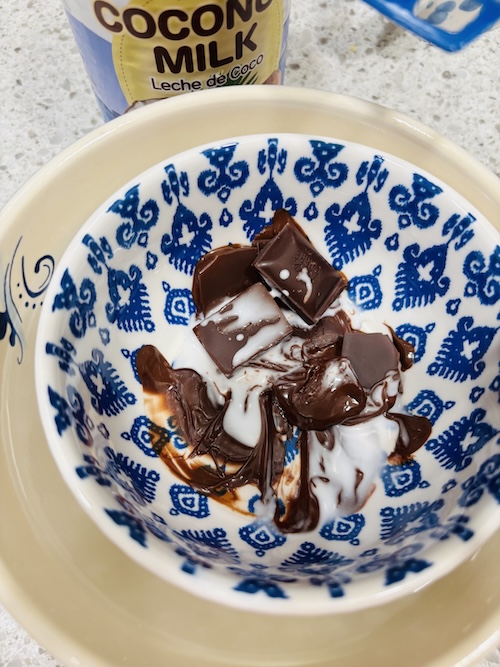
Reserve the thickest part of the coconut cream. Then mix the thinner part of the cream to make a milk consistency that will be used for blending.
Combine brewed blueberry tea and hibiscus tea and milk consistency cream. Shake up and strain to create the lavender purple color layer. Optional: add berries to this layer if you wish.
Freeze the first layer.
Repeat the second step but omit the blueberry tea to make the pink color layer as red and white make pink. Optional: add berries to this layer if you wish.
Freeze the second layer.
Add the thick coconut cream to the top. Add a little of the milk consistency cream to make the thickness of choice.
Decorate with dried hibiscus and lavender tea leaves, and/or fresh fruit.
Protein smoothie bowl is dreamy color-enhanced with healthy anti-inflammatory powder supplements like spirulina, that’s also high in protein… and that you can learn more about below. Plus, how to blend in the superfood powder to make a tasty bowl (and not just a healthy one!).
Spirulina if you don’t know, is algae. It sounds like what you and I may have studied in school under a microscope or saw floating in a pond. I saw both in my journey.
Today, it’s no longer controversial in food and as a food ingredient. It’s also no longer a hold-your-nose-to-swallow healthy food that tastes like medicine when you find the right mild one that’s much easier to come across and source online today.
…Because I remember when I tried to source blue spirulina before 2020, and it was not online ready yet. But back then, I did buy green algae spirulina that quickly brought me back to the smells of living next to a pond and walking into a pet store, getting closer toward the fish aquarium sections.
But I blended some of the powder into my green smoothies with a bunch of pineapple to try and sweetly mask the taste.
And then one day I noticed the blue spirulina powder on the market. I had seen the powder in a bowl coming out of a smoothie place years earlier.
I was excited for getting the powder because I knew what aqua bright colors it could make.
…And so I did! And you too can make a breakfast protein smoothie bowl into a mermaid blue…
With the concentrated spirulina powder I had, I added a few drops of healthy plant-based Pandan gel that I discovered had been available for a while. It’s the vanilla extract of the east. And has an earthy taste and dark green color if you’re not familiar.
With the blue powder and green gel combined together, you get a cool blue-green aqua shade. Is it blue or is it green? That’s between your color mix and cones’ perceptions in your eyes.
And whatever the soothing end color, for me this has become a loved yogurt smoothie breakfast morning bowl. It’s also one of my site colors for daily inspiration.
Spirulina Protein Powder
But more than color, spirulina is also more than half protein! Between 57-70 grams in 100 grams that you can add to your grocery healthy protein list.
it’s an alternative for a protein powder if you don’t like whey (that comes from dairy).
Or collagen powders (that come from animals).
Spirulina is plant-based, and has other benefits like it’s a high antioxidant potency for anti-inflammatory health. The blue-green algae colors are filled with chlorophyll, that are especially good for body immunity and detox.
Blue spirulina is great for smoothies or a protein smoothie bowl. It makes for a fun healthy drink or bowl with natural colors.
Blended up with yogurt or milk white as the base medium, you get a lighter shade. It’s really an eat-from-the rainbow drink because white contains all the colors.🌈
But you can also go deep green or deep blue marine blue by blending in blueberries to blue spirulina.
And if you want to go wild purple, you can even make a deep purple color by also blending in strawberries or raspberries. Now that’s one royal bowl. 👑
And if you’re deciding which powder to add based on protein amount, here’s the healthy skinny…
Spirulina vs. Collagen (vs. Whey) Protein
Collagen is animal protein and has about 90 grams of protein per 100 grams, so it’s more than plant-based spirulina. Hydrolyzed collagen is the finer version of collagen.
In case you’re wondering, bone broth has less than 10 grams per 100 grams, since it’s diluted (vs. powder supplement). Collagen is a type of protein found in bone broth.
Fun fact: Even though you hear fitness people talking about and taking whey powder commonly for weight lifting and muscle building, you’d think it came from an animal source. But it’s actually 70-90 grams of protein that comes from dairy (as in separating curds and whey in the cheesemaking process)… and milk is not just for babies.
So the choice is yours… you can add whey, spirulina, or collagen into a protein smoothie bowl if you’re trying to rack up more protein points.
You’d never know in a pretty Tiffany blue bowl that you can dunk a spoon in… maybe even today?
And if you like this dreamy color and healthy idea, you’ll probably like this idea too, to make a healthy blue frosting you can have for breakfast (and feel good about feeding your body)… and/or a berry yogurt smoothie you can make in seconds with a Magic Bullet.
You can also turn a protein smoothie bowl into a drinking smoothie by simply blending in the liquid portion of the yogurt, milk, or other liquids.
Healthy brownie with fiber (and protein) can be made with wheat bran and wheat germ. You can 2XX (and fibermaxx). And have a delicious dessert good for breakfast or anytime.
Oh, and healthy especially with buckwheat flour added that’s in this fudge-like brownie recipe.
Also, learn how each kind of flour impacts your healthy brownie’s texture, and which flour has the most fiber. So you can decide which fiber to add in this healthy brownie. I’ll help you below…
Fiber is plant-based indigestible food that helps digestion. Think of whole wheat and other insoluble fiber sources, like tumbleweed passing through and picking up particles that would otherwise stay longer in your body.
Soluble fiber is good for helping cholesterol and blood sugar. And supporting optimized weight below the belt.
And daily fiber helps you feel leaner and look your best in your jeans… and who doesn’t love that?
So a healthy brownie is a simple way to lace in healthy ingredients that help our health… and satiate a sweet tooth. And in the duo benefits, you have your choice of healthy ingredients.
Here’s the healthy skinny, so you can make your ingredient choice as to which ones you want to include for your brownie this time.
First up is is the wheat germ ingredient, that’s the seed. It’s where it all begins for a wheat kernel…
Wheat germ has more protein and Vitamin E that also is an antioxidant. And wheat bran has more fiber than the good germ which is good for weight management.
Wheat bran is also part of the wheat kernel, like the skin or outer layer that’s super high in fiber. When you buy wheat germ, you’re getting more vitamins and minerals that embryos carry. And wheat bran has more fiber.
Whole wheat flour is more common and balanced with germ and bran in it, but it’s more processed. It includes the endosperm, that’s the middle layer and starchy section that helps make more flour.
Think of whole wheat flour as the more healthy alternative with more protein and fiber compared to or vs. (white) all-purpose flour.
Then there’s buckwheat… that’s a gluten-free flour choice.
Buckwheat is a super food and is actually not a wheat. That’s why it’s gluten-free. It has an even higher amount of fiber for fibermaxxing if that’s one of your heatlthy missions. It’s a good add for most sweet and breakfas-y dessert recipes like a blueberry scone or buckwheat ginger cookie snap.
…So those are the wheat options (both gluten wheat and gluten-free buckwheat flour)… and then there are a couple other good healthy brownie gluten-free options, including coconut flour and oat flour.
Coconut flour vs. whole wheat flour vs. oat flour
For the healthy brownie recipe options, you can decide between whole wheat flour, oat flour, and coconut flour as the main brownie flour. And the others (germ, bran, and buckwheat) are healthy supporting adds.
If you’re trying to do a fully gluten-free healthy brownie, buckwheat, oat, and coconut flours or a combo of them would be good choices.
Coconut flour is super high in fiber with over 20 grams or more per 1/2 cup (about 100 grams). Coconut flour has more insoluble fiber (and more fiber than oats). Oats has more soluble fiber (overall 3-4 grams of fiber per 1/2 cup or about 100 grams). Whole wheat flour has 6-7 grams of fiber per half cup.
If you’re looking to control blood sugar or cholesterol, then oats would be a good brownie ingredient choice. And the best choice for a healthy fudgy brownie. You can simply grind rolled oats to make the flour.
And besides coconut and oats, another gluten-free alternative is black beans that will give a more lumpy brownie with 6-9 grams of fiber.
It’s a good option if you have extra bean cans around (or kicking the cans deciding which ingredients to choose 😀)… and you want to have a more balanced soluble and insoluble fiber eating experience. For a brownie with black beans, to enhance flavor, you can add black coffee as a flavored liquid instead of regular water.
Healthy Brownie Tastes and Textures
Adding or subtracting flours won’t impact the brownie taste negatively (as cacao powder or chocolate-y flavors is the main brownie flavor and another healthy ingredient).
Unsweetened 100% cacao powder (cocoa baking powder) is anti-inflammatory. It helps to make this an overall low-sugar brownie.
And for a healthier sweetener, honey is also used, but you can substitute for a smidge of healthy monk fruit sugar (that’s better for a cake-like brownie, e.g. with whole wheat flour).
For additional flavor pairing or for no-added sugar, you can use peppermint extract for a chocolate mint brownie or coffee to enhance the cacao flavor tastes.
And besides tastes, you can favorably change the texture of the brownie you choose by the flour choices you make.
Whole wheat flour (a fully gluten option) will help make your brownies flour-cake-like, and a smoother batter (less healthy bumpy or rustic). And if you add baking powder (and/or baking powder), that will help the brownie rise in the oven.
But gluten-free flours like coconut flour will stay about the same height before and after the oven bake. Coconut flour brownies will be more dry for texture: the coconut flour batter will be more dry and the brownies out of the oven will be too.
For coconut flour brownies, I leaned into coconut tastes with shredded coconut here…
…And finely ground oat flour brownies will give more of a fudge-y brownie (like a flourless cake). The baked brownie will look more like the batter, than not at all. Brownies are simple that way. You can kinda predict what they will look like on the other side of the oven. 😊
…Where the brownie batter will be more like a slightly sticky cookie dough with some grainy oat bits. And more like a store bought brownie mix than say with coconut flour.
So, weighing fiber types/amounts and brownie texture differences and what’s priority to you, will help tip the scale toward as to which flour(s) you choose this time for your healthy brownie plate.
And as you’re deciding flours if you haven’t already, this brownie recipe also has egg white and applesauce as healthy binders.
…Which btw I love substituting using any butter or egg yolk with unsweetened applesauce in a healthy brownie. And if you like applesauce in general, you’ll also like a fruit roll up or applesauce cobbler.
Longer Lasting Brownie
Applesauce will help your brownie last longer if you want to make a larger batch. And coconut oil will help that mission too.
You can use another oil like light olive oil or canola oil, but it will not last as long at room temperature. Those oils can grow rancid quicker at (warmer) room temperatures.
And the same goes for liquid choices. Milk (and liquids that need to be refrigerated) will not last as long vs. using water (or an enhancing liquid like black coffee).
…So now that you have all the brownie ingredient notes, are you ready to make this delicious, one-bowl batter recipe?
This is a 2X fiber brownie that has no black beans. It's fudge and less cake-like. This will make 6 small brownie bites or 2 regular size square brownies.
In one bowl, hand combine ingredients with a spoon.
Bake at 350°F/180°C for about 15 minutes. Do not overbake.
Notes
If you want to turn this into a cake-like brownie, add 1/4 cup whole wheat flour and 1 tsp baking powder.Oat flour is better at blood sugar and lower cholesterol and coconut flour is good for supporting regular digestion. Coconut flour will make a more dry brownie, and oat flour will give a more fudgy brownie.Add enough water (or liquid) to get a smoother batter that fully incorporates the flours of choice.
Healthy proteins belong on the new food pyramid. Starting 2026, it’s an inverted triangle funnel shape with a heightened focus on healthy proteins and dairy at the top.
This is a printable protein grocery list you can use for inspiration and good for anyone who is following a healthy diet like the Mediterranean diet.
One other food category that has been a constant is Vegetables & Fruits (healthy carbs). They’re still a top priority as nature’s produce in a garden.
V&F are also store affordable, and have a lot of value add to the body with all its vitamins, minerals, and antioxidants (to fight free radicals in cells).
Unlike packaged foods, V&F grocery labels are PLU stickers that need no list of ingredients to dilute. They are whole and healthy.
I remember the original food pyramid that started in the previous century from the New food pyramid. It was a controversial 23+ servings, coming from the 4 basic food groups.
In simpler times, the rectangular 4 basic food groups kept it inside-the-box basic. Dairy was already one of the main food groups. Meat was another that represented healthy proteins.
Plant-based proteins have been around since B.C. times, but hadn’t cropped up on the table scene for the Western diet yet (…and maybe why a food pyramid was built 😊).
But amino acids have been with us for for-EVER, even though it’s more technical…
And amino acid profiles give more protein details… where some surprising foods (besides meats and eggs) have all 9 essential amino acids that the body can’t make: foods such as amaranth, nutritional yeast, and buckwheat.
Those just happen to be a few of my food loves to subtly add-in, and they’re naturally gluten-free (and easier to digest).
A few ideas... you can easily sprinkle in nutritional yeast like a healthy spice. In case you haven’t discovered yet, nutritional yeast is a dairy-free cheesy alternative. It’s a flaky powder that doesn’t melt well, but is as good as a final zhugh topping to pastas (and any foods you want a cheesy umami taste). 🧀
And you can spread some cooked amaranth into the dough of a homemade whole grain roll that rolls fresh out of the oven.
And many dairy foods have healthy proteins. Like real cheeses, that are mostly made of water, milk fat, proteins (casein and whey), lactose (milk sugar), and minerals. You can easily add into a breakfast meal like with a cottage cheese blueberry peach smoothie.
Below is a list of healthy proteins and dairy (along with tips, ideas, and inspo) on how you can get more food value with more healthy proteins and combining (…2 proteins together?). This helps your body win healthy points, alongside a loose guideline-based diet like in the new food pyramid.
What healthy foods are high in protein for the new food pyramid and a healthy diet?
You can use a printable healthy protein source food list like this one to decide for yourself, or when you’re making choices grocery shopping:
Generally, women can loosely stick to eating about .7 to 1 gram (or slightly less) per pound of body weight. I use 1 gram for easy math. As an example, for a 135 pound woman, that’s 100-135 grams per day.
And to get those points, here are a few point-based healthy protein comparisons. Keep in mind different proteins have different types and amounts of amino acids that’s important. I learned this unconventionally and out of curiosity.
…Because I wondered why on occasion when I ate something that didn’t agree with me, why I always felt better eating beef than other sources of protein, after being on the simple to digest BRAT diet or not eating for a day or two. And it turns out, it’s more than just familiarity and that I grew up eating meals with beef.
It has a lot to do with the different and different amounts of amino acids that describe the differences in protein sources between say chicken, fish, and beef that affect the digestive system.
So like most healthy foods, it’s good to diversify and not put all your eggs in one basket… but starting with an eggs is not a bad idea either.
And a good place to start on here…
Eggs -There is more protein in egg whites, but 6-7 grams for a large egg in liquid form. Keep in mind grams change for wet and dry ingredients (and before or after cooking an egg).
Chicken breast, skinless – If you want to get to your daily protein grams count quicker, chicken is a good healthy proteins answer. It has 30-31 grams per 1/2 cup (100 grams/3.5 ounces). 2 liquid eggs is about 3.5 ounces, so that’s less than half the protein than chicken. Lunch recipe idea: try an easy chicken salad.
Lean beef – This was mentioned already… but f you’ve ever wondered why after you feel sick from something you ate, when you’re recovering and you eat ground beef and feel better, it’s because beef is specifically high in glutamine and glycine (amino acids). It also has more leucine (muscle building benefits). 100 grams or 3.5 cooked ounces that is used for comparison with all the proteins named here (in this article) have about 25-30 grams.
Sardines and anchovies – Using the same 3.5 ounces, a sardine can have about 18-20 grams. Anchovies can be even higher in the 30 grams range, but always check the labels.
Wild salmon – This is the healthy fish protein choice, but more known for the Omega-3 content that’s good on a healthy fat list especially for heart, anti-inflammation, and on a Mediterranean diet. You can also find about 20 grams of protein in salmon filet. A salad recipe to try!: salmon salad
Quinoa, btw, and other pseudo grains like amaranth and buckwheat (already mentioned) are complete proteins. Quinoa has about 4 grams per 100 grams, but is high in lysine amino acid, so it can be good to include for those who only eat plant-based proteins. Oh, and get this… black quinoa you don’t hear about as often, has a higher amount of 15-20 protein grams!
Rolling them into your cereal is a good idea along with a rolled oat bowl. Rolled oats is a good balanced protein with 13-17 grams. Sometimes I like to add my daily oats, just shy of a cup, to make a low-sugar oatmeal raisin cookie that’s also got Greek yogurt (with about 10 grams of protein per 100 grams/3.5 ounces).
How’s that’s for double healthy protein inspiration?
And, moving into plant-based protein sources:
Tofu – has about the 7-10 grams of protein per 3.5 ounce, closer to an egg. And like an egg, you can make a tofu scramble. I like to add some nuts and seeds to give some texture, and additional healthy proteins. Some other healthy recipe ideas to try: Tofu pepperoni and tofu chil.
Nuts – Peanuts have about 26 grams per 3.5 ounce/100 grams. And most nuts have about 18-25 grams. These days nuts are deemed healthy and a healthy handful makes a good snack.
Seeds – Seeds have 16-31 grams with pumpkin seeds and hemp seeds/hearts. We only see a few varieties in grocery stores but there are many thousands of seed types in the world. You can find more seeds in spice aisles such as celery, poppy, and sesame seeds.
Beans – Beans are another fascinating protein food with 7-9 grams per 100 grams (3.5 ounces) of cooked beans. Cooking dry beans is a great way to get into cooking, and make the beans easier to digest (removing the complex sugars – oligosaccharides). Try a turmeric soup with 15 beans or an Italian bean salad.
Lentils – about 9 grams per 100 cooked grams. And of lentils, green lentils win the fiber count. Most lentils cook quicker than beans. You can try an easy mushy green lentils peas.
And one healthy protein may not be familiar with is spirulina powder that’s off the charts, in the 50-70 grams range. You can make a healthy virgin blue curaçao beverage with the spirulina blue-green algae. You just need a smidge to get the ocean blue colors. It’s the wave of the future! 🌊
And finally we can look at healthy foods that have protein and dairy! Meat and plant proteins don’t have dairy, but most dairy have proteins.
On the new food pyramid, 3 servings of dairy are recommended that varies on the food. For yogurt a serving is about 1/2 cup, so that’s still around the 3.5 ounces (we used to compare proteins). Grams change by weight for wet and dry ingredients (or before or after cooked).
Greek yogurt – 7-10 grams of protein per 3.5 ounce (or a dairy serving). I can’t say enough about Greek yogurt as it can be used for desserts, a savory pita bread dip, and for many breakfas-y and even waffle brunch recipes.
Goat or sheep cheese – less processed has 21-22 grams of protein!
Buffalo mozzarella cheese – True buffalo mozzarella can even be eaten by some people who are dairy sensitive. Because the milk comes from water buffalo, that is lower in lactose than most cow milks. Buffalo mozzarella also has sirtuins (“longevity proteins”). I believe we’ll be hearing more about sirtuins in the future as helpers to cellular health, aging, and metabolism.
Buffalo mozzarella is very meltable and especially delicious on a Neapolitan-style pizza crust you can make from your home oven!
And last but not least…
Cottage cheese – Cottage cheese about 11-13 grams of protein, but check the labels as with all the other labelled foods. Cottage cheese is high in casein, that helps you feel full especially if you’re trying to lose weight.
Looking for some healthy dessert recipes? I got you. Try these low-sugar dessert sweets. Some of them are no-added sugar (Greek yogurt) or could be made delicious with low or no sugar. 🍥