UA-141369524-4

Dyshidrotic Eczema + Turmeric Tofu Scramble

Dyshidrotic eczema is often tied to allergies whether outdoor or food-related is individual to each body.
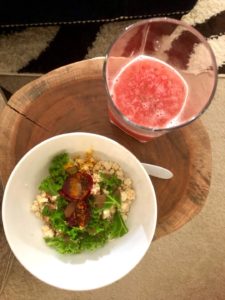
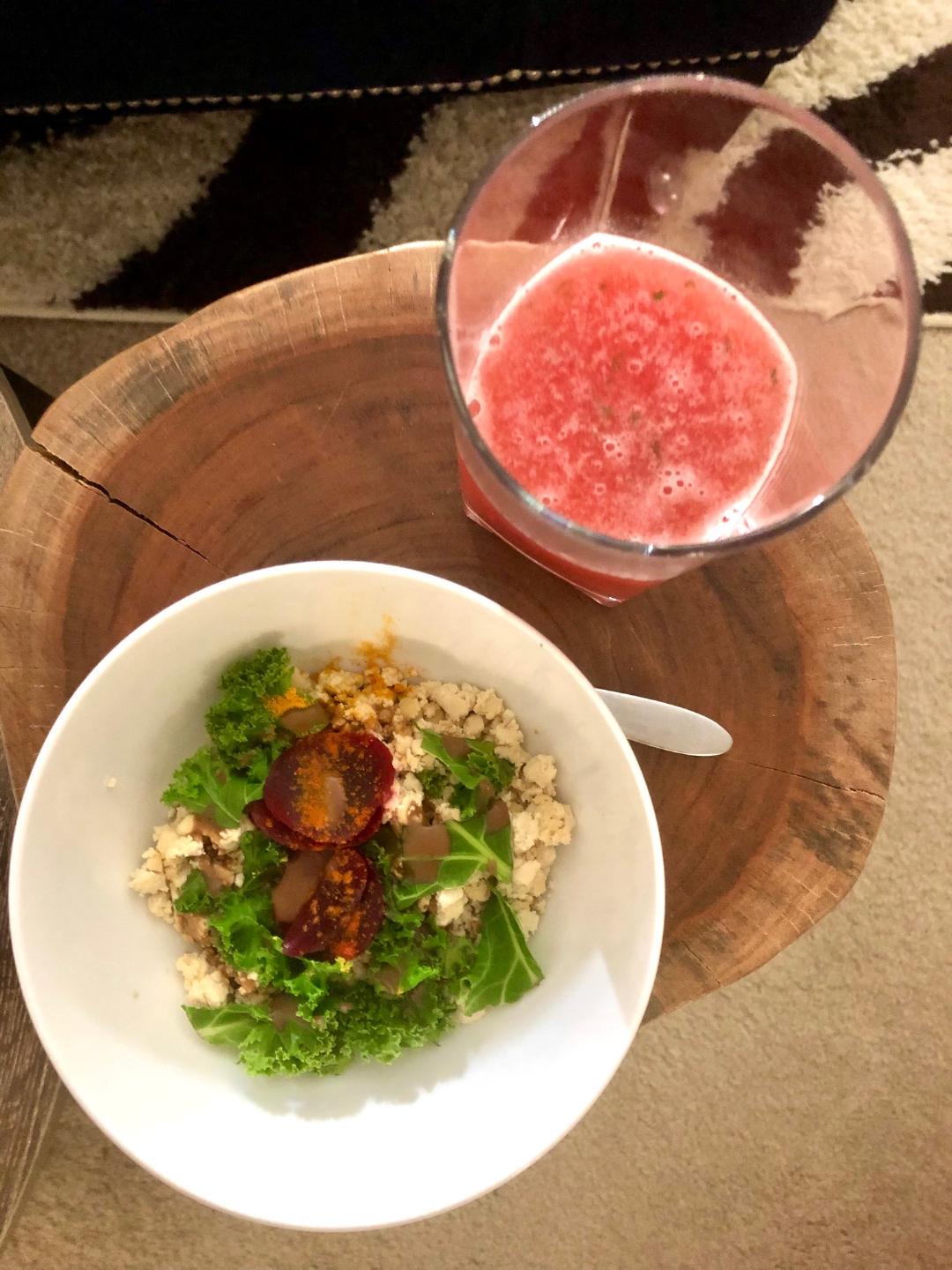
Pair a turmeric tofu scramble (recipe below) for anti-inflammatory eating and moisturizing watermelon drink.

The outward showing and what makes it different from other types of eczema is that it often appears as clear blisters on hands and soles of feet (…an odd place). So it’s a little easier to spot.

A dyshidrotic eczema reaction is individual and it’s an overreaction in the body, as are other types of eczema.

Cod fish is rich in Vitamin D good for dyshidrotic eczema.
Adding cod fish to your diet with Vitamin-D helps dyshidrotic eczema.

Dyshidrotic eczema can spread but not because of your spreading it in a contagious way. It can feel that way. But, if it does spread on its own, it’s an internal body reaction. So you can cross that worry off your list.

Like most eczema types, it has dry and irritated skin as general symptoms.

Irritation in the mind and body and in the mind-body connection is a form of high Pitta.

Knowing this helps because then you can focus on doing anti-Pitta moves like an anti-Pitta diet.

I learned this in the summer of 2021 when I ended up in the hospital emergency room for a dyshidrotic eczema diagnosis.

I had a heat blister that quickly turned into a foot infection a week later where my foot swelled to greenish, purple colors. Not the Northern Lights aurora borealis effect you want on your body. 😕

During my visit, the doctor confirmed my dyshidrotic eczema symptoms… and what I already knew and had researched on my own in 2020 when I first experienced the condition.

Dyshidrotic eczema that I’ve learned to partner with is still a sign of inflammation. And while acute, it’s not that cute ☺️. And the symptoms can be preventable.

Climate Changes As a Dyshidrotic Eczema Cause

With sensitive and thirsty summer skin that many of us have felt, the fiery and itchy summer effects of global warming are only intensifying.

Our bodies rely on this livable earth. But in perspective, 10 degrees hotter is still doable compared to the 800-degree temps on Mercury. 🌎

Mother Earth is the Queen. 👑

And besides heat, dyshidrotic eczema flare-ups can come from hypersensitivity to climate changes and climbing hotter weather.

This requires deeper skin care and moisturizing as preventative measures for dry skin. While heat and climate change can be one eczema cause, there are many eczema types and triggers.

Some other triggers can be food or other allergies.

Today in fall, it’s cooler and gratefully we did see an in-between this year with some colorful fiery leaves 🍁

Low-Sugar Planning Helps Eczema

Anything at any time like air, can make the dyshidrotic eczema situation worse no matter the cause. And being smart, not eating too much sugar is one area that is controllable for any of us.

It’s smart to start at breakfast so you haven’t spent all your sugar early in the day. Eating more plant-based and organic foods help offset undesired triggers and effects.

Offsetting sugar at every meal is a good strategy to avoid the skin crawling effect, if you’ve ever experienced that feeling. It’s going to make your life easier.

I know how hard that can be if you’re a sweet tooth because I thought that would be impossible for me to give up some sugar. But that’s how you lower sugar cravings.  And I know it is possible to do as I’m living proof! 🧡

Funny I love baking, right? 👩‍🍳 

But actually, you can better control how much sugar and sweetness is added when you do your own baking, cooking, and meal prep.

That’s why I can still enjoy low-sugar summer desserts. I bake with anti-inflammatory sensitivity and that’s why I started creating my own anti-inflammatory recipes.

And you can do your own creations in your home in a healthy way where you don’t give up the love of sugar. Moderation and substitution are your friends.

I found most recipes out there call for so much sugar (that once upon a time I wouldn’t have blinked an eye too 😜).  But when you make your own dishes and bakes, you’re more selective and cautious.

And what I learned was that I craved sugar less after eating less sugar. So that became my way.

And I focused on the positives. In my world, it’s about diverse eating from the rainbow 🌈 with food varieties that are doing the body good. The rainbow are rich polyphenols that help our guts.

That btw, is one good reason you would consider eating a variety of healthy foods.

And in that way, I ruled out that any one food was a likely cause for dyshidrotic eczema. Sugar I could see was an overall offender, but all sugars aren’t created equal.

Fruits are a good example. Fruits have sugar (fructose) but they have so much fiber and vitamin benefits that offset the negative. You wouldn’t want to cut fruit out, but have them in moderation.

You could also choose lower sugar ones like berries and even better, an avocado fruit. 🥑 Or a green banana that will lower glycemic so better for the anti-inflammatory effects.

Food Allergies, Ayurveda, and Eczema

I’m sensitive to other people’s food allergies having worked closely in catering foods and party planning management for a decade. Many of us have food sensitivities that’s on a spectrum of allergies, and different than Celiac Disease (that’s a disease).

Finding our happy gut is something that each of us get to explore and keep learning about as our bodies change.

Food balancing our preferences and food sensitivities is the best tip I can give to avoid tipping the scales for inflammation, dyshidrotic eczema, and other types of eczema… PLUS still enjoy foods.

Part of that is not giving up on any one healthy food unless they’re a known offender. Using moderation or balance as a guide is much more satisfying and doable.

When you operate with restoring balance year-round as a goal, then you notice when something is “off” even if it’s just ever-so-slightly so you can remedy before it’s too late or the scales have tipped to symptoms.

Something as simple as the scents and aromas you’re drawn to is an Ayurvedic clue as to what’s going on. Testing spice and food aromas are a couple of fun Ayurvedic ways we can all use to test our bodies this season.

You can learn more about restoring your body’s Ayurvedic imbalance.

Anti-Inflammatory Foods And Dyshidrotic Eczema

Coupled with an Ayurvedic balanced food approach, adding more sustainable anti-inflammatory foods and less gluten-foods help prevent dyshidrotic eczema.

And to help offset this, leaning more into a whole, plant-based diet that’s Ayurvedic and anti-inflammatory gives us all an edge, as we do good for our body AND for the planet.

Some anti-inflammatory foods are high in cobalt and nickel that’s found all over the earth and in some of the healthiest plant-based foods such as cocoa, nuts, and even leafy greens.

Dark chocolate is anti-inflammatory and can be good to go back to in moderation after eczema inflammation symptoms go away.

So what’s the best plan? Still eating a variety of planet healthy foods is still the best bet unless you have a known allergy.

It’s also good to stay thankful for our bodies for doing all that it does every day of the year under the hood.

Keep on keepin’ on! 🎉
Print

Turmeric Plant-Based Tofu Scramble

Course lunch
Cuisine American
Author Brandy @ Healthy Happy Life Secrets

Ingredients

  • Tofu
  • water or olive oil
  • turmeric spice and black pepper
  • pimento

Instructions

  • Cut tofu into small pieces or dices. For soft tofu: cook in a pot with water on medium heat for about 15 minutes.
  • For crispier tofu: in a skillet, add a drizzle of olive oil to the skillet. Cook the same as soft tofu without water. Flip tofu about every 5 minutes.
  • Use a masher or fork to crumble cooked tofu.
  • Add turmeric spice, black pepper, and pimento to heat enhance the curcumin effect.
  • Add your favorite vegetables such as cooked kale.
 

Anti-Inflammatory Food Ideas With Fun Trivia Questions

Anti-inflammatory food ideas are delicious and good for health prevention. Finding the right healthy pairings, spices, and flavors bring make the rainbow variety out. 🌈 Learn more about anti inflammatory foods in this article.

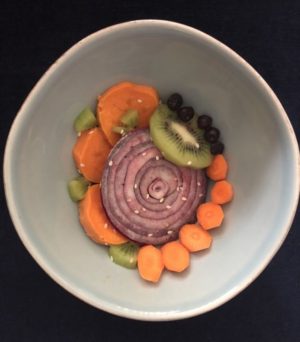
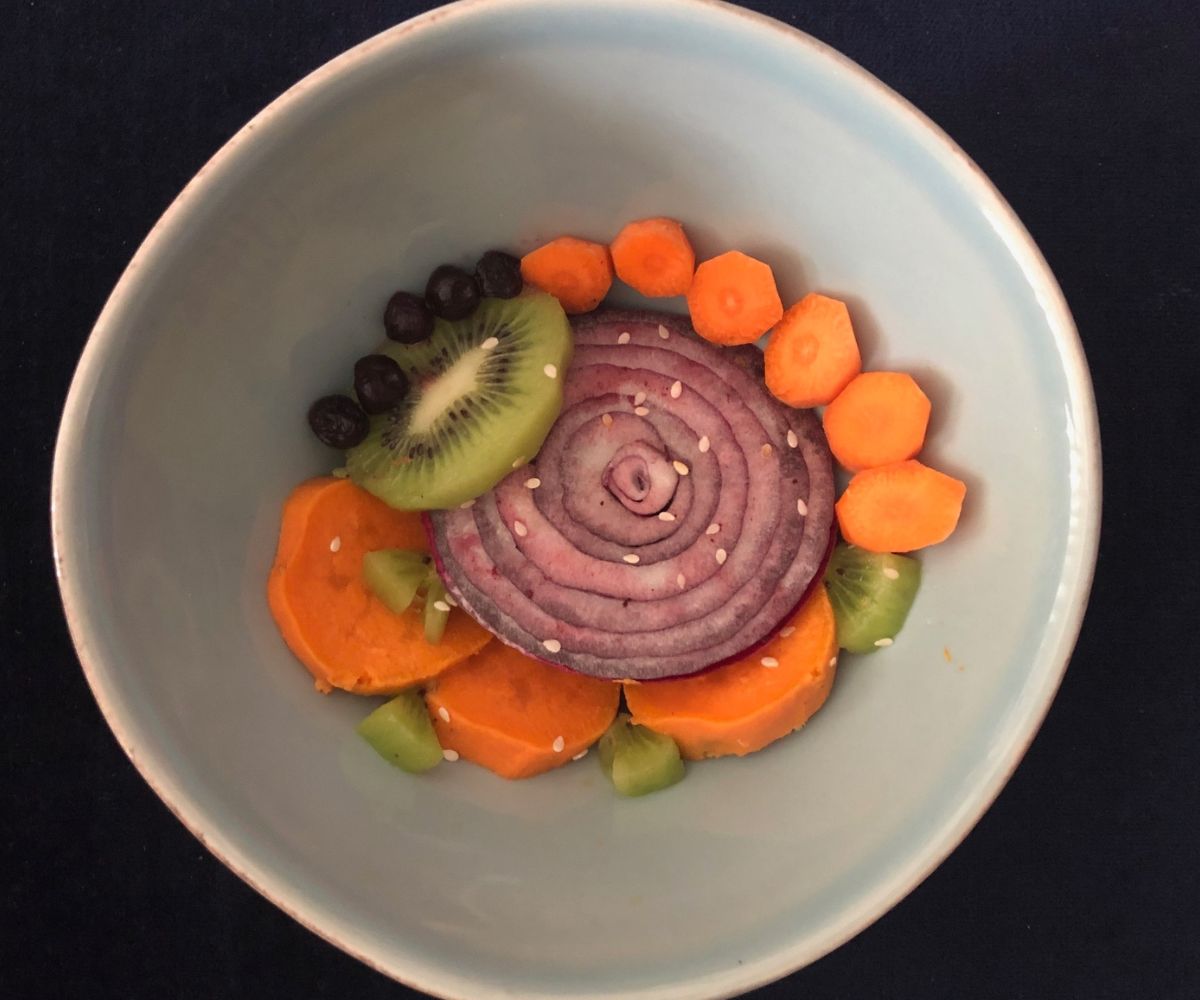
Anti inflammatory food ideas in carrot, red onion, kiwi, blueberry colorful polyphenol food artwork. 

One of my favorite happy and healthy topics is probably no surprise to you, it’s food… and coming up with food ideas to eat. And for a low-sugar but sweet treat with anti-inflammatory benefits, see the Chai Cookies below. 🥠

And I’ve probably talked about anti-inflammatory food ideas even more times, and this anti-inflammatory food guide for grocery shopping and easy meal planning ideas.

…And so to spice up your healthy food knowledge, here are 5 Trivia Questions for you.

The answers are at the bottom… but I have a hunch that you may know the answer to one or more of them, and will definitely by the time you finish reading to the end. 😉

…So here we go with the 5 questions!

What is the difference between an herb and a spice?

Which 4 vitamins are fat-soluble?

Where is gluten found in wheat?

Besides wheat, what are 1-2 starchy CROP foods we could eat? (Hint: Grown and raised in big fields)

AND…

What food category does pumpkin fall in?

I had to add that last tricky trivia question in there because pumpkin is all the rage in taste these days. It seems earlier and earlier each year.

I’m still pouring coconut flavors into my beverages as it’s too hot for pumping pumpkin for me just yet… and maybe you too where you are?

In all healthy fairness though, pumpkin puree we often add to our dishes and bakes, is a nutrient-dense anti-inflammatory food loaded with fiber prebiotics good for gut health.

The downside: it has a high/fair GI rating so it can raise blood sugar spikes but still good for an anti inflammatory meal plan idea.

And so, you’ve probably heard of nutrient-dense foods at the core of anti inflammatory food which means they’re packed with nutrients compared to calories. And they have few ingredients. Often they’re whole foods like fruits.

They’re preventative protectors to help fight inflammation that’s recurring, ongoing, or chronic inflammation. Inflammatory properties often have at least one of these symptoms: redness or irritation, heat, swelling, or pain.

Those are earlier signs that can lead to certain chronic diseases such as heart disease, Diabetes 2,  certain cancers, and cognitive decline diseases. So one way to handle is to reduce inflammation occurrences with a healthy lifestyle and healthy eating.

And you’ve probably heard of polyphenols that are nutrients in plants and the orange color in pumpkin gives away its healthy advantage rich in beta carotene that’s converted into Vitamin A in the body as needed, so you can think of them as one and the same 🎃

Polyphenols protect the plant, but we get the benefit as an antioxidant (to help protect against disease) in vegetables, fruits, grains, beans, nuts, tofu, and our plant-based diet. These are also good for weight loss meal plans.

There are 13 essential vitamins our bodies can’t make on their own. We get them through food or supplements. They’re critical for key functions like immunity, metabolism, and digestion that help us lose weight and maintain healthy weight.

These are essential nutrients on the anti inflammatory diet and anti inflammatory food ideaas for your food plans.

Vitamins A, C, E

These 3 essential vitamins fight inflammation or swelling. These are important antioxidants that fight cell-free radicals, to help protect against cancer. And you already know one way (eat more 100% pumpkins!).

Since Vitamins A and E are fat-soluble, it’s good to pair healthy fat in your body with them. Like sweet potatoes with walnuts or a drizzle of olive oil that’s common in a mediterranean diet… or how about a healthy bake like carrot coconut oil cake? 😋 That’s one of my anti inflammatory recipes.

Foods like avocados and almonds are rich in Vitamin E and (monounsaturated) healthy fats, so that’s why you probably see these superfoods in the healthy news headlines everywhere you turn.

Vitamin C is easy to find in fruits, but it’s water soluble (I think of it like going down a water slide out of your body). And so, you can take more and that’s why I take a daily supplement, in addition to eating from the rainbow Vit C foods.

Vitamins B

Daily, we need our B vitamins. All 8 are essential like those listed in a B-complex vitamin, and they work in synergy with each other.

Vitamins A, E, D, K are also essential and are the fat-soluble vitamins. Sometimes you naturally take advantage of this. Like when you use EVOO to cook your salmon.

But being more intentional, you can find other opportunities like:

Carrots with hummus made with EVOO.

Spinach with walnuts.

Or an avocado green smoothie with a plant-based milk.

And, here are some of my fave good anti-inflammatory food ideas:

One morning snack I enjoy is celery with almond butter that has protein and fiber. Or natural peanut butter paired with a Granny Smith apple, sliced up bananas, or in good old-fashioned PBJ (or favorite seeded jam) toast.

Another good starter is watermelon with EVOO and mint. If you have a headache, the first thing I do is drink water that’s always good for hydrating your system. And mint is good for the aches.

In fruits and veggies, the different polyphenol-phytochemical pigments are healthy antioxidants. Here are some food examples and how you can eat from the rainbow 🌈:

Red

Red Apples – If you like crisp, Fuji or Gala varieties are easy to find. Or a traditional Red Delicious that’s a softer apple and tends to bruise easier.

Tomatoes – if you find a tomato medley, they all have differing degrees of sweetness, like a green tomato is less sweet. Yellow tomatoes are less acidic and taste sweeter than a red cherry tomato. And a plum tomato usually found in an Italian dish has a deep red or red-orange color different than a slightly sour grape tomato for a Greek salad.

Both overall, tomatoes and avocados aren’t as sweet compared to other fruits. They’re botanical fruits, but we think of them as veggies in our dishes. They actually come from the flowers of plants.

Squashes are considered fruits, and pumpkin popular in September and October is considered a squash. So a pumpkin is a fruit (and that answers that trivia question).

Orange

Carrots – are underrated I think. A bag of carrots is always good to have on hand and are usually abundant year-round. You can eat them as snacks, or cook them slightly soft for better nutritional benefits.

Or you can julienne them or puree them for your carrot cake and breads. If carrots get too dry left out, you can simply add them to a bowl of water to revive them. They’re a lot like us even though their roots are different! 🥕

Oranges – are seasonal even though we see them sometimes year-round. They’re more abundant in the cold winter months like November – January in the U.S.

But, nothing is guaranteed for any food, and you may have found oranges harder to find as there has been a crop shortage, as of 2021. You can find mandarin oranges or small clementines more easily. They’re less acidic and easier to peel if you want to find their good sides.

Yellow

One of the most practical fruits we have around is a banana. Green bananas have a lower GI (glycemic index) than ripe bananas. That makes sense as they’re not as sweet. I like to eat green bananas and use the ripe ones for baking or a smoothie. If you shop around, you’ll know where to get the greenest ones in your town.

Green 

Avocado – already mentioned as a superfood, besides on toast, you can make a smoothie or a mousse dessert. You can add on top of any salad. And since they don’t last long after you cut into them, you can easily make an easy guacamole dip. 🥑

Spinach – spinach is a powerful vitamin-rich food and Popeye learned this when got his strength guzzling spinach down.

But for us ordinary characters, we can get bored with the bland spinach taste in a salad. So, I have many anti-inflammatory food ideas:

One idea is to wilt with a little liquid and heat, and then add to your plate slightly cooked to keep the nutrients intact. You’ll find you can add a lot more spinach once it’s tamed down with water and heat

It’s the difference between when your hair is just blown out shiny straight, compared to a wild frizzy humid hair day. 😄

And… when you have a big bag of spinach that can last a couple of weeks in the fridge, but by then is not as fresh… here are some FRESH spinach ideas:

Smoothie: Spinach, pineapple, Granny Smith apple, and nut or plant-based milk. The tart and sweet complements the green smoothie goodness. Add your powders and seeds all day! And you can substitute with kale.

Spinach con queso dip

On medium stove heat, you can wilt the spinach with warming milk, and then add cheese to melt, while stirring. And you can sprinkle baked kale chips on top for extra anti-inflammatory food ideas.

Tortilla with melted cheese spinach (Quesadila)

Bake tortilla. I like low and slow (200°F for an hour) so they don’t burn, and then add shredded or cut-up cheese that’ll be quick to melt in the oven. Add your fresh microgreens or herbs on top AFTER you bake.

I like to add allium-healthy flavors like red or green onions. And tri-color bell peppers for a mouth fiesta 🎉. And a bean spread (with EVOO smashed   pinto or cannellini beans).

That is a super anti-inflammatory food idea and you may have heard that beans are the vitamins that Blue Zone Centenarians take. 🫘

Maybe spinach ain’t so bland after all!?

And one food that hasn’t been mentioned yet is fatty fish oils found in fish. Good healthy eating ones are small fish like sardines or wild fish like wild salmon. They would be good to add to any meal planns.

Blue

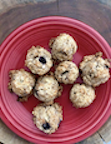
Blueberries – bake well into morning bars, balls, or scones.

blueberry muffin bites.

Blueberries also great for smoothies, and jams. And if you’re not a fan or allergic, you could do the other common berries like strawberries or raspberries, or the newer popular berries like elderberries or red lingonberries. I think it’s interesting that we haven’t even come close to identifying all the berries around the world!

Purple/Black

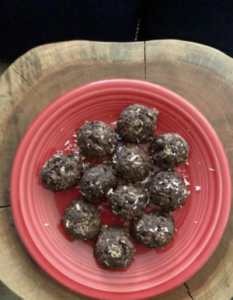
Black beans – I like to bake black bean brownies or energy balls that makes these longevity bakes. You can add espresso on top of the cocoa to give some deeper flavors. Or you can make a cool beans soup. 😋

…Now that’s thinking like a Centenarian! These are worth adding to your anti-inflammatory food ideas.

black bean high cocoa energy bites are good anti-inflammatory food ideas.

Red Onions – On the outside, they’re s dark purple hue and inside they’re white. They are pretty and healthy.

Onions, carrots, blueberries, and kiwi are examples of superfoods and anti-inflammatory food ideas.

Onion rings – And you can easily make healthy baked onion rings. Cut rings (parallel to the top of the onion like the latitudinal equator lines if you could imagine it like a globe). Then dip into a whisked egg, then flour, and then Panko bread crumbs. And then bake. So easy and impressive for a snack!

White/Brown

Mushrooms – these are fascinating as they have so many benefits to the earth and our immunity. The earth needs us and we need the food on the earth.

And adaptogens like mushrooms help with our stress and anxiety. And they have become a whole new taste revolution. Umami – oh, mommy!

Cauliflower – they are a good source of Vitamin C and low in calories for healthy weight loss. You can bake them into your pizza crust or eat my favorite ways, as Crudite. That’s raw on a veggie plate we always had when I worked in hotel catering.

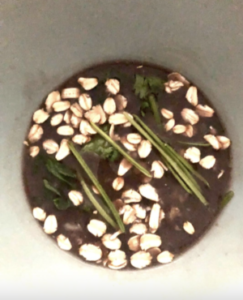
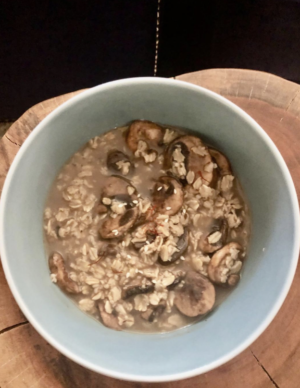
mushroom porridge or oatmeal are fantastic anti-inflammatory food ideas

Breakfast Mushroom Oats Porridge

What’s not to love? 

For plant based breakfasts, there are many anti-inflammatory food ideas worth keeping:

Breakfast Quinoa – as a pseudo grain and naturally gluten-free, this is my go-to cereal. Quinoa takes a little bit of cooking time like rice, but you can batch cook in advance so it’s cool and ready for the next few mornings.

Lunch/Dinner Quinoa – It’s also versatile for your savory lunch meals and dinner salads. My favorite combo is chickpeas and quinoa with a coarser Celtic sea salt.

Warm Oats – this is definitely a morning staple. I like to eat warm with fresh fruit but that’s about Vata-me… and what about you? 

Cold Oats – You can also do Overnight Oats and just pull your cup or glass out of the fridge in the morning. Add your chia seeds, berries, yogurt, and bananas for a Pitta perfect parfait. 😊

Almonds – these are great snacks. And unlike a chip, it’s good to eat more than one. They have the healthy fat, but also vitamins, minerals, and protein.

Extra Virgin Olive Oil or EVOO

Besides cooking, EVOO is good for baking, dips, and on toast for some other anti-inflammatory food ideas.

Spelt and sprouted grains come from whole grains and have high levels of vitamins and minerals. They’re easier to digest with a lower GI (but not to be confused with gluten-free!). You can get GF versions, but those are wholesome wheat grains.

And that’s a good idea and thought to leave it on! I hope this helps you on your food healthy lifestyle!

…Oh, and here are the answer to the 5 TRIVIA questions above (that I copied here):

What is the difference between an herb and a spice?

Which 4 vitamins are fat-soluble?

Where is gluten found in wheat?

Besides wheat, what are some other starchy crop healthy foods we could eat?

What food category is pumpkin in?

Trivia Question Answers:

1.An herb comes from the leaves of plants, and spices from the other parts (flowers, fruits, seeds, roots).

2.Vitamins D,E,A,K

3.Gluten is found in the starchy endosperm in the middle layer of the wheat cereal grain. The seed is deep inside and the bran is the outside of the grain.

4.Corn, rice, and millet are a few. Millet is more popular for humans to eat outside the U.S. but you can find it if you look around.

5.Pumpkin is a squash, and squashes are fruit. So, a pumpkin is technically a fruit. You may never look at pumpkins the same, and at Thanksgiving when you think you need a fruit pie on the table.

And that’s a wrap!

For healthy recipes you can check out this one especially if you have a sweet tooth and want to avoid the inflammatory sugar.

Print Recipe

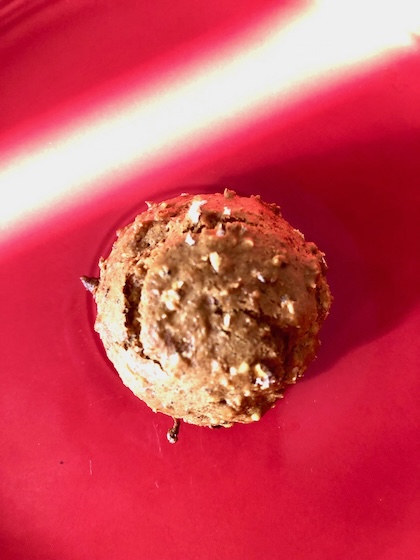
chai cookie.
Print

Low-Sugar Easy Chai Cookies

These delicious and simple-to-make chai bombs are loaded with antioxidants.
Course desserts
Cuisine American, Indian
Author Brandy @ Healthy Happy Life Secrets

Ingredients

  • 1 tsp all spice (cloves)
  • 1 tsp Ceylon cinnamon (add more with preference
  • 1 tsp chai tea bag, grinds
  • 1 tbsp molasses (or honey)
  • 2 tbsp coconut oil, solid form
  • 1/3 cup coconut flour
  • 1 tsp cardamom

Instructions

  • The secret to these delicious cookies is to mix the ingredient dough and refrigerate for several days so the flavors have a chance to penetrate. Then scoop into balls and bake as you would cookies.

Moisturize Tips – for Eczema Dry Skin

Moisturize if your skin is dry may be what’s needed for you in these climate changing times. And if you’re experiencing eczema skin or other dryness signs, you’ll want to drench yourself and let these tips soak in like I did when I first discovered an eczema flair-up due to global warming…

moisturize self-care will revive your eczema dry skin.

And if that’s you, you’ve come to the right place for moisturize tips…

With global warming and climate change (plus global cooling) on the reality fast rise, the outdoor dry air is becoming more dry, and this plays extra havoc on our affected bodies… down to the hypodermis and skin cells level.

In awareness, you can proactively moisturize (more), make healthy changes (10 tips below to check off), and not be blind-sided by your body’s need to adjust naturally.

You may find yourself needing more products as I did… and I ended up in the hospital emergency room because of a dry foot. Can you imagine!?

But I found I needed more than moisturizers and products with hyaluronic acid for soothing parched skin.

It was like a body heat rash sun burn, but was eczema.

I felt good drinking more water and eating 90% water fruits like melons which wasn’t enough, but it was a start.

And a watermelon sorbet helps as hydrating and cooling that can help restore your body temperature.

But if you feel like you’re drinking water like a camel and keep moisturizing like it’s already winter (and you’re still dry), there’s nothing wrong with you…

Climate change can affect sensitive skin with symptoms you may never have had before.

For me, I had good skin and there was no need to moisturize certain body parts regularly up until a few years ago when I learned about eczema as a diagnosis.

Eczema complicated my situation where I ended up in a hospital emergency room.

One good daily check is your home thermostat.

Another is your body thermostat. This will feel different despite our 98°F/36°C human bodies.

If you’re Pitta imbalanced, your natural heat will be increased and get really bad like it did for me one season where I needed body balance intervention.

One of the first places to transition is testing the shower water temperatures you’re using based on outdoor temperatures and your body (balanced or imbalanced).

If it’s hot outside or you feel hot, getting used to the cooler shower water temperatures will do your body good.

You can start on cool and end on cool water temps if you’re high in Pitta or it’s summer.

Scalding hot will always be harsh on the skin even if you’re leaning into Vata and Kapha preferences that like the nourishing and comforting heat. And yes… feeling more anxiety or clingy in any way are related.

For Vata and Kaphas, you may already be on the cooler side, so a little warmer to start and end is good.

You can use Ayurvedic small changes to help change your previous habits.

That’s one way of how knowing what your Ayurvedic body imbalances are now that can help you.

And you can restore them without intervention.

Self-care and prioritizing our prized bodies above our stuff keep us running optimally through the seasons.

And just like you change out your clothes from summer to autumn and winter, you want to change your routines and habits for your changing body.

Our skin, as our largest organ, acts as a barrier to our internal body organs we can’t see.

Your skin is constantly changing, and renewing and a great place to start.

Retinol (that I learned as the stronger Retin-A from youth) can help that process along if a little doesn’t irritate your skin too much.

10 Moisturize Self-Care Tips:

FOR SKIN AND SPECIFIC BODY PARTS

At the bare minimum, take care of the entry points on your body.

1) Eyes: Your eyes aren’t just the window to your soul, they are the gateway to how you see the world. And if you have dry eyes, that’s one fuzzy world!

Adding eye drops helps (and especially if you’re on your digital devices more than ever).

Blue light blocking UVB glasses are necessary as you never know when you’ll be walking in the strong sun and don’t want to end up with cataracts or eye diseases that’s a reality for aging people. I learned that from my mom.

As a society, we can seem to care more about what fashionable pair of specs we’re wearing and forget about our precious eyes.

Needing to moisturize our eyes when we wake up lets us know we’ve slept that swimming fish don’t need (not even the smart Dr. Seuss Goldfish ones 😉).

That could be a habit stack for us along with nasal saline drops (another main entrance into the body).

The Neti pot is a nasal cleansing habit I do weekly and when kept up with is effective to prevent nasty sinus infections.

2) Lips: Daily real self-care things can seem small (and sometimes inconvenient or annoying) but you’re naturally given your refined parts like tender soft lips so you can chew with your mouth closed (unlike a cute monkey-ape that happily spits out food in its company).

At home, I like to bring in outdoor local wonderment by using organic honey, a household-must in more ways than one.

One way you may not have thought about is using honey to moisturize dry lips. It’s better than Vaseline because it’s edible.

Glossy raw honey works better than a honey lip balm, especially if you’re about to eat or drink.

…Plus you get a ‘lil sweet taste in that’s always a plus for a sweet tooth 😉

Honey lips stay supple because the natural humectant locks in the moisture.

And even helps for little salty cuts on the sides of your lips in between the top and bottom lip, if that happens to you like it does for me.

Honey is also antibacterial. The B.C. Egyptians are credited for discovering honey as a secret medicinal ingredient.

They lived like the Kardashians and Queen bees.

Honey back then meant luxury. I wonder if the Queen Bee would’ve adapted to today’s changing climate.

We still know that nature provides the best sources and resources where natural solutions can be the best answers to our problems.

…And this is why our natural bodies intuitively know what we need (and that I’m super passionate about in Ayurveda).

Our bodies are connection points to our mind and spirit that make us above other mammals.

For honey, depending on your need, you can find a local raw honey source in your area or you use a good standby like Manuka honey (native to Australia/New Zealand) that has become the gold standard and is pricier.

If you buy processed honey fillers, those aren’t the same.

The sugar honey bear shows his age as he crystallizes. and is not one you want to add to your medicinal cabinet, as cute and wallet-friendly as a honey celebrity that he is. 🍯

3) Whole-body moisturize (before and) after showering for prevention.

If your skin feels raisin dry, steaming in the warm shower helps.

If right after exiting the shower, you moisturize right away, you can seal in the moisture on certain dry parts with a product like Vaseline lotion that has petrolatum (it’s like adding a protective wax or protective coat).

The rose pink Vaseline version is good for heated Pitta moments.

And then add your favorite lotion if you’re still feeling dry skin. That’s a good habit to get into.

We all have different skin so I mention a few good ingredients here that you can see what works for you…

In the evening, you can mix it up with shea butter, coconut or avocado oil, or Ceramide 3 lotions.

You may even want to moisturize a few times each day if you are super dry.

That’s what I do, as needed.

I use different unscented or fragrance-free moisturizers that don’t have harmful phthalates.

Phtalates are the skin ingredients that you want to avoid where you don’t see immediate effects to health.

I also keep natural, great citrusy scented hand creams close by.

Mixing it up (biodiversity) helps your body to adapt better to changing body and climate situations in the your environment.

When in doubt or confused of what to select… don’t let all the hoopla of different ingredients overwhelm you, but focus on 3 main things… moisturize, moisturize, and moisturize!

But if more severe and you need to soothe itchy skin inflammations, look for ingredients like aloe, colloidal oatmeal, vitamins C and E, and healthy oils (coconut, carrot seed, olive oils… if you can eat it, then you know it’s skin-safe and good food moisturizing ideas).

Don’t forget honey too… it’s sticky good!

For dryness around your scalp, you can try coconut oil and other moisturizers that you’re not allergic to.

The scalp isn’t as delicate as the face where you want to avoid oils.

Try to leave in after your shower (or let soak in before you shower). We’re so quick to get cleaned off from the greasiness, but that’s sheer bathing luxury for your skin.

4) Salve and sesame oil: for dryness on and around nails and cuticles. You want to let your nails breathe (if you usually have them polished or wear artificial nails).

Cooler weather is a good time to let your nails go au naturel for in between breathing days.

That also gives you a break from year-round time consuming and costly nail maintenance… that can be a huge breath of fresh air!

moisturize
This is a moist salve (good for dry cuticles) and dry lips, essential oil spray for pillow or yoga mats, and moist lip balm almost as good as honey… PLUS a nice quote!

5) Shea Butter: For rough sandpaper hands or feet, an emollient-softening lotion with shea butter can feel rich and good.

Hands and feet tend to be the first places that can get very dry so take extra mani-pedi self-care measures.

Keep lotion by your computer, desk, and body so you can use throughout the day as needed or when you remember (and see it).

6) Aloe: Is another great skin quencher and is not fussy or sticky.

It’s naturally clear color like water (not the Kermit frog green dye color you may have  seen that sells better).

And pure aloe is water to your skin. I never used to use aloe regularly. I only used it to quickly heal skin burns from kitchen heat accidents.

But now it’s a great non-greasy moistener for in-between moisturizing with lotions.

It’s like a sip of water to your skin, that is better than nothing when your skin is parched… it’s like drinking water on your skin, and it can tie-you over until you get a full moisturizer on.

It has saved me many times in the dry summer!

FOOD AND DRINKS

7) Water and Coconut water: Is super hydrating from the natural Super Fruit.

VitaCoco water is hydrolyzing, and can help if you’re not sugar-sensitive.

If you are, there’s nothing more pure than plain water.

Natural water like Voss and Fiji water are treats but skipping the cases of grocery plastic bottle filtered waters (stripped of minerals) are good ideas.

A replaceable Brita pitcher and filter or home water filter system from your fridge can work better for most daily water and is a better reusable water system.

To supplement water that can be boring, you can make smoothies and healthy beverages that have nutrients.

8) Substituting ingredients: Preventing inflammation caused by dryness helps to maintain a healthy balance in your body.

You can subtly do this with small replacements like fruit sugar over refined sugar, and a healthy fats list like EVOO, avocado, or coconut oil over poly fats (e.g. margarine, butter, vegetable oil, hydrogenated oils… and the stuff you and I grew up consuming).

9) Seasonal foods: Lean into what’s seasonally “in” by shopping at the local farmers markets or in the abundant seasonal bins in grocery stores.

You can often tell when there’s an abundance because the organic choice is also abundant.

You can see a variety of abundance from a distance in its bright colors and up close with unique PLU small stickers.

When I did party planning in Mediterranean cuisine restaurants, the menus were always seasonal, based on the available foods priced reasonably.

…So you wouldn’t see watermelon-inspired recipes in the winter and pumpkin or pomegranate dishes in the spring.

10) Spices: are a great way to balance food seasonality and keep your food and dishes interesting year-round with reliable seasonings.

Isn’t spice the variety of life!? …in my world, anyway, it is (and hopefully in yours!).

Oregano is healthy and one of my first favorites which goes well with red sauces and Italian dishes.

Then as spices evolved in the Western world, turmeric became a star.

Don’t let the turmeric drying and astringent texture to your tongue fool you into believing it’s drying you out. It’s body healing (and where you can get a glimpse of balancing wholeness through food).

Cumin is also great for soothing.

Plus, these spices are anti-inflammatory and good to eat for dry, irritated skin.

Until next time, take good self care! …And if you want to learn how to restore annoying imbalances (dry-related or something else), you can take my body balance quiz.

Or if you’re wanting a moist with coconut oil sweet treat, you’ll love this low-sugar easy and healthy chocolate banana bread recipe.  🍫🍌🍞

Spaghetti Squash – Anti-Inflammatory Food Dish

Spaghetti squash is an anti-inflammatory food. And if you’re trying to stay away from gluten or inflammatory foods for healthy eating, then squashes fit the bill. Spaghetti squash can even take the place of spaghetti carbs.

Spaghetti squash is a good gluten-free and allergy bowl substitute.
Make this spaghetti squash bowl easy from the recipe steps below 🍝

It also has more fiber. And you can count on A, B, and C vitamins.

Both vitamins A and C are antioxidants that help to protect against chronic diseases that can develop from chronic inflammation.

And your allergies and eczema skin symptoms can be telltale. It doesn’t always have to be an internal diagnosis as inflammatory warning signs.

I learned this firsthand when I experienced adult eczema in a nightmarish way during the world pandemic. It was a 3 month saga I’d love to forget. But then ended up in the hospital emergency room a year later for a related episode that had to do with food eating habits.

Before then, I knew common allergy foods from the outside as I planned parties and food menus working with thousands of groups with known food allergies and gluten sensitivities.

Gluten flour was a red flag for the chef foods prepared and I’d add a special label to food items on food tables that were gluten-free

For my preventing eczema better food habits, white flour and white table sugar are ingredients I try to use less of in my recipes and low-sugar desserts. That seems to do the trick (along with skin moisturizing often)!

Gluten free flours is more healthy.
Choosing gluten free flours for pasta is more healthy for most people and those with allergies.

Because white table sugar is a primary inflammatory food source. It raises blood sugar.

That’s probably no surprise as too much sugar can make your skin crawl (itch) and no research (other than asking your sweet taste buds 😋) has sanely suggested that sugar is good for you.

But that’s hard news to swallow when you’re a sweet tooth (and a Vata body like me).

But I’m happy to say that even though I love baking (and do it weekly), I’ve learned how to bake healthy and keep eczema at bay. And yes make bakes that are sweet tooth satisfying (otherwise why bother?).

…Boring rice crackers are not my cup of tea. I’m looking for the sweet childhood desserts I remember that leave no inflammatory memory.

Because I’m a foodie…

And when I started in catering management for upscale hotel chains, there was only a vegetarian menu option outside of what others ate.

Then common requests grew like “hold the onions” and “hold the garlic.”

And peanut and nut allergies cropped up.

When I dug deeper into creating menus for food allergy group requests, we found that guests who had some peanut allergies could sometimes eat tree nuts like pine nuts.

They even reported back they liked certain dishes with them.

And shellfish can be another tricky allergy area, but gratefully I didn’t work much with those foods.

An affected person who has even a trace of the shellfish can experience a life threatening allergic reaction called anaphylaxis shock. Like gluten to Celiac disease people, it can be a real issue.

Your body gives different health conditions signs as warning. But a warning is a warning..

And in my trial-and-error food tasting experiences, I learned eczema was dramatically reduced with low daily refined sugar intake and reducing processed white flours.

Honey and gluten-free flours seem fine.

So substituting food ingredients became my way. And I remembered spaghetti squash from my catering days.

Plus, adding more anti-inflammatory eat-from-the-rainbow foods including vegetables, whole fruits, lean healthy proteins, healthy fats and whole grains.

All grains like flours are not created equal. How they are prepared and the details of their ingredient profiles change their effect.

A frequently asked question is: what foods are high in gluten?

The answer: whole grains are healthy. They’re also guilty. 

Wheat, barley, and rye are the sources.

Being smart about healthier low-glycemic index starchy carbs and nutrient-dense foods pays off.

Also corn, oats, and quinoa (pseudo-grain) meals are good ideas since they are naturally gluten-free.

Corn is actually the largest agricultural crop produced in the United States.

But what spikes the blood sugar of one person is different for another person in our biodiversity.

Testing food and exposing yourself to a variety of healthy foods helps the body function as you get more vitamins, minerals, and anti-inflammatory nutrition.

Adding more organic plant-based 🌱 in nature when possible, and less plant based (factory) foods 🏭 help your entire body system run better.

Every little bit of our effort counts…

And adding more healthy food variety, and nutrient-dense plant-forward foods is a double-win, scoring points for our bodies and our earth. 🌍

Small switches can be as easy as exchanging pasta made from flour for a spaghetti squash bowl (steps below).

Also, focus on anti-inflammatory foods and include a Mediterranean Diet or Mediterranean-style diet. Many of the foods are found in both diets. Like spaghetti squash would be acceptable on both diets.

Changing your habits like a regular sweet one for a plant-based breakfast is doable. I’m living proof. 😊

And I take another page from my catering days where Crudite was a platter offered at almost every event.

That’s basically raw veggies like cauliflower, carrots, broccoli, and asparagus.

Those are good sources of fiber that your body needs to better absorb foods.

We often forget about the fiber as we’ve been primed to think of the macros (protein, carbs, and fat).

Instead of sodas, I opt for a healthy beverage or smoothie that is made from foods with high fiber.

That could be your start. And you can look forward to your baked in gourd spaghetti squash.

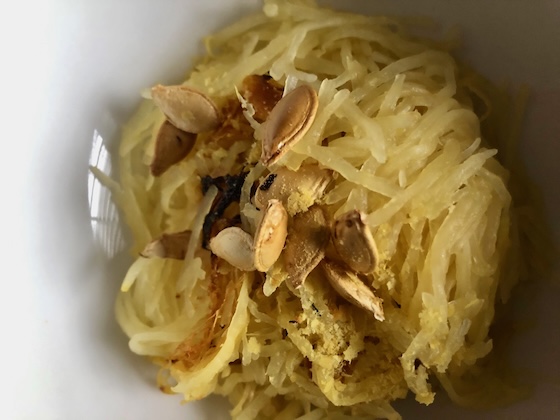
spaghetti squash dish.
Print

Spaghetti Squash (Gluten-Free) and Roasted Seeds

I discovered spaghetti squash as a meal substitute when vegetarians requested special meals when I was working in hotel catering planning. It's an easy anti-inflammatory food bowl or dish to prepare.
Course dinner, lunch
Cuisine American
Total Time 1 hour 10 minutes
Author Brandy @ Healthy Happy Life Secrets

Equipment

  • Bread knife or safer sawing knife.
  • Spoon

Ingredients

  • spaghetti squash gourd
  • extra virgin olive oil (EVOO)

Instructions

  • Score the gourd lengthwise. do not try to cut the hard gourd raw 
  • Bake your spaghetti squash for about 20 minutes at 350°F or so. Then softened, you can cut where you scored. Tip: for the ends (like on pumpkins, take the firmly planted inside squash knife and twist to the right at the top and then at the bottom of the squash and that should do the trick break it open fully into two halves)
  • Face the two halves down on a baking sheet. You can add a ‘lil EVOO if you like.
  • Bake for 50 minutes or until you can scoop out strands easily with a spoon. You can test with a fork if you like. About half way through, when you see browning, flip the halves so they're facing up, and add a 'lil more EVOO drizzle.
  • Optional: keep the healthy seeds and enjoy them as snacks! Roast them along when you're baking the squash.