UA-141369524-4

Low Sodium Healthy Soup Recipes

Low sodium healthy soup is easy when you make your own!  

I have 3 recipes below with carrots, mushrooms, and potatoes that you can make (with  low sodium and sea salt if you like).

Before 2020, I never made my own soups. And today, I only keep a backup can in my pantry.

low sodium healthy soup recipes

And you can too!… if that’s what you aspire to even if you don’t know how JUST YET.

But with delicious plant-based ingredients, you can make soup broths that you easily turn into clam chowder with a potato soup base.

You impress yourself and everyone you make the soup for!

After you learn to make homemade soups in simple steps, you’ll probably not go back to store soup cans as these have delicious natural flavors without all the sodium!

And you’re doing your body healthy good. And probably saving a few dollars if that matters.

And these are the 3 easy healthy soup recipes I’m sharing below:

1. Mushroom soup (with old-fashioned but not-out-of-style oats)

2. Carrot soup (with digestive-wonder root, ginger) 

3. Clam chowder (New England style that’s my personal favorite made from potato soup)

At this time, I’m involved in a Beta chef’s cooking healthy eating group collaboration with RDs that provides culinary teaching and recipe input to a healthy strategy program.

I love food, and my background includes working with thousands of party planning events (and started my career in hotel catering that you already know if you’ve been reading some of my previous blog posts).

I’d hardly consider myself a chef-ette, but I have always had an adult culinary arts interest. 🧑‍🍳

…after hotels, I left the hospitality industry and went into more traditional Corporate America work, and then came back to the hospitality working world doing  Mediterranean-cuisine (Lebanese, Spanish, and Italian) event planning for about a dozen foodie restaurants.

That’s really when my good food (gastronomy) tastes and senses were re-ignited and I had a chance to re-marry with my “food is medicine” approach to life.

And marry salt from two food worlds.

Salt Talk For Your Low Sodium Healthy Soup Making

For soups, I avoid iodized salt. I don’t usually add table salt (like the ones in the packets) unless that’s all that’s available and the food isn’t already salted.

I alway buy “unsalted” ingredients when given an option.

If you eat out or eat prepared foods from groceries and restaurants, then you probably get enough salt. And probably more than enough salt in our highly processed foods.

On a DASH diet, lowering sodium is the recommendation.

When I’m cooking, I use sea salt (non-iodized) for everything and everyday use.

And then I use coarser natural sea salts like Celtic sea salt (or Himalayan or fleur de sel) for preparing meats to be baked in the oven, and for certain cooked vegetables.

Celtic sea salt is great for your rubs and on top as a garnish (not so much in mixing). The crystals are larger so they don’t blend as great as smaller salt granules. And I also Himalayan sea salt for additional healthy minerals.

And the gastronomic person in me, says coarser salt is absolutely necessary for the right flavor and texture on veggies like Brussel sprouts and edamame if you want a culinary meal experience (and not a bland one). Salt is as important as the veggie itself.

You can get away without using salt on certain veggies like broccoli or okra that hold their own tastes. If you add them to soups, the salt is usually already added.

So here are the 3 easy healthy soups that’ll help you with your salt cravings…

Easy Healthy Soup Recipes

Easy Low Sodium Healthy Soup #1: Mushroom Oat Soup

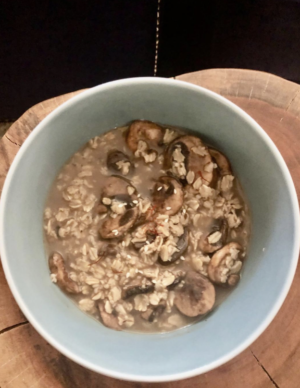
Cook mushrooms in a pot of covering water until soft, and add slow-cook oats. Mushrooms are immune-boosting and are alkaline. Cook until mushrooms are soft.

If you want, add a drizzle of cooking sherry, truffle oil, and saffron to get culinary fancy and balance umami tastes.

For more umami, add a dash of white pepper.

mushroom soup

Low Sodium Healthy Soup #2: Carrot Ginger Soup

Print Recipe
carrot ginger soup recipe.
Print

Carrot Ginger Soup

Course Soup
Cuisine American
Author Brandy @ Healthy Happy Life Secrets

Ingredients

  • cooked carrots
  • ginger juice
  • ginger spice
  • ginger, chopped
  • sunflower seeds (optional)
  • dried parsley (optional)
  • cumin and Old Bay (optional)

Instructions

  • Cook carrots on medium heat. When soft, mash carrots. For smooth and easy-to-make soup, sdd to your Magic Bullet or blender and pulse a few times until it's to your smooth texture liking.
  • Add ginger spiced and chopped ginger bits (if you prefer for a more pungent bite good for Kapha). You can also use ginger juice for less chunks, and spices.
  • Zhugh with sunflower seeds and dried parsley if desired.

Cook carrots in water until soft, then mash and grate or squeeze ginger juices in the soup. You can finish off with alt-milk for a creamy-effect or  just leave as is. That’s probably the way a.k.a. without ginger I would’ve preferred as a child 🧒🏻).

healthy soup recipes

Easy Potato Soup or New England Clam Chowder

This low sodium healthy soup is easier to make than you may think! You can make delicious chowder from a simple potato soup base.

Peel and cook common Russet potatoes in a pot with water. You would do the same step if you were making mashed potatoes.

Then decide if you want a creamy soup. And if you do, pour out some of the water and then mash potatoes in the same stovetop pot.  Still with the stove heat on, add in your ready-to-eat clams (3 large potatoes to about 5 ounces of clams you can cook or use a can).

I like to zhugh up with aromatic herbs, either fresh or with ground herb spices like cilantro, parsley, oregano, and/or basil.

If you’re not sure if you should add any herbs into your soup (if you’re feeding others), then parsley and thyme spices are less strong (more universally likable) and can be added in of left to individual tastes.

potato healthy soup recipes
Potato base soup

If you’re looking for a few easy-to-make snack ideas to go along with your healthy soup recipes or just to eat on their own, you can try…

Baked kale chips…

Or, homemade baked crackers – zesty za’atar crackers…

Or, popcorn…

Another different twist and take on changing up tastes, is this idea… instead of adding salt, you could add a ‘lil vinegar to your potato snacks and soup.

I like to add ACV vinegar but you could also try malt, red, or white vinegar…  they’re healthier and also give the food a bit of a tangy bite.

I like to also add my daily spices (turmeric, black or white pepper once in awhile). I skip needing any salt after all those changes 😉.

So hopefully you are soup-er excited to make your comfort homemade and easy healthy soup recipes, and maybe you even choose to change up a way that you snack.

Chocolate Oat Cookie – Star Cut Pattern To Share Big Cookie

Chocolate oat cookie with an orange center is one delicious cookie that can be shared in a star formation.

star design chocolate oat cookie to inspire your passion purpose that could be baking.

O-range you glad?

Below is the cookie pattern and tips to find your purpose from passion and in life’s patterns.

Because passion is a sign you’re on the way to your life’s work or purpose.

My food passion led me to these cookies I baked, and started out as a catering manager for a DoubleTree Hotel, as full circle. 🍪🍪

Star design chocolate oat cookie recipe below. 🍪

But I believe…

We all have a second act in us for a passion purpose in life. And that’s how I felt when I started to question the culture we live in and our individual purpose.

The longer you live and explore the full possibilities, you get to see and decide if you’ve been looking out from the wrong lens in some areas of your life, like a passion purpose in life. ✨

You can use the star cookie pattern as a guide or inspiration. 🍪

See the images below.

Print

Cookie Star Pattern

This is a cool kaleidoscope geometric star pattern you can add to any cakes, brownies, or soft cookie(s).
Author Brandy @ Healthy Happy Life Secrets

Equipment

  • pizza roller/cutter or knife

Instructions

  • Make 4 cuts to make 8 pie shaped wedges.
  • Within each wedge, make two parallel diagonal cuts (see photo).
  • Do this for each wedge until you're done. You will end up with a kaleidoscope star pattern that's tear-and-share fun and easy to eat.

You can walk into your passion purpose if you take strategic steps (and that’s what this blog post is all about).

I’ll start with my humble adult story…

I got married later in life (at least I thought).

I didn’t enter marriage in my twenties (something I recommend waiting on). Like most, I went through big changes from 25-30.

That’s pretty typical of getting your feet off the ground as a newer adult.

By 28, I kept getting the same answer back that I was changing and trading in my caterpillar feet for wings. I didn’t know what I didn’t know and my 180-degree career switch in high-tech data (from the hospitality business) was a metaphor.

I knew that if I wanted any semblance of a life outside work like my business college friends had, I needed to jump ship into different waters.

I had no idea how and had no real job connections other than the internet. There was no LinkedIn, lol.

But I knew that if I took the risk, then a new door could open. I believed whatever direction I was headed in would happen without yet knowing why. And it did.

I experienced what work-life balance was for the first time. I also got married.

And I had time for relationships and self-care. It didn’t take long for me to realize that I still had a past that I hadn’t addressed but was affecting the way I thought and acted, especially in my marriage.

At that time, I didn’t know childhood wounds existed into adulthood as PTSD.

I didn’t connect-the-dots to how events from decades ago could show up in my marriage. The brain is messy and complex like that.

It’s easy to stay unaware about the lens from which you see out into your life (and even these days in a more open and knowledge-aware society). And that affects your daily thought life and outcomes.

It’s a lot easier to be critical of others and notice how they behave that’s different than you.

And if you’re married, you’ve probably been tested, as marriage like no other relationship will make you go into deeper places you’ve never explored. You’ll meet each other’s ego.

Intimate bonding will highlight those insecure dormant spaces that need addressing like a UV blacklight spotlights stains.

A marriage relationship can make the partners want to fix everything that’s not how each would have done as a single person.

Marriage can be a tough bootcamp and why it’s such a great training ground for personal growth (and I’m all for it!).

And so is building a business from a passion purpose in life. Even though not everyone likes that kind of testing ground to move up.

And that described what I experienced. Then years later, I lost my work-balance job from a massive corporate layoff.

And my marriage came to a peaceful screeching-halt end suddenly. And the business foundations I started, crumbled.

I relocated back to where I grew up and started over with a more mature lens. These events eventually helped me to find my individual purpose.

It started with a blogging journey back in 2009 and then put aside for about a decade. That was my passion purpose in life then.

And one day, I started writing a funny lesson learned story from a hot tea kettle burn on my finger. I submitted for publication and have never stopped writing since.

Long story short, writing never left my veins. And in the messy middle (by design), I found the path leading to a passion purpose in life.

And this leads me to 3 ways I can share (from my journey) how you can walk into your passion purpose this season.

Start Over (Finding Your Passion Purpose In Life Could Depend On It):

Don’t be afraid to start over.

Be okay with the unknown as all of life if you think about it is uncertain. Taking gut and heartfelt risks is worth the chance!

If the timing is right, be brave, and don’t look back (at least not at your decision right away). You’re wisely guided internally.

It’s easy for any of us to wrap our identity in jobs and titles and rationalize why we can’t leave (they’re handcuffs whether they’re golden or not).

In my case, I grew up and worked in the most politically powerful and driven metro mover-and-shaker Washington DC culture, where people will run circles around you if you don’t pull over or speed up.

And I’m convinced it’s the area where the corporate rat race phrase came from 😂.

In my corporate work, I quickly learned that everyone working for someone is replaceable. And lessons learned yearsss later, that letting go of the fear of losing a job is so freeing and liberating. And not something to be scared of. It’s the ticket to your personal happiness and success.

When I was laid off after six years of success at a corporate job, I was literally in shock. I mean, one day your job existence is there, and then POOF!… the next day you wake up and it’s gone.

If you purposefully stay in the mindset of choosing to design your quality life, then you’re always nimble and heading towards your north star pointing passion purpose in life.

The uncertain journey isn’t prescriptive, all roses, or without doubt, but your creative purpose is in there and you can eventually do what you love and love doing (or else why pursue?) even if you’re not creative.

We all have a passion purpose in life. In This One Life.

Plus, in control of your own destiny, you will never be bored! Getting there may take some years, wrong turns, and grit (almost an inevitable formula for the best things in life!)… but it’s so rewarding and worth the effort.

…If you’re starting over, that’s a sign of growth into your purpose. New starts can be a deliberate choice, but often you’re blindsided with a job or relationship loss or change, health scare, or an unexpected move.

Anything can happen suddenly, even though it could be years in the making. You could become a 10-year overnight success (or land your dream job) with a new starting point or unintended re-route.

When there’s a fresh new beginning, your senses are heightened and you soak up more like a sponge. You feel life (and alive)!

The alternative is staying on the comfortable course. When life is busy, in the messy middle, that is when you can grow comfortable… until you’re not. Life doesn’t work the way it should. You feel stuck. And maybe discouraged.

Those are times you look deeper inside yourself and into what else you got in your bag o’ tricks. And you’ve got so much more than you know today!

You just have to start digging for your today passion purpose in life that can change tomorrow.

It’s actually more methodical (than scary) and sensible if you think about it… you only get this one life to do what you want with it.

Look at those on America’s Got Talent.

They’ve worked so hard for decades on their talent that they started from nothing but an idea and a dream. 💭

And they’ve failed forward plenty. But they didn’t give up.

…And they know each fall and fail is one step closer to success. And when they end up on the AGT stage, they never look back. And their big break success takes off.

Starting over may be just what you need to go to the next level in your unique part of this life.

After you meditate, think, or pray about it, and you get a form of A-ha confirmation that excites you and makes sense to you for that next step, then you and the shining Galactic Universe celebrate with a burst of fanfare (a new kind of Big Bang theory 🎉).

And when you go all in, they and all your support fans in your life will go to town to help you in your belief. You figure out your unique unstoppable path. And what you were destined to do.

So these are the steps I would recommend (and I did to find my self-taught writing passion):

Discover Your Hidden Talent(s):

Maybe you have started an interest years ago that you never fully saw into fruition, and now is your ripe time. Or you want to know what your hidden talent is if you have uncovered it…  you DO have one (and probably more than one).

That I’m certain of!

If you want to know what that is, then I encourage you to keep looking and more deeply as it’s there on the tea leaves and in between your yoga poses if that’s your jam.

You can also find it in your hobbies, interests, and activities you’ve dabbled in that excited you for a day or a season.

Those outlets and past times made you feel good, and maybe even felt a sigh-of-relief from life’s busyness and stressors.

We all find time to do the things we want and love, even if we’re SUPER busy. It doesn’t have to be just one interest, as it can be a category especially if you’re a Vata and like to multi-task…

Such as, when I was in corporate work, I’ve always had a side interest in scrapbooking, painting art, and creating (anything) where I got lost in my project…

The Great British Bakeoff is a great representation of passion purpose bakers.
This is my graphical representation of the show 🍰

And that’s what The Great British Bake-Off (or The Great British Baking Show in the U.S.) past and present contestants do. They have day jobs and baking is their side gig or hobby, so they are on the show happy to be there. It’s another outlet for them.

OK, I have to pause the serious reel here for just a minute ⏳… I was laughing so hard over the baking show comedy last week in the current episode series. Are you familiar with the show?

…If not, I’m gonna give you a 30-second program interrupt and let you in. 😊

The comedy is there in every episode (it’s not hard to find like your hidden talent can be, haha.)

…And there’s a funny sound bite clip from one show episode that I’m reminded of where the contestants are tasked with making baklava and phyllo dough during Pastry Week.

One of my favorite contestants from the season episodes, is Giuseppe who mentioned he had never made either before because it’s a hassle and easier to just go out and buy.

It’s funny on two levels because 1) with his lovely and classic Italian accent, it sounded like another English word to Matt (one of the tent sidekicks) he was talking to, and 2) because the challenge was for him to make the painfully hassle-filled baklava under 3 hours, and cut in a star design (pattern below 👇).

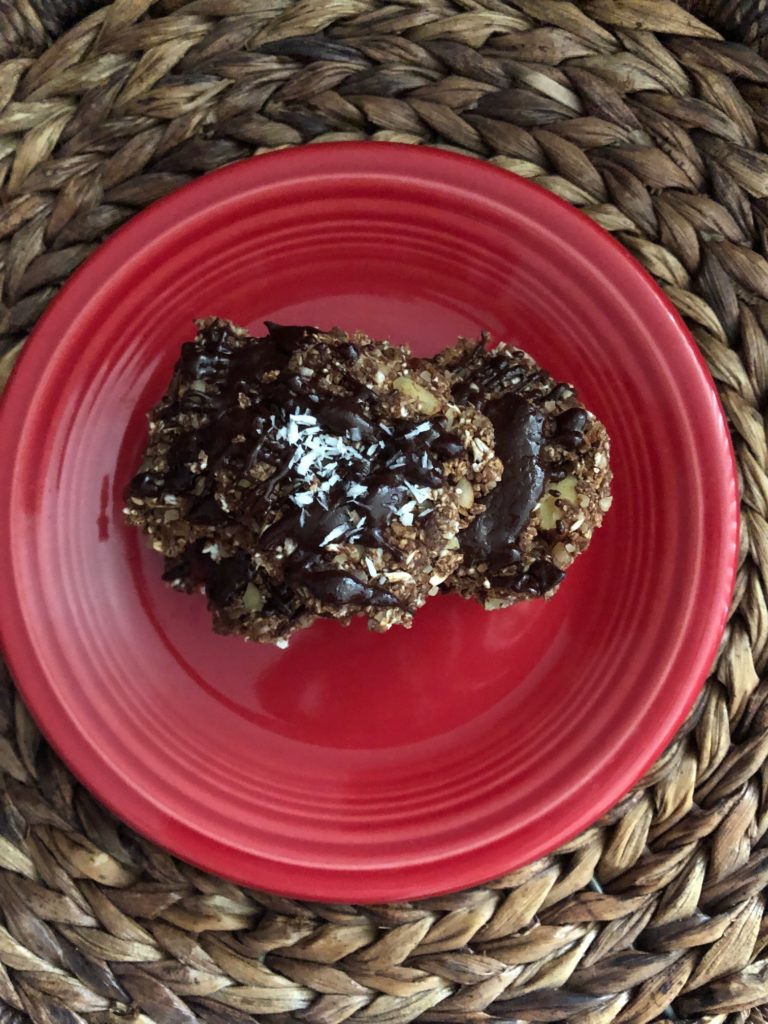
chocolate chip orange oatmeal cookie for passion purpose inspiration.

Btw, the star pattern looked a little like this healthy inspired chocolate chip oatmeal orange cookie I baked from show inspiration (it’s as good as the DoubleTree Chocolate Chip cookies I used to work-live and breathe as a Doubletree catering manager, but a lot less calories!):

Food was (and is) a passion purpose.

It would’ve tasted just as good if I didn’t make the design. But we know Life can be a hassle by our design. Thank you, Giuseppe from Great British Bake Off! 🇬🇧

And in the hassle, we learn the pattern (process) and that enriches our life (and we gain clarity) to the next challenge and steps moving towards our greater purpose and into our happiness.

I had to get out of that needed Time Out laugh… and now get back to the serious.

…On that note, I have found these two mindset shifts and responses that have made the biggest impact on finding purpose.

Let Go:

Deeper awareness (the A-ha’s) can be humbling and freeing, and a little of both (as it was for me). Living in a get-ahead culture can have damaging internal consequences and allow for pride and ego to grow.

The ego hates to let go. And it hates quiet time. I have an entire chapter in my book Empowered Happiness.

So to outsmart my non-serving ego, I first had to scrape out the believing invincible thoughts I grew into from my teens and into my 20s.

And after I saw the drama thoughts for what they were, I saw life as fragile (and not invincible).

And that taught me to play a more active role in my thought life. And if you’ve ever encountered people who don’t know how to change their daily thoughts, then there’s a good chance their ego is playing them.

The reality is that’s how most people you work with operate.

Seeking awareness (going from dark to light) is a learner trait and a growth mindset. Something I’m attracted to (and maybe you are too).

And with that lens, over time, I gradually made the shift to taking control of my thought life observing the crumbs fed and changing them.

And those ‘lil daily mind re-routes led into better knowing, taking better steps, and fewer missteps.

The temporary disconnects were favors in disguise as they helped to turn the ship around and steer into the right passion purpose in life path.

And, along with letting go of what I couldn’t change (also referred to as the Serenity Prayer).

Letting Go may not be your brain’s natural way. It’s not mine. But by letting go, you can bypass the messy middle, the in between neither here nor there, and get to the happy fulfilling place faster.

Here are two things that could help you let go (and get there faster):

1)      If there’s nothing you can do about it, then deliberately forget about it. Trust it will work out. Release your mind-body from worries, release resentment, and offer forgiveness.

For your own good and growth. Even if you’re not there yet, assume the position and you’ll get there soon. What you put your attention to shows up in your life… and probably pretty quickly!

2)      Stop caring so much for matters that don’t need your attention. That’s when things can be taken too personally or blown up in mind importance (but not really that important).

The ego loves to cling and accumulate past and old ideas (that shows up as a Kapha imbalance)

In Ayurvedic mind-body terms. (they’re always connected), that’s letting go of being needy or cloying. That’s a sign of a Kapha imbalance even if that’s not your natural way (or it worsens as you’re emotionally charged up around that one specific person).

Without letting go, you can stay stuck. And without moving on, you can also stay stuck.

A move-on sign can be when a door closes, or when you don’t get a full night’s rest, waking up at 3 am with worry thoughts, or you still don’t know why.

If it was because you needed to use the bathroom, you would fall right back asleep. …so if you determine that’s not it and this becomes more nights than not, then try a pivot. Your purpose is calling!

Our wise body-mind is so much more intuitive than you we are as the decision-makers.

And that’s why it’s possible to tell what is going on with you now by the food you’re attracted to, and what your annoying body symptoms are trying to tell you… the stuff I get excited about (restoring, optimizing in balanced living, and prevention).

Staying in shape, good self-care, and getting the balance (sattvic in Ayurvedic terms) helps you do the healthy things for optimal, purpose-driven living.

And there you have it!… good snack tips as you grow one day closer to your passion purpose in life. 🌱

You can make this chocolate oat cookie into a one-bowl easy, low-sugar chocolate chip oatmeal cookie star.

The pattern is easy when you know what it is. But like life, you don’t know until you try, have experience, and look back. So try making 3 cut lines and then focus on each wedge (your passion and purposes). And when you’re done and look at your completed lines, you’ve found your full-circle groove. 😉

Print Recipe

Print

Cookie Star Pattern

This is a cool kaleidoscope geometric star pattern you can add to any cakes, brownies, or soft cookie(s).
Author Brandy @ Healthy Happy Life Secrets

Equipment

  • pizza roller/cutter or knife

Instructions

  • Make 4 cuts to make 8 pie shaped wedges.
  • Within each wedge, make two parallel diagonal cuts (see photo).
  • Do this for each wedge until you're done. You will end up with a kaleidoscope star pattern that's tear-and-share fun and easy to eat.

7 Habits of Highly Effective People Learned Lessons

7 Habits of Highly Effective People are habit principles you can use in  most aspects of your life. I learned this from teacher and author, Stephen Covey who taught from his principle book: 7 Habits of Highly Effective People.

7 habits of highly effective people
Planning events is all about habit creation that builds confidence for the next event!

I can’t think of anything more work adrenaline-filled than putting on a moving-part event production. That’s how I felt when I would plan and then orchestrate large events with over 100 guests, where the habits from 7 Habits of Highly Effective People were put to good use.

Setting up event success meant planning milestone meetings with chefs and managers (and plenty of meetings with myself) with a 5 P’s mantra: Proper planning prevents poor performance.

That’s not a personal mission statement, but it’s a success value statement. In my event planning, I learned many powerful lessons that can be applied to personal change and growth.

On event nights, the party starts at the ready time or at least the staff and I have to be ready.

That’s when we know whether the prep work laid out hours beforehand pays off with a successful event. And this actually starts weeks and sometimes months in advance by planning menus, setup, and details with planners and chefs.

Each event is like its own wedding event even though it may have fewer mini-events and agendas.

The first two habits (of 7 Habits of Highly Effective People) always took center stage to anticipate changes:

1.       Be proactive

2.       Begin with the end in mind

During the parties, when there were too many moving parts, being in the moment, keeping focused on the guests, gauging the temperature of the room, and checking in on the party host (be proactive) was part of event success (begin with the end in mind).

And in your daily life, you probably don’t plan events (or not in a live event space today anyway)…but most of us plan our daily event schedules.

So most of us are planners. On the calendar, you can (and may already) practice be(ing) proactive and begin with the end in mind habits.

One effective way is, if you only have an activity that requires a bi-weekly (or bi-anytime) habit… and to succeed with those tasks, you could fill the non-weeks or time with another activity so that your mind has to search for the “either/or” activity.

If you don’t create a weekly placeholder activity then you could unintentionally forget/skip the bi-weekly intended one. The mind needs a replacement to substitute.

If it’s an every other day activity, then you could fill that same activity time for another activity, that follows a daily habit (or the habit stacking concept most of us have come to love and know from the more recent Atomic Habits by James Clear).

And that’s why I personally got rid of calendars because of building habits.

It’s much easier for the habit to stick (and for consistency to happen) when you have an “automatic” method programming your mind.

That’s easier and in event planning, that’s the “you got this” feeling in event planning when you’re on top of everything and proactive. You’re not writing everything down in those critical seconds needed to make a decision.

Most professions have these “make or break” moments. For a surgeon in a hospital emergency room, if the doctor has to look up procedural answers then, that’s not a good sign.

And in event planning that I know, being reactive with situations is crushing and it can be a snowball effect where the plates come out late or cold. And there’s a complaint about the room temperature and drinks.. and in those humbling times, you can’t wait until the end of the event, that’s only a matter of time.

To get to the proactive level takes planning, proficiency, and experience that creates confidence. And that starts from building consistent habits.

Consistency is the end-all, be-all that builds progress, and confidence and works for every important habit that I can think of at least. You consistently follow a habit. And when a better habit idea comes along, you replace that habit.

But consistency isn’t without downfall. It can be at odds with creativity, so consider looking at them as the yin-and-yang, or the sugar and the salt in baking that give the balanced spice in life.

And using solid principles like that from Stephen Covey’s 7 Habits of Highly Effective People can improve your effectiveness.

They can help you in life’s productivity and also deeper areas like finding your life’s purpose, a proactive choice that can easily get los in life’s busyness and commotion of what’s seemingly urgent but not important to you.

You’re headed in the right direction when you keep developing yourself and pivoting. You keep practicing new skills, putting one step in front of the other and looking at your compass.

The Universe is constantly guiding you and offering an invisible hand to help you and give you a hand up.

The healthy and growth mind set knows that a re-route is to help you move up in the climb of your life and get off the roller coaster ride.

If you begin thinking with the desired outcome end in mind, then your process in the middle is improved when you set your eyes on the end goal.

You can better Ready, Fire, and Aim.

And when you stay focused and open to feedback using habits #3 and #4 from seven Habits of Highly Effective People:

3.       Put first things first

4.       Think win-win

These days prioritizing what’s important is more blurred than in the past.

Most of us live a double life to some degree with our digital lives and real lives, so putting first things first (habit #3) is not the easiest thing and can be complex.

Both lives are authentic. Your sweet spot is what makes you stand out and the skills that you’re good at that are relevant.

The biggest competitor you could run into for a win-win approach (habit #4) can be yourself and your moods (we used to blame much more on others). We’re now a more openly aware and collaborative society.

Being able to give is a gift. It’s a win-win.

There’s a cosmic exchange when you give your energy away in optimism, and then the world dances. When you give your time (service) or money (generous giving), that can also create buzz and impact for your endeavors.

When you can start looking at how you fit in the world, not selfishly, but what you can give in the abundant overflow you’re given in personality, gifts, and talents, then you can grow to your highest and best use purpose (habit #2).

In self-awareness, then you can create a continuing growth environment (kaizen is the Japanese word in business terms) for you and others around you (habits # 5-7):

5.       Seek first to understand, then to be understood

6.       Synergize

7.       Sharpen the saw

“You have two ears and one mouth,” I remember Author Stephen Covey saying in his workshops.

Listening is more importing than talking.

Habit #5 summed up: Hearing, selective listening, and active listening are 3 different processes. The first is naturally automatic, the second is tuning in/out when multi-tasking, and the third is focusing, taking notes, and coming up with unique ideas from what you heard in your frame of reference and experiences.

In my event planning days, if a client had an issue, it was best to listen to them, then give them available options based on what they communicated (habit #5)  and let them decide which options to take (habit #6). Seasoned event planners know how to do that every time, and let those dialogues roll off their tongues (habit #7). And that way the client felt in charge and if things didn’t go as planned, then they owned part of the outcome. That’s the behind-the-scenes smoothness in event planning.

And that helps in most ways when you work with others. If you fill them in with communication nd what you’re up to, there’s a greater chance they can fill in and help in ways you wouldn’t even know how, now.

Habit #6: 1+1=3 or synergy is exponential growth that happens when you have collaboration. And when you keep adding/evolving collectively to what you’re doing, then you’re getting better. By default, you’ll avoid the things you didn’t like or “been there done that,” and keep seeking newer, better ways for yourself. That leads to growth and…

Habit #7: Evolved learners focus most of their time on the present moment and not on the past or future that hasn’t happened.

They know where they’re at and that the past brought them to where they are today. And without the past, they would not have learned (from their history) what they need to do to improve.

And when you get out of the negative emotions of that headspace or focus on the happy memories, you can feel good and alive.

When you can reflect, you can see why things happened and how they helped you even though it didn’t seem that way when you were learning the lesson.

Everything happens for a good reason (believe that!) and sometimes that takes a little longer to realize… and, at every turn you are gaining a little more confidence in who you are becoming.

And you gain a clearer vision for the future and better strategies that you can better evaluate from time to time.


In events, dessert were always a must. Baklava was on the Mediterranean-Lebanese restaurant menus. We didn’t make baklava in-house, but you can with this low-sugar recipe. 🥮

Print

Easy Phyllo Dough For Baklava Dessert (Mediterranean Olive Oil Healthy)

Make phyllo dough from scratch! It's not as difficult as it sounds... and dare I say fun!
Course Dessert
Cuisine lebanese
Author Brandy @ Healthy Happy Life Secrets

Equipment

  • pasta machine maker

Ingredients

  • 2 tbsp olive oil
  • 1 cup flour
  • 1 cup water
  • pinch of salt
  • honey
  • chopped nuts
  • dates, orange, and cinnamon (optional)
  • additional bench flour (to prevent sticking)

Instructions

  • Making phyllo is a lot like making homemade pasta, but much thinner.
  • Make a mound and a hole in the middlle where you can add the olive oil and slowly add water. Knead for about 5 minutes and then form a dough disc. Let rest.
  • Roll out as thin as possible and then you can slip into the pasta maker if you have one, adjusting until you get to the thinnest setting (e.g. 1). It will look opaque but the hope is that there will be no holes.
  • Cut into strips that you will use as layers for the baklava.
  • For the baklava, you can brush honey and top with chopped dates and nuts (walnuts or pistachios work well) on every other layer if you make 7 layers ending with the top layer with honey and nuts. Sprinkle each layer with cinnamon and orange zest if you like (good for Ayurvedic Vata balancing!).

Home Pizza Crust – Neapolitan-Style Recipe

Home pizza crust is easy and fun to make as homemade pizza dough. And it can be made with any gluten flour like bread flour that I love as more universal to use. You can make other bread types and not just pizza like with 00 flour.

Home oven made Neapolitan style pizza crust with mushrooms.
Neapolitan style pizza crust that looks wood fire oven charred, but is baked in an apartment oven.

Below you can learn step by step how to get the home pizza crust you want including a Neapolitan style crust that’s popular in restaurants with wood fire ovens… but that you can make even from an apartment oven! 👇

…Without waiting for one to be delivered.

This is impressive to your friends and learning how to make your own pizza crust is rewarding. 😋

…Pizza can be a healthy meal that’s filling for all ages. I have a homemade pizza recipe you can try along with all the detailed steps from scratch below…

And you can learn techniques from me, a once-upon-a-time  pizza maker teenager for 4 years who worked at the busiest Domino’s Pizza store and franchise in the world 😊… yes, in the world. 🌎

Back then, we would crank out over 200 pizzas an hour on any given Friday or Game Day Sunday. This was when the 30 minute guarantee still existed and then became a well-known business case study.

It was the funnest job I ever had… and very memorable decades later where I use my pizza learned skills to make home pizza today. Like these thin crispy or regular chewy pizza crust styles.


Crispy cracker pizza crust example.
Thin and crispy cracker-like crust.
Thick, soft chewy pizza crust.
Thick chewy crust more like a pan-pizza style with a toasty bake.

And which btw you can make your own special pizza masterpiece from start to finish, faster than you can order a pizza and have it delivered.

So let’s begin…

First, you don’t need a pizza kit.

To make homemade pizza, you just need two essential simple ingredients (flour and water) you already have in your house (or can easily get) to make the dough.

Plus 4 ingredients if you want a bigger crust rise (flour, water, instant or active yeast, and salt). Or you can let room temperature act as the growing yeast (like in sourdough).

Homemade pizza needs no long prep time like pulling out ingredients in advance, like in other baking recipes. So it can be making and baking EASY.

It also has an advantage over breadmaking: you don’t need to wait for hours for the pizza dough to proof.

Making homemade pizza dough needs only a few minutes. You can simply prepare, bake, and enjoy in less than an hour.

If you’re not a planner this can be a winner.

But then again, you’d probably buy store-bought or order delivery. …but then that would be no fun, and you wouldn’t get the healthy, homemade pizza.

So I’ll assume you’ll give it a try at least at some point. You’ll be glad you did! 🎉

Here’s how to make homemade pizza…

Before you do anything, there is one area to plan. You should consider what you’ll add on top of your pizza crust.

If you load with gobs of cheese, then you’ve added fat and dairy (…that isn’t always a bad thing as cheese has vitamins, calcium, other minerals, and satisfies cheesy craving…).

For a healthy recipe, use fresh shredded mozzarella cheese or sliced buffalo mozzarella like on a Margherita pizza. It’s one of the healthier (less greasy) cheeses if your stomach is sensitive and end up sopping up the cheese grease.

Now you’re ready to start and pull out all your homemade pizza dough ingredients.

Instant yeast. I buy the small Red Star packets. The yeast balls look like microscope-tiny, perfectly round khaki brown color beads. And a tip is if you don’t have instant yeast on hand, you can use baking powder that you would use for cakes. Yes, baking powder!

Water. 1 cup warm or room temperature tap water is fine. You may want to experiment as you know what they say about the famously delicious New York pizza crust (the rumor is that it comes from the water).

I’ve used seltzer and filtered water for pizza crust, and I find tap is still the best all-around.

Flour. You have options. Bread flour is the one for Neapolitan-style airy pizza. You don’t need special “00” flour even though you’ll find many recipes with this.

With bread flour you can use for other breads and it’s generally less expensive.

And if you aren’t doing an airy crust, other options are:

You can use a mix of regular or all purpose flour with whole wheat flour (that has a higher bread protein content). Whole wheat flour dough will be less sticky.

And if you use semolina flour for your bench flour, then that will help your dough from sticking to the metal pizza pan you use.

Another reason to choose whole wheat flour is the slightly higher, healthy fiber content. There are also gluten-free options.

In total, use about 2-1/2 flour total, but you will need more when you’re working with the dough.

You get better with practice and experience. You may be able to later eyeball how much you need.

Salt. 2 teaspoon table salt. You can use a little more salt if you use sea salt or if you plan to use fresh mozzarella (or buffalo mozzarella) that doesn’t have as much salt as some other cheeses. Kosher salt or a coarser salt will work well.

Optional: 1 tablespoon EVOO (helps with adding taste and less sticky dough).

Here are the 5 easy home pizza crust steps (broken down in detail):

Step 1: Make the pizza dough.

Add the yeast to water and let it settle/dissolve for about 5-10 minutes. The mixture will have a milky color and consistency. Set aside.

Separately, add the flour or mixed flours of choice to your mixing bowl (I like half and half whole wheat and regular or all-purpose flour). Add 1 teaspoon salt or you can use 1-½ teaspoon sea salt (if you want to use non-iodized salt as I use). Then add EVOO if you’re using, and the water-yeast mixture.

Dough by hand method: You can make the dough by hand, and if you do it that way, I’d recommend creating a neat flour mountain on a shallow baking pan where the flour won’t stick to everything.

Using semolina flour as a lightly floured surface is a preference.

Then add a dip in the middle of the mountain where you would add the liquids, like you may have seen or done at home making pasta the old-fashioned way (except there are no eggs needed in pizza making).

Dough with machine (recommended): It’s easier to use a mixing machine with the dough hook, like the Kitchen Aid mixer (I have a baby pink Cadillac color one… Paris Hilton and I have something in common, lol).  

With a machine, in a few quick minutes, the dough should be ready. You’ll know when it’s done when it’s not too dry, and not too wet, and has some good elasticity. Pizza dough is forgiving and is only part of the pizza pizzazz (say that 10 times).

Remember to scrape down the flour from the sides of the mixer. As you’re waiting for the dough to finish mixing, generously flour your pan.

I recommend a mix of coarser semolina flour and regular all-purpose flour for the bench flour.

When it’s ready, pull the dough out of the bowl. You’ll be able to form a small ball with the dough, and you may need to add more regular flour on the outside if it’s too sticky.

Form a dough ball and let it rest on the pan you’ve floured. Leave it sitting or resting at room temperature for 10 minutes.

Note, you don’t even need a plastic wrap or another container you’d have to clean like in bread making!

Step 2: Prep the toppings and the sauce.

While the dough is still resting, I get the topping ingredients ready.

I open the tomato sauce can (many restaurants use San Marzano tomatoes that I recommend), and I add finely chop anchovies with a serrated knife to the sauce as my secret ingredient (that’s not a secret anymore).

It adds salt and another flavor dimension (or you can just add a teaspoon of salt to the sauce if you prefer a saltier-tasting pizza).

Tomato sauce will add sweetness back. You can make your own tomato sauce but since it’s not the star of the dish, canned will work just great.

If you want a chunky style, Marzano tomatoes are plum tomatoes which are the kind commonly used in Italian restaurants. Or else use any tomato sauce or paste.

If you are using fresh cheeses like buffalo mozzarella, slice the cheese into smaller bits.

And if you use basil leaves, wet them a little like with a wet paper towel as they will settle a little better on the pizza. Alternatively, you can use spinach leaves like I use as healthy-alternative inspiration.

For any other wet ingredients like black olives, drain any excess liquid and dry them with a paper towel if you need to (as that would be a damper to your pizza… sorry, I couldn’t resist. Today is a fun day.).

By the time you finish this step, your pizza dough should be ready to work with.

A quick back story: I used to be a pizza maker (or pie maker as they referred to) as a teen before I could drive, and for the busiest Domino’s Pizza… not in the country, but in the world (yes the world! that is becoming smaller every day). 

I stuck around for 4 years until I took on other food-related jobs in college.

So, I still make the dough the way I learned from the modern pros!

We used to crank out 300 or so pizzas in an hour as a team during the busy football nights, and during the 30-minute guarantee years (you probably don’t remember!).

Our heads were down but it was fun energy in the shop![OK back to the business of making your homemade pizza]…

Equipment you need:

-Pizza pan. Any metal pan will work.

-Pizza cutter or pizza wheel (optional)

You don’t need a pizza peel.

Step 3: Flatten the dough into the pizza pan, to get it ready for the oven.

You can turn the oven on to pre-heat or you can wait if it’s your first time or so baking pizza.

Regarding temps, if you want to use 425 degrees (Fahrenheit, just to clarify for my Brit friends), that will give you a crispier bake like a pizza oven would.

If you prefer to cook under 400 degrees because it’s a hot summer day or your fire alarm can go off in apartment living, then you can bake with standard 350 degrees/180°C.

So anything in between 350/180°F and 425/218°C degrees will work. Remember pizza crust is forgiving (and I dare say easy).

OK, so here’s how to make the home pizza crust…

Fancy hand way: Take your dominant eating hand and place ontop of your weaker hand. Put your dominant index finger and middle finger below your weaker hand index finger and middle finger (crossing your thumbs). 

Or…

Simple hand way: Place your hands side-by-side, index fingers touching.

Either way, using your fingers, put pressure into the dough as you’re making hand imprints. Use enough pressure to make a dent, but make sure you’re not making holes in the dough, and it’s thick enough to hold the amount of sauce you plan to use.

If you get a hole in your dough, simply start over like you would with Play-doh. Roll the dough back into a ball and then flatten the ball with the palm of your hand (that you can coat with a little more flour as needed).

Push down on the dough and make handprints on every part of the dough.

Keep turning the dough 90 degrees while you move along and your hand is at a 90-degree angle (or at 3 o’clock clockwise or 9 o’clock counter-clockwise if you like clock descriptions).

For a right-handed person, you can turn the dough clockwise (and counterclockwise for a left-handed person).

Then flatten down the middle of the dough with your fingers and palm of your hand to get out all the trapped air bubbles.

Do this once and then flip the dough to the other side (back side), and do the same process. Add more bench flour underneath the dough as needed.

Keep working with it until it’s the right crust size for your pan or toppings.

If you want a super smooth dough crust without your handprints or blemishes, turn the dough with your gentle palms while lightly kneading, smoothing, and stretching the dough with palms (like you’re sanding it down).

I skip that part as a handmade-looking pie to me is part of the fun.

For basic round or irregular shapes, making the dough can take one minute or less with practice.

I know my instructions are descriptively long, but once you get the hang of it, it can be fast and easy!

In the beginning, take your time learning. It can be fun and maybe even a ‘lil therapeutic especially if you have some good music going on!

And, then here’s another important step/option that I recommend:

When you’re satisfied with your pizza dough that will be your topping base and crust, pre-bake the home pizza crust first (without toppings) especially if you are using lower baking temps.

This is necessary if you are using lower 350-degree temperatures, but you can skip this step if you want if you use much higher temperatures.

I use the prep-baking crust waiting time to clean off my dough hook, mixing bowl, and other supplies I’m finished with, so I have minimal cleanup later.

After 10 minutes (a magic number for pizza step waiting times), pull the slightly toasted home pizza crust out of the oven.

Let it cool for a few minutes, but you don’t have to wait until it’s room temperature again.

Then you can add your sauce with a spoon or ladle and spread evenly starting in the middle and applying less and less pressure towards the crust.

That’s the way we use to do it in the pie shop 😉

Btw, you can make other sauces like pesto, barbecue, or balsamic (that are other personal favorites of mine)! Maybe you too as you get to be a pizza pro?

…But here I’ll keep it super simple with the tomato sauce. And you can check out how to make a whole wheat flour veggie pizza.

Wheat pizza crust example.Step 4: Then lay your toppings on.

The secret for better baking through is to put the quickest to cook items on the bottom. So any thin, flat veggies (like black olives and mushrooms) and flat meats like anchovies, and then add the lumpier foods on the very top layer.

If you use buffalo mozzarella (the white ball kind), treat it like a topping instead of cheese. For shredded cheeses like regular mozzarella cheese, add as the first layer over the sauce.

If you want to use tomatoes that aren’t finely diced (tomato concasse in fancy Italian restaurants), bake them on the side in another pan as they could be too wet and create a mess on your pizza in the oven or prolong your baking time (sundried tomatoes are ok on the pizza).

For any meats, cook them through in advance especially if you’re baking your pizza on 350 degrees.

Now you’re in the home stretch! You just have one more step.

Step 5: Bake your home pizza crust (or cook your pie 😉).

When you’re happy with your fully loaded Picasso-pizza art, put it back in the oven on your lowest or medium rack, and if you’ve pre-baked the dough then you don’t need the pizza pan anymore if you want.

You can just set your pizza right on the baking rack. Sometimes I leave the pan baking just depending on the crust I want. Try it both ways.

And then bake for another 20 minutes to your crispy done liking (all ovens are different and depend on your dough thickness, ingredients, etc.).

Check the crust bottom to determine doneness and if it’s not yet done, but toppings are done or shriveling/drying up, then add a piece of aluminum foil on top and keep baking until the crust is done.

Don’t leave the pizza in there after you’ve turned off the oven, like you could in baking other goods, as this can dry out the toppings and the fiery heat will be gone from the crust which usually takes the longest to bake.

When done, pull out of the oven. Presto! Let it cool and then cut and enjoy.

If you want to add individual flavors, like if you’re feeding a larger group, you can have side parmesan-reggiano cheese, oregano spice, red pepper flakes, garlic, drizzle or olive oil, or caper ingredients (just to name a few ideas)!

…And then you will have 100% impressed your friends with your rock star homemade pizza baking skills ⭐️

The sky’s the limit! And while you’re waiting on your baking oven, you can do a few baking yoga moves, if you’re so inclined.


shittake mushrooms homemade pizza.
Shiitake mushrooms and apple cider vinegar cracker pizza crust.

And then when you’ve made easy home pizza crust, you can make your own mushroom Neapolitan-style airy pizza crust from your home or apartment oven, like you would get out of a professional wood-fired pizza oven.

homemade wood-fired pizza with mushrooms recipe.
Print

Neapolitan-Style Home Pizza Crust

You can make this Italian style pizza crust at home in your oven with mushrooms or any of your favorite toppings.
Course lunch, Main Course
Cuisine American, Italian
Author Brandy @ Healthy Happy Life Secrets

Ingredients

  • 1 cup bread flour
  • 1 tsp salt (coarser kosher salt works well)
  • water (start with 1/4 cup and add more)
  • 1/4 tsp instant yeast
  • toppings (e.g. mushroom, buffalo mozzarella cheese, and sauce).
  • 1 tbsp extra virgin olive oil
  • bench flour (e.g. semolina flour or bread flour)

Instructions

  • Make the dough. Add flour, water, salt, and yeast ingredients to a mixer bowl or bowl if you are making the dough by hand. You will use about 1/2 cup water per 1 cup flour.
  • Knead the dough, until a cohesive pizza dough ball can be formed. With a bread dough hook on a mixer, this will be about 5 minutes on high, 7 minutes on a medium setting (and about double time by hand).
  • Add some olive oil to a plastic container with a lid.
  • Place dough in container and let proof for at least 2 hours. Can be left overnight in the refrigerator and be sure to not let the dough dry out.
  • Then add some bench flour to your pan to prevent sticking (semolina flour is classic for Neapolitan pizza but any flour will do). I suggest a baking pan with a Silpat setup ontop to prevent the pizza crust from sticking to the pan.
  • Flatten the dough into the shape you want with your hand and fingers. Avoid the crust edges to create a more airy crust.
  • When you're happy with your pizza shape pre-baked, then place in center of the oven bottom rack and bake for about 20 minutes on 350°F/180°C oven. The pizza crust will not be finished but it will be hard enough on the crust bottom to be able to broiled without a pan.
  • Add sauce, cheese and pizza toppings.
  • For the airy crust and charring pizza crust marks, broil your pizza. For preparation, remove Silpat (if using)and your baking pan, and slide the pizza to the top oven shelf at least 6-8 inches away from the top of the oven where the oven heat will be coming from (not the bottom like baking settings). In most common ovens, the 2nd rung down for the top adjustable metal rack works well.
    Turn on the broil (caliente hot!) setting for 2-5 minutes until crust is slightly charred giving the wood-burned fire "effect." You'll see the heating source from the oven lines above that could take a minute to heat up (indicated by the top red heating element).
    Safety tips: Be careful and watch the broiling the entire time with the oven light "on," so you can be fully safe. Do not open the oven door at any time that the broil setting is fully heated or turned on. And do not turn your pizza without turning the broiling setting off and waiting for the oven to cool down before opening the oven door (and then turning back on). Test your oven for the best broiling time for your pizza crust, and do not overcook.

Notes

You don't want your dough to dry out, so be sure to add enough water so it's more like an elastic smooth skin versus stringy dough. And be sure to cover the dough.
If you do not have instant yeast on hand, you can use baking powder.

Fresh Orange Juice (No Juicer Needed)

Fresh orange juice is a popular, year-round favorite. In the winter, oranges are in season, so you can find an abundance of oranges.

orange juice

That’s also when most people load up on Vitamin C that they associate with orange juice, and why orange juice grocery shelves can be full or running empty.

And summer is a popular time too as it’s served in vacation towns and resorts.

I share below how you can optimize an entire orange in homemade fresh orange juice squeezed by hand.

If you’re inspired by fresh juices, this is a smart idea to save money, be healthy, and enjoy conveniently at home.

And speaking of enjoyment, last week I had a nice surprise.

I won a gift card to a local smoothie place I’m inspired by. They are my inspiration for tropical smoothies.

One day I saw someone coming out of a yoga studio in my town who was carrying this mermaid blue color bowl that’s the size of a large yogurt container.

I had to find out what this healthy ingredient is!

I learned it comes from an ingredient called blue majik (that’s the magic in the blue bowl). 🥣

The South Block smoothie chain also uses ingredients like camu camu and maca root.

You feel like you’ve been invited to a new array of rainforest superfoods shipped from an exotic locale in the world and infused in your made-to-order bowl or smoothie.

It’s dreamy, no?

OK, I could go on and on excited!…

But, today I also wanted to share how you can optimize oranges in a house-made fresh orange juice.

I’ve become super sensitive to how much sugar I consume and that’s healthy motivation.

And that hopefully inspires you to think healthy food and drinks at least most of the time (as it does for me).

Vatas are attracted to oranges and sugar so this is perfect for satiating sweet cravings.

Next time you think about getting orange juice from the store, consider making your own fresh orange juice from whole oranges where there’s no added sugar.

Fresh Orange Juice

organic navel orange peel for fresh homemade orange juice.
Look for heirloom, organic, or local farmers market produce as in season (free of pesticides, good for us and the environment)

And oranges are one of my favorite fruits as I love the smell of oranges. Here’s why…

They are good for calming anxiety, aromatherapy, and if you’re leaning into the Vata mind-body ways or  wanting to restore any Vata imbalance.

If you can’t get the work life balance or life is stressful, keeping an orange near you to sniff and that’ll help calm you.

And making fresh orange juice will also in its healthy-balancing effects.

And if you feel it in your nervous digestive tract, you can try an orange elixir like this recipe:

organic navel orange peel for ayurveda drinks
Print

Orange Digestif Juice

Course Drinks
Cuisine American
Author Brandy @ Healthy Happy Life Secrets

Ingredients

  • 1 orange (pulp, zest, peel)
  • Apple cider vinegar (amount adjustable to liking)
  • 5 Spice blend (Five spice is star anise, cloves, cinnamon, fennel, and black pepper) - (amount adjustable to liking)
  • water (dilute as needed)

Instructions

  • Zest and peel an orange. Keep all the parts. Tip: use navel, Cara Cara, blood, or heirloom oranges. They are good for the calming (and good for parasympathetic nervous system also affecting good digestion).
  • Squeeze the pulp into your orange juice container (or enjoy).
  • Add your zest and peels to the container.
  • Add five-spice blend.
  • Add apple cider vinegar
  • Fill up with water. Shake and refrigerate. Enjoy when you have an upset stomach.

There are so many orange varieties to choose from. I love the Cara Cara sweetheart orange variety (common around Christmas) that can be juicier and sweeter than a California navel orange that’s in season a little earlier.

Plus fresh orange juice makes me think of my second home, staying in nice hotels! Once upon a time I worked in hotel catering management where I got my first taste.

And you may have seen out and about those gigantic commercial machines that crank out fresh orange juice from whole oranges. That would be a fun job for a day!

You may have seen one of these at selective grocery stores if you live in a larger metro area.

Fresh orange juice definitely ruined me for any added sugar orange juice that comes from a carton (like I grew up drinking).

Concentrated is high sugar and harsh on the stomach, and especially along with a morning coffee routine that Americans commonly do. That’s double acidity.

Plus ontop of that, most common foods are usually acidic.

And if that’s your typical morning routine…

👉 You can opt for making your own organic cold brew coffee and  diluting orange juice with water.

So let’s begin and get your fresh orange juice-on!

For equipment, you can use a citrus squeezing tool, which is one of my favorite kitchen tools because it’s bright yellow so I have no choice but to be sunny with the brightening citrus when I use it 😉.

And a zester microplane tool that looks like a zester.

Orange zest from a fresh orange juice.

These are the parts of the orange.

Orange Zest (essence). Before I cut into the orange for orange juice, I go around the orange peel, grating, and capturing all the outside orange zest as essence for zhughing up other sweet morning smoothies, dishes, and garnishes (that’s where my former-catering mind goes and yours can go wild too!).

Orange Pith. Most people throw the spongy, slightly bitter part out, but consider keeping.

This would good in the orange digestif recipe mentioned already.

The orange pith is high in Vit C (as is the juicy pulp) and anti-inflammatory flavonoids. For those reasons alone, it’s worth considering mixing in foods and drinks/smoothies.

Plus leaving no traces of fruit is good for not attracting critters. 😉

Orange Juice and Pulp. Then cut the orange in half (perpendicular to the top or the stem or from left to right).

I know it’s tempting to cut the orange any which way since it’s perfectly round, but cutting the right way lets you cut through each orange segment to maximize juice.

Otherwise you could get stuck on a pillowy-feeling orange segment.

Now you’re ready to squeeze each orange half or use a citrus squeezer tool, and squeeze away the juice into a tall glass.

Let go of all your stress squeezing oranges. Activating calming oranges around you is a relaxing sensory exercise.

Keep repeating until you have the amount of juice you want. Add back pulp as desired if you like high pulp juice.

You can also add some water to dilute some or stretch the juice out for more.

And enjoy!

No-Waste Eco-Friendly Ideas: Save the orange pulp if you prefer high-pulp OJ and add small orange pieces to your drink.

Save the seed to grow a plant. Save the pulp and zest for cooking and baking recipes. Save the pith that has the most nutrients for digestifs and foods. Save the orange sticker as a reminder for getting the Produce LookUp (PLU) item again. 😉

If you like fresh juices, you may want to give Fresh Peach Juice and Mango Juice other sunny yellow inspiring fruity juices a GO.