Have you ever noticed how certain scents bring joy to your face? Or that warm blanket spritzed with lavender that reminds you of a yoga mat or relaxing moment that instantly makes your troubling life situations better?
Using those olfactory memories and the comforting things available to us, can help us to make it through our day… and sometimes is all we need to get inspired again. That’s all-so Ayurvedic!
One sweet spice way that we can capture daily is in our scents. I like to keep around a few perfumy bottles even though I rarely wear any. But I like to catch a citrusy sweet whiff every so often. Bergamot and citrus light scents don’t last as long as others so keeping them close by is a good idea.
And if you’re a Vata like me, cinnamon spice is one of your faves. Also, vanilla scents and sweet oranges like that from a California navel or Italian blood orange.
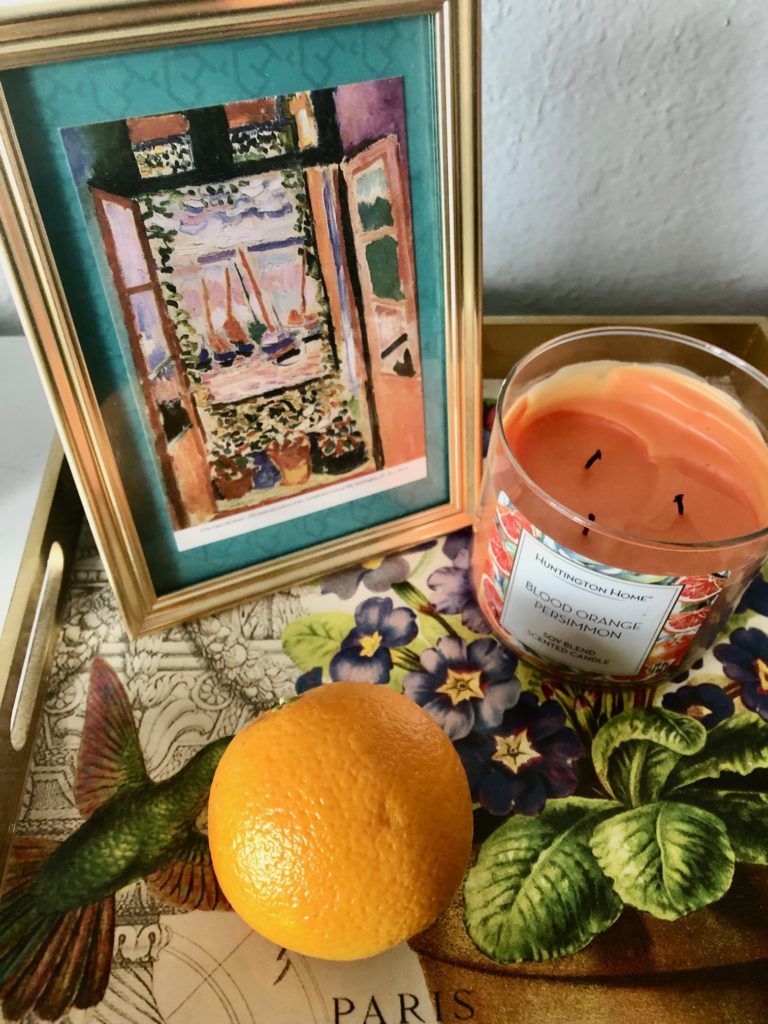
Celebrating the orange scents here on this table…
Can you guess what orange is here? It’s a Cara Cara orange.
So on those notes, these are a few of my go-to perfume aromatherapy scents for balance.
The heavy-knock-you-out-cold perfumes are a thing of the past. The kind your grandmother probably wore. And what my mom wore. Those memories are hard to erase.
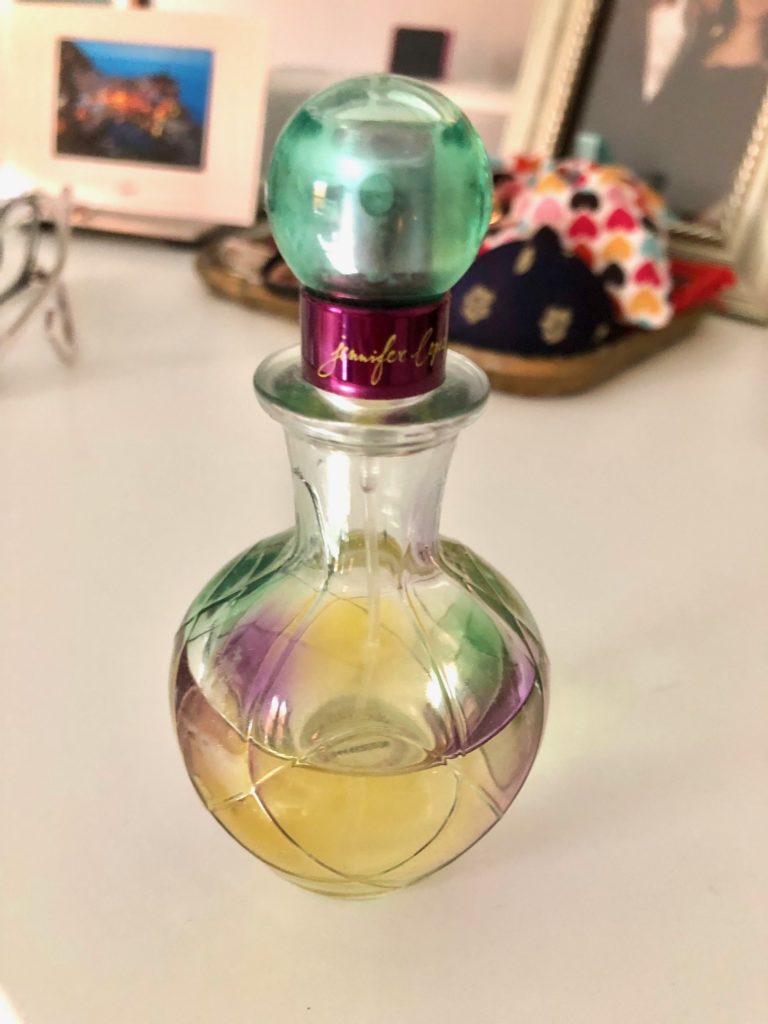
But for everyday living, these two eau de parfums are more appropriate.
J.Lo Live – the version I bought is very citrusy. I stumbled on the perfume when I had extra minutes (hours) in an airport and decided to make use of that time by finding a good scent. Good idea, right? And this one was the one that got my attention. Yes, it’s Jennifer Lopez’s (J.Lo) Live. And it also comes in a pretty bottle.
A good perfume is like a good dress. When you try it on, you know if it’s The One as you can’t stop grinning from ear to ear.
Viktor&Rolf – Flower Bomb is da bomb when it comes to scents, me thinks 😊 in me-time (that was how I thought in my youthful fun self) 🌼
Btw… do you ever wonder why you can’t smell certain scents that’s more about you liking a perfume scent one day and not-so-much the next day or next season?
There are a few reasons:
For one, as mentioned, the citrusy ones don’t last in the air too long. While they calm your parasympathetic nerves (and help to lower cortisol stress levels), they only last a few hours depending also on what other scents they are balanced with. So it’s fading daily along with bottle age.
And the other reason is… you!
You don’t smell them because you have a heavier imbalance in another dosha. But don’t worry, that can easily be restored back in a day or two. And the right scents can help put your day right back on track.
It always comes back to your Vata, Pitta, and Kaphas. 👧🏻 😡😴
Let me explain… so since I’m a Vata, sometimes I can’t smell the citrus scents strongly. And so I gravitate towards maybe a woodsy or florally scent or a stronger sandalwood burning trees scent. 👃And that would indicate to me that I have a Pitta imbalance. Rarely these days, but back in my corporate work days that was the status quo. …Until I found a better new normal balance.
So primarily these days I like the Vata scents because that’s my natural body.
And if you’re interested in learning more about the intuitive body and how it can help you in your daily life and balance, then take the 2-minute Body Balance Quiz.
There is one scent in particular that I use to instantly know if I’m feeling balanced.
Wanna know what that is?…
I use another Viktor&Rolf’s scent called Bon Bon. It’s in a cute, hot pink cylindrical bottle. Hot pink was my favorite color growing up …and now everybody’s fave. 💕
…I Love how our society is becoming so close-knit and we see eye-to-eye on the important things 😉
So, here’s what I know.
When this candy scent is too cloying or sickenly sweet to me, then I know that my Vata is off. It has a burnt caramel scent to it that isn’t always likable. I figured this out while wearing it one day when I couldn’t wait to wash it off. That’s what happens.
AND… maybe I’ve inspired you to pull out your scents to test.
And if you ever wonder why you like a certain person… it could be the way they smell. Years before our society adopted Ayurvedic balance, a co-worker of mine wore Clinique’s Happy. And every time I was near her, I was happy! 🤸♀️
My day was brightened and I distinctly felt calmer. And now I know that’s because of the concentrated citrus orange notes. Once a Vata always a Vata!
So, if you want to be around more people like you, wear the scents you like. And if you wanna balance yourself out and attract your opposite, wears the scents they would like. …Just a scented meeting people advice note I thought I’d leave you on.
Happiness is a journey, not a destination. – Alfred D. Souza
But since those trying earlier years, I’ve come to know that happiness comes from a different deeper lens in the thoughts today. And happiness is in your ability to control, changing arising and spinning dysfunctional ego mind thoughts from the past.
In the daily moments, happiness is searching for and magnifying past happy experiences. For me, that’s recalling birthday parties and cakes. And I have even more photos as evidence (but I’ll spare you those this time). 😉
And the happy, good memories are not usually what the mind actually serve up in the messy thoughts that a busy day can bring. That’s anything but happiness. So for happiness, it’s good to be mindful of these specific thoughts:
Past thoughts. Consciously be aware of re-framing the bad memories and negative repeated tapes that interruptingly come up in the day. And these thoughts crowd out the happy ones. So it’s often necessary to rewrite your present thoughts of the past so you can keep them in the past…
Because your today’s happiness depends on that…
And your happiness depends on what version of thoughts you want to magnify today.
The mind often likes to serve up what we didn’t get that others got. And in those past dysfunctional areas dwelling in the present, keeps us playing small in our lives. Even decades later.
Like, I remember a few daily childhood situations where I wasn’t put first by others. Because that’s what the brain does in the present moment. The brain doesn’t pull up memories like all the years of having celebrational cake for birthdays and throwing fun birthday parties.
So to better get out of that fast (think fast!), we can either think of better past memories. Or we can focus on the present… And in this moment…well, I’m writing but you’re doing what you’re doing. So having a good standby conscious thought ready to replace the bad thoughts is what you want.
And that’s why as a reminder, gratitude is so important. Because you can always be thankful and replace negative thoughts with appreciation, and that can be the maze out of the fuzzy mind on any given day.
Or putting love on yourself: “I am loved.” That’s a post-it note worth keeping around! 💌
Remember to focus on what helps you out completely, not what soothes the same hurts time and time again like a band-aid.
Heal the hurt and then rewrite what is served up. Healing is found in the re-write thoughts and not the re-living of the same past storyline that happened many decades ago. You already suffered once from the situation, which was more than enough.
And today, it’s not physically hurting you unless you allow your thoughts to keep going there in the same way.
Present thoughts. In this moment and today, you canapply wisdom knowing what’s up vs. what’s down (right or wrong as best you know). And every day there’s an opportunity for wrong to creep in.
So it’s good to be objective. See the what-is truth behind your thoughts and operate from that perspective… Not what it could be or what you think it could be. And you’re NOT the bad person for saying “no!” Think the opposite. You’re the foolish person saying “yes” to something you don’t agree with out of guilt or feeling selfish. The ego brain loves that beating up yourself-stuff.
And always saying yes or letting guilty feelings take over are costing happiness, unproductive time, and emotional energy.
If you think you’re being selfish, that’s all twisted information anyway because when you’re *really* acting selfish, you don’t give another thought to it!
And there are other areas that go under the radar where we did act selfish without us having a conscience. So then we know our brains aren’t always helping us!
…So don’t buy into every thought you have.
…Stop the madness! Go with your gut-feeling thoughts and check in with your heart that guides in whispers. Is what you’re thinking and feeling, loving? … and to you?
And that again takes knowing what your right and wrongs are, so you do have to noodle them out some.
Sometimes noodling takes up mind space or sleep, but they’re worth the short time because you don’t want to be caught deer in the headlights without knowing your thoughts and how to respond in certain life situations. So you save time in the long-run.
You do want your boundaries honored, especially with others.
Others will try to cross over your boundaries. And don’t let that bother you. We’re all imperfect (and some of us try more than others). All you can count on is yourself.
For others who cause ripples, love the person but hate the action that they’re responsible for. And give tougher love more often when needed. If someone in your daily life today is not carrying their weight or responsibility, then let their actions catch up with their words.
And more importantly, don’t be part of their actions and antics. That would just be okay-ing their dysfunctions and now yours. 🤨
And for the future thoughts…Uncertainty is certain for everyone, so be happy today.
Worry is optional. Use worry to prepare and write out potential answers and solutions. Noodle out. And then forget about it.
Other than that, worry produces nothing.
And anxiety is the same. …I get it. I’m a Vata. The anxious symptoms are not something you can control the onset of. And you try to manage best each time in life’s sticky situations and triggers. But use those opportunities to rewrite how you handle your anxious symptoms.
We first developed anxiety and panic in our childhood pasts where we first felt anxieties about out of our control situations (like 90% of the time). And if not careful they become wound thoughts.
And if you’re primarily a Pitta, you’re not off the hook either 😊…maybe you deal with anger issues still; and Kaphas, hang onto clinging issues.
And since we have earth, wind, and fire in us (Vata, Pitta, and Kapha), we can express any of those counterproductive ways at any time.
So don’t let your ego think you have it better or worse than anyone else. Rewrite those “better than others” thoughts as practice. That’s another sour ego mind trick.
Our happiness is in our wisdom (and maybe knowledge applied from above). It’s in what we do today in our thoughts and redesign how we want to think and be.
And if you want to operate in more daily wisdom, I can’t think of a better source than seeking Biblical wisdom (like that in Psalms/Proverbs and in the New Testament). If you weren’t taught along the way like so many of us, you have this resource that is reliable and relevant.
And even better, develop the fruits of the spirit that include kindness, goodness, patience, self-control, peace, joy, and love. And love yourself first. That could be your guiding mantra this week 💚💛💜
Consistent is the balance needed for a Vata whose middle name is “irregular” and “variety.” The balancing remedy is routine.
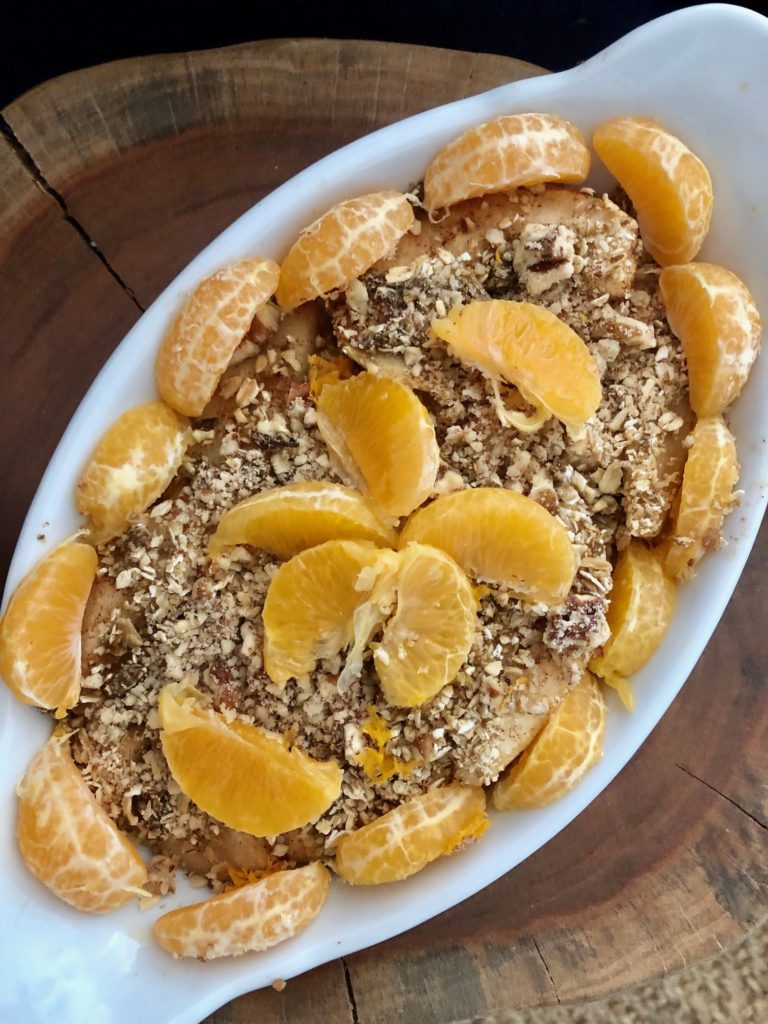
Oat Pear Crumble dish with Vata happy balancing cinnamon and oranges! Recipe below. 🧡
Today I share some better ways to get consistent so you’re in mind-body alignment. And if you’re in a season where you’re not in alignment (or have never been), you’ll have a hard time with the “A” word because you’re not there yet. But you can make that a mantra to get aligned!
And being in balance helps us get there …This time I’m focusing on Vatas, where every month looks different, like moon periods…
And every day of the month is inconsistent in some way… on top of the world around us is changing. The good news for all of us is, like plants, we’re growing just a bit daily. 🌱
And Vata patterns change more often than Pittas and Kaphas, even though those could be secondary dials that can ratcheted up.
For a Vata looking closely at her life, you’ll see how this affects your sleep, food, and play minute-by-minute… even what you reviewed in your productive time last time looks different.
And even though nothing about the work has changed. Because your last name is “change.”
Like the wind, Vatas by nature is changing all-the-time. Vata bodies don’t withstand temperature swings well… more like orchids than enduring palm trees.
So to balance and restore, doing the opposite helps. You want to be consistent and stay on task instead of letting the mind run you by sending a list of things you need to do this minute that aren’t urgent.
If you look at a tipping scale, the way to balance it is to add some weight to the opposite side. …makes sense, right? ⚖️
And if you’re feeling like you can’t sit still, or are going from task to task more than usual, you could be heavy on the Vata. And some daily tweaks could help you restore back to your usual ways pretty quickly.
For any of us, it doesn’t take much to get off balance in our Vata, Pitta, or Kapha.
For Vata, these are the balancing tricks you can help to tip the scales back to equilibrium:
1.Consistent sleep – just like you’ve been told is a good idea, keep the same schedule as much as possible. Even if you go to bed late, try to get up at the same AM time you normally do. You want to take advantage of circadian rhythms.
If you sleep in because your body has been tired for a season, you’ll be even more tired once your body gets a sleep dose. It’s part of the process of our bodies trying to restore balance.
Our one-and-only bodies send obvious signs and blaring warnings that we can still miss in our busy modern lives full of external noise. Alarms and coffee only go so far to help us awaken.
And while 8 hours of sleep is healthy and on average what most of us need, if you’ve had enough sleep, that’s all you need.
Worrying the Vata head is worse than not getting enough sleep in the mind-body connection, because then you add silent stress to your body. With a lack of sleep, your body will let you know by your tiredness, and other new symptoms over time.
Your body knows what it needs to reset and we’re not in charge of that. And if it’s running efficiently and you’ve been good to it by not overdoing yourself, then you may only need a few hours of sleep one night to be recharged.
The recommended 8 hours is just an average and works neatly for 1/3 of our 24-hour day.
But even if you have a perfect sleep record streak from measuring your sleep… at the end of the day, that just says you’re off to a good start with your daily health. It doesn’t indicate much else.
It’s more what you don’t do in sleep that shouldn’t be ignored. Any daily health telltale signs show up on the body and should be attended to quickly so they don’t become a new normal.
And getting the right dosage of sleep amount is individual as we all have different symptoms and bodies.
So… In short balance, the goal for each of us in sleep is getting enough. 💤
2.Consistent eating – and having regular eating patterns is good. I shared how time-restricted eating (or Intermittent Fasting) could help set a discipline, like it does with me for snacking and late-night eating.
And one thing I would steer more into the Vata ways is variety and diversity in healthy foods. Pittas and Kaphas tend to stick more to the same foods.
Different healthy foods offer different nutrients, vitamins, and minerals, and amounts. It’s also good to have macros: lean protein, healthy carbs, and healthy fats in the diet.
Muscle gradually declines as we age so we need more protein. Healthy carbs give us bursts of energy and keep us full enough while junk carbs rob us. And healthy fats help the body absorb foods and fat-soluble vitamins better this way.
3.Consistent Practices and Activities – keep you calm as you do your daily routines you enjoy.
That can include exercise, your craft, quiet time, reading, etc.
When you’re tired, try to plow through those moods and do at least a little bit of your routine or practice. This will teach you to keep at it, which helps with balancing inconsistency. And you’ll be working on a skill you can use the rest of your life.
And if you need ideas, you can find outlets like this one here that gives life advice on pillows:
LIFE IS GOOD…
And keeping it good is part of the balance. Because we all run into situations we’d rather not at some point. It can’t be all sunshine and roses (as part of the balance). 🥀
4.Consistent Behaviors with Other Influences
It’s important to stay consistent even when we don’t live in a bubble. We interact with people and society.
And you do this in work and life where you can get tested.
I’ve had many experiences starting something new with new people involved that can be a bit stressful… and sometimes throw the balance off. I’m sure you can relate.
And to make those times easier, what I do is I stick to my gut thoughts, feelings, and boundaries. It’s smart not to react as the air shifts around you and in you.
I know not everyone has offenders in their lives (living in a bubble, haha!)…
But kidding aside, in daily life, some people have no idea how they come across to others (in lack of self-awareness). And sadly, others knowing better let their bad sides run, trying to work (play) the systems. You just happen to be someone muddled in their system.
That’s just how it is in this imperfect life where we only control and manage ourselves.
…And that should be enough to keep us all busy!
We all come from different backgrounds. Sticking to our own values and not compromising is going to do you and the world a world of good (say that 10 tongue twister 10 times 😊).
You teach people how to treat you and how to behave toward others.
I know it’s not easy.
But always remember: your life is not a dress rehearsal. You will never get this year or today back.
And you don’t want to live in your own regrets if you need a motivator.
Usually, the people who want to test your buttons are the ones who aren’t doing the right things to begin with… and they’re not the ones that you want to follow anyway.
So with the troublemakers who aren’t considerate and are annoyingly kicking up your Pitta, initially it could seem like a good idea to follow along their ways or at least not create waves. But wise not to fall into this temptation.
…But the innocent often fall and don’t follow the good rules. They cave into the squeaky grease and play along on their blind path game that leads to nowhere.
And innocently that’s ’cause they don’t want to cause friction with themselves or other people. But you teach people how to treat you today and in the future.
If you let others step on you, then expect more of that when you allow it once. That’s how it is with children, and some adults haven’t grown up yet or figured out their ego sides.
And last tip on that note: never, never ever reward bad behavior unless you want more of the same behavior.
To be a productive leader, you want to create and forge your own path. Be considerate but stop caring so much. And think for yourself. You’ll be glad you did at the end of whatever you’re facing.
And be consistent where you tell your heavy anxious Vata mind to stop worrying about what will or won’t happen.
Because what will happen is you’ll get respected by the people you respect, and get to do more of what you want (and work with the people you want to work with).
And you’ll get to build the consistent, work-life balance that you really want!
Next time I’ll follow up with the 2nd part of the self-awareness series I started a few weeks ago that you won’t want to miss! 🧡
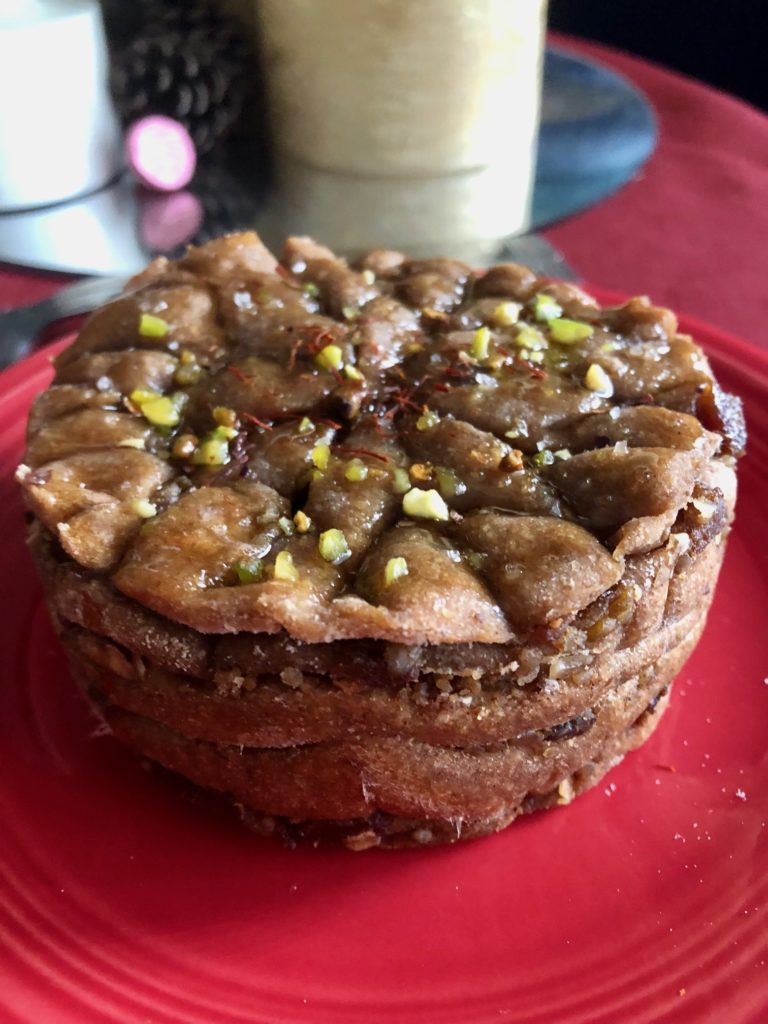
This isn’t what it looks like (or doesn’t look like!). It’s actually a honey-saffron-pistachio-dates-sea salt whole wheat dessert inspired by baklava and the layers are filled with a wintery nut trio mix (walnuts, pistachio, and pecans). Healthy and happy!
Intermittent Fasting has become a popular way for those of us who want to be healthier and improve mental clarity (and is not just for losing weight).
It’s something I’m embracing in 2023. And I’m sharing my points with you in this jam-packed post that also includes 15 great spices I love… for good food inspo you can appreciate on feasting days if you’re on a sustainable healthy fasting lifestyle.
But first, let me back up two points as you may not be familiar with Intermittent Fasting.
#1. Fasting or Intermittent Fasting (within time windows) is becoming uber popular these days as a way to lose weight sustainably. It’s the opposite of a fad diet that I’m opposed to because the long-term effects can backfire.
#2. Weight loss for a healthy body mass index or waist circumference is one great benefit that shouldn’t be downplayed… and has side benefits that are even greater. Losing weight also reduces the risk of cardiovascular and metabolic breakdowns and developing adult-onset type-2 Diabetes that’s soaring in our modern world. T2D oftentimes can be better managed, prevented, and restored with healthy lifestyle choices.
And another point… is if you know me, you know I’m not doing IF for weight loss. It’s the sustainable, healthy lifestyle and side health benefits that I’m super excited about on my end!
…So I hope the information here gives you some insight and can help you decide if IF is right for you. There’s no shame or awkward feelings like “being on a diet” can have because Intermittent Fasting (IF) is a sustainable lifestyle.
…And actually, no one during your day will be able to note when you’re IF fasting or feasting if you want to keep it to yourself (as your choice). Drinking water and coffee is pretty normal stuff for most of us. 😊
And I use sleep time for almost half of the 16 hours I’m fasting these days. But the schedule you decide is completely flexible and changeable from season to season… and actually is better when you mix it up if you get stuck e.g. not losing more weight or you’re on your cycle for women (that’s different than 🚴♀️).
There are so many health benefits from switching in and out of glucose and ketones. I list a few below, but I can’t get into all of them here as the list is long (and this article is already pretty long)… but, if you want to seriously learn more about this, just fill out the 2-minute body balance quiz and mention your IF interest in the optional notes area, and I’ll pass on some good resources.
And in case this is your first time visiting my weekly blog, I’ve been into preventative health my entire adult life that started when I was marketing high-end nutritional supplements in my early 20s. Lowering fat calories (where even “nuts are bad”) was part of the zeitgeist I grew up in. …and, well, these days that macro-talk has switched to carbs.
Personally, I like to focus on the macro positives like increasing healthy proteins and veggie-forward carbs.
But today, we’re on the brink of health research that’ll help us live longer optimally by biohacking our bodies. I think we need this to offset the toxins and global warming effects that we daily intake (and didn’t experience decades ago).
And I believe Intermittent Fasting will help our individual healthy e-missions as our world advances. More women and men are looking at IF as a healthy lifestyle choice. Here is a good reason why:
Because IF is good for chronic cardiovascular-related prevention (heart disease is still the leading cause of death, along with certain cancers, and now cognitive decline and T2D)…
So this is why IF is good for all of us (Vatas, Pittas, and Kaphas). All our bodies perform autophagy cell clean up, and efficiently better with IF. And that helps us to reduce oxidative stress that leads to the chronic stresses that lead to chronic diseases. And if you get into a 24-hour fast, you can optimize this one benefit.
You can also look up autophagy: a new kind of recycling we can do, but with our bodies. 😊
…that benefit alone should raise an eyebrow! And is good news.
As a health and wellness freelance writer having spent countless hours consuming IF facts, benefits, and science-backed expert advice, Intermittent Fasting is aligned with my current healthy ways.
So, I’ve added this to my 2023 health and wellness plans.
And in my weekly Intermittent Fasting, what I eat and drink complements my anti-inflammatory diet and balancing Ayurvedic-lifestyle (from yoga to spices)… below, I share some of my fave Ayurvedic spices-and-everything-nice list that helps to enhance self-awareness by appreciating the foods put in the body.
On my “fasting days,” I eat from 8-4. I know that sounds like an “on the clock” job, but that’s hardly the way it feels. It’s so easy and actually makes my daily life easier.
…In my case, it keeps me from snacking all day and night, like so many of us. And even though my snacks are usually simple and healthy, like carrots, nuts, popcorn, and dark chocolate, my body rewards me for not snacking at all.
That includes giving up the habit of chewing gum that I stopped a few years ago.
All gum, sweet mints, cough drops, creamers, and flavored drinks all count as part of the calories that can unintentionally swing the “napping” fasting body back into work mode, and easily break a fast.
Breaking a Fast
The snack elephant in the room (on feasting days) for me is a few soft Twizzlers (strawberry, cherry, and black licorice). I was so going to say fresh Twizzlers, but you’d laugh at me because there are few if any fresh foods coming from a packaging manufacturing plant. 😉
…And just so we’re clear, that’s not a Twizzler endorsement for any of my weekly healthy food lists and plans (anti-inflam, Ayurvedic, or IF). I’m not trying to steer you down a Twizzler diet path (…lol).
Licorice is the happy food in my life. And you have your non-negotiable faves. Hopefully, they’re worth it!
…So, swinging the needle back to the healthy (and happy) body, here are some ways I use spices.
I like to go into my spice cabinet regularly and open up the small containers to cook and bake with. It’s an Ayurvedic balancing practice (not usually practiced when fasting).
Spices heighten the senses. And are a good way to develop recipes and come up with spiced-up! new meals. I’m a free-pour type of gal so rarely do I use teaspoons to measure spices. And sometimes being heavy-handed makes for a better dish or bake anyway.
Balancing the Body with Spices
And not only are spices a good way to appreciate your sense of taste and smell, they’re also a good indicator of where you’re balanced and off-balance. I mentioned the Body Balance Quiz earlier which uses this same concept.
This is body-mind self-awareness from the mind-body’s perspective.
Here’s how it works: whether you’re anxious/worried, irritated/angry, feeling critical, or feeling lazy, these emotions and moods all show up in your spice preferences!
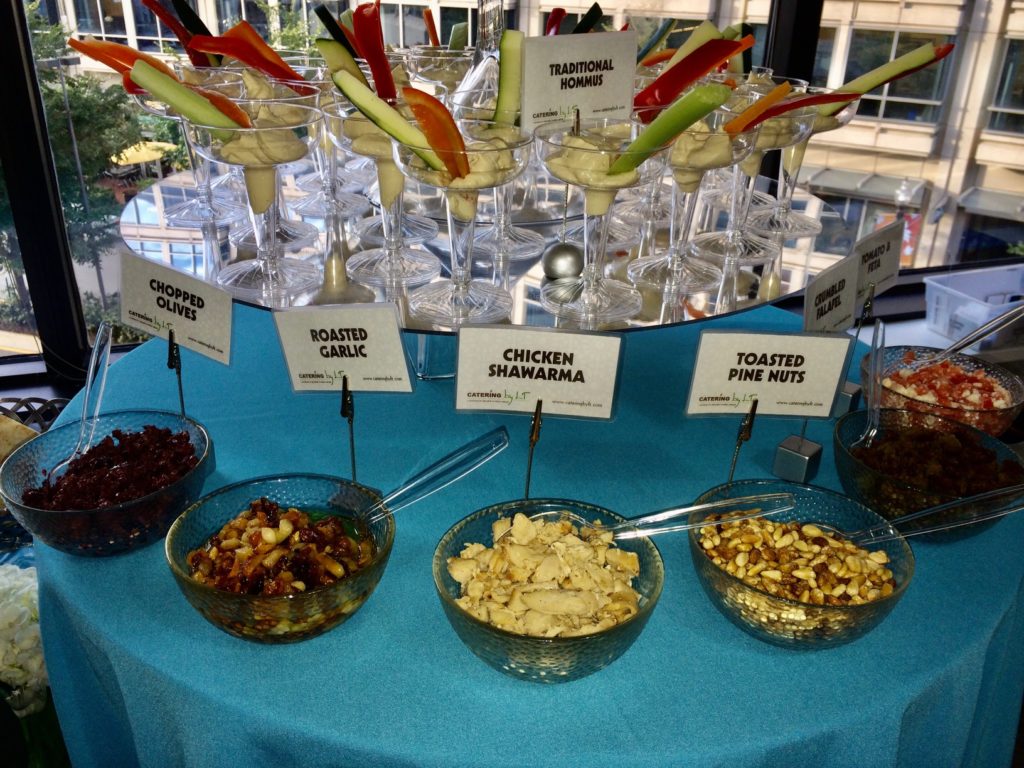
This is one of the fun experiences I had when I learned Ayurveda in 2008. And then years later hadn’t forgotten, so I thought would be fun to give “the spice test” to my office-mate catering colleagues. It made for a nice break when we were all swamped and I had up to 7 events going on in a day.
…And somehow I found time to help out and work at one of The WeddingWire HQ catered events in those imbalanced hour days.
…So when I gave my officemates their personalized results, I think they felt like I magically 🪄knew them better than themselves that season (…and just with a few everyday seasonings I brought in!). Of course, I provided the counterbalancing solutions they specifically needed.
And these ordinary ones are some of the faves that can make an EXTRAORDINARY dish.
Sweet Spice:
✅Star anise. A spice blend with star anise as the star is Ras el hanout. You also get some punchy notes with cloves, balancing fennel, and mild-spicy black pepper.
✅Curry. Surprisingly I used to think this exotic spice smelled like an old shop full of food knick-knacks. And then grew into this sweet spice. It goes really well with chicken or potato dishes.
Bitter:
✅Sumac. This is not as common a spice. You would know if it was in your cabinet because it stands out with a dark purple color. It has the quintessential bitter taste along the same lines as dry mustard.
📝And bitter spices would probably not spike insulin on a fast (aka Intermittent Fasting), but the foods that went with it definitely would!
✅Pungent:
Ginger. Freshly grated ginger is great for everything. It has a calming effect even though it has a distinctive spice kick at the end. And of course, ginger spice is great for gingerbread in the gingerbread house in the winter holiday seasons.
✅Cardamom. This takes a sophisticated taste. You either like it, are neutral, or detest. Most younger tastes go for the latter perspective. Maybe that’s why it has “mom” at the end because it’s meant for more mature tastes.
✅Black pepper. And there are studies that indicate if black pepper is added to cardamom, there are synergistic anti-inflammatory benefits. It’s not just good with salt. And you can take that for what it’s worth. I personally like waving black pepper around for opening up nasal congestion. 😊
✅Cloves. This is a versatile pungent spice. Unlike ginger which gets spicier, clove is a subtle spice. And maybe why a dark brown color to blend in. And cloves are off the charts when it comes to anti-inflammatory, meaning it’s super good for you.
It’s one of those hidden spices in the cabinet that should be brought out. And it’s often in the middle of the list of ingredients in a spice blend. It doesn’t get the glory recognition it deserves like bright orange turmeric news headlines these days.
And just a few more spice notes 🎶, and then we’re done. Btw, thanks for sticking with me!… Your dishes will thank me.
Herby/Fragrant:
✅Garlic – good for adding a 3rd dimension and a good prebiotic we can always use more of.
✅Thyme – similar to oregano that’s generally more common.
✅Oregano – good for any Italian dishes, pizza, pasta, and red sauce.
Distinct/Pleasant:
✅Tarragon – for any savory dish you want to add a sweet herb and create a French bistro in-the-mouth vibe. This is great for savory breakfast foods like potatoes and eggs. They can also be part of your break the fast foods if you’re Intermittent Fasting.
✅Saffron – great for any seafood dishes and stews. And even sweets paired with honey, like baklava. Saffron is a Vata favorite because it has a very balanced, sweet, and distinct scent and taste. You can’t miss it in a paella seafood dish.
✅Dill – is lovely with any cold appetizers that need a ‘lil fresh pep. It also has a distinct green pine needle look, so it makes for a great last-minute dish dash (or final touch to top off).
Unlike rosemary which also has a needle-like appearance, dill is easy to chew. Dried rosemary… not so much, and since it’s prickly is better as an exterior skin flavoring or on a roast.
✅Mint – Not the candy mint no-no I mentioned earlier when I was talking about fasting, but the plant that’s actually an herb. Peppermint leaves are great for tea and baking extracts. Tea leaves are great for garnishes and also pair well with fruits.
✅Spearmint – always reminds me of Wrigley’s spearmint gum (another fasting faux pas) from my childhood years and is good in a tea blend. Also, good with dishes such as mint peas.
So, that’s what I have for spicy news this week until next week!
I record all my blog posts, so you can fold laundry or take a break from staring at a screen 📱
…And if you want to learn more about starting an Intermittent Fasting anti-inflammatory lifestyle habit you can stick to (and maintain a consistent weight), check out my FREE 27-page Intermittent Fasting Guide. 👙
Sleep is the revolution we’re in. Previously the ambitious mantra was to forego sleep to get more done.
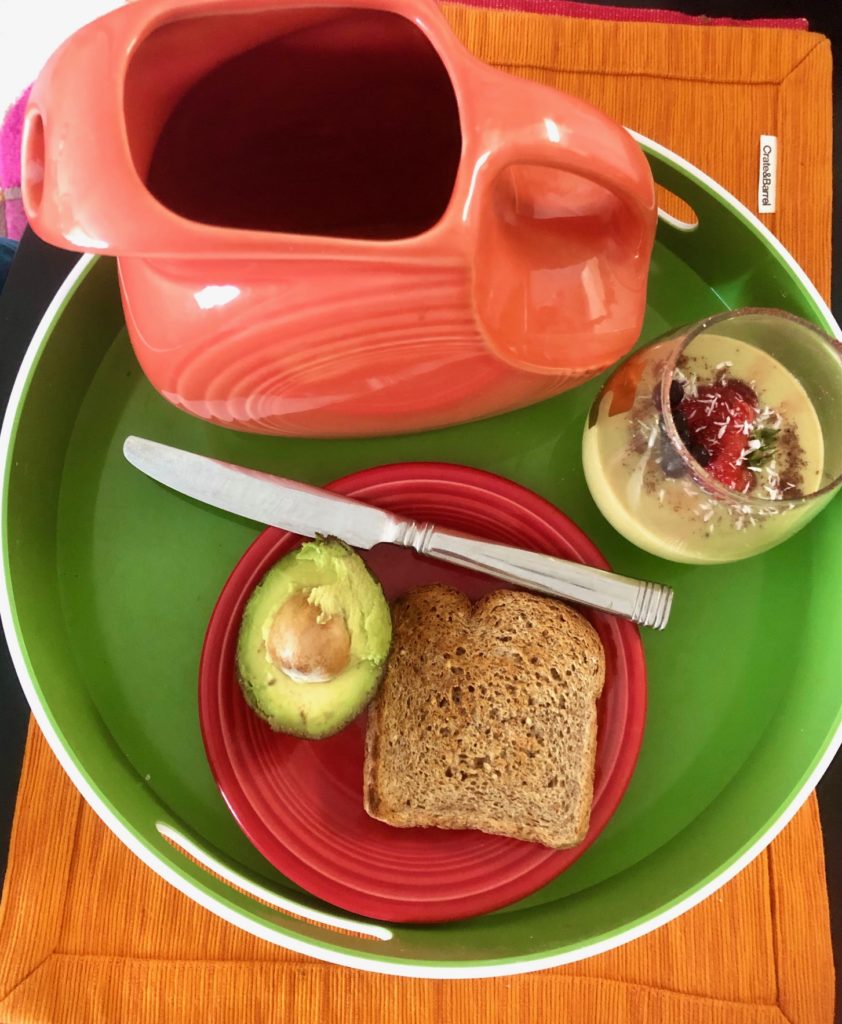
A healthy avocado breakfast to break the sleep fast! 🥑
Whether getting more sleep is on your list of resolutions or wellness intentions this year (or not), you’ll get a new side of sleep… not just back, left, or right but a whole NEW angle (in this week’s blog post article)…
Below, I share about Ayurvedic energy patterns that affect your sleep, and why it matters to your daily energy.
…And a NEW change this year I’ve made that’s revolutionized my sleep. 🎉
And sleep is everything to your body… and to you and me!
Even when it was endorsed and en vogue to sleep less to get more done just a decade ago from what I remember, I never bought into that belief.
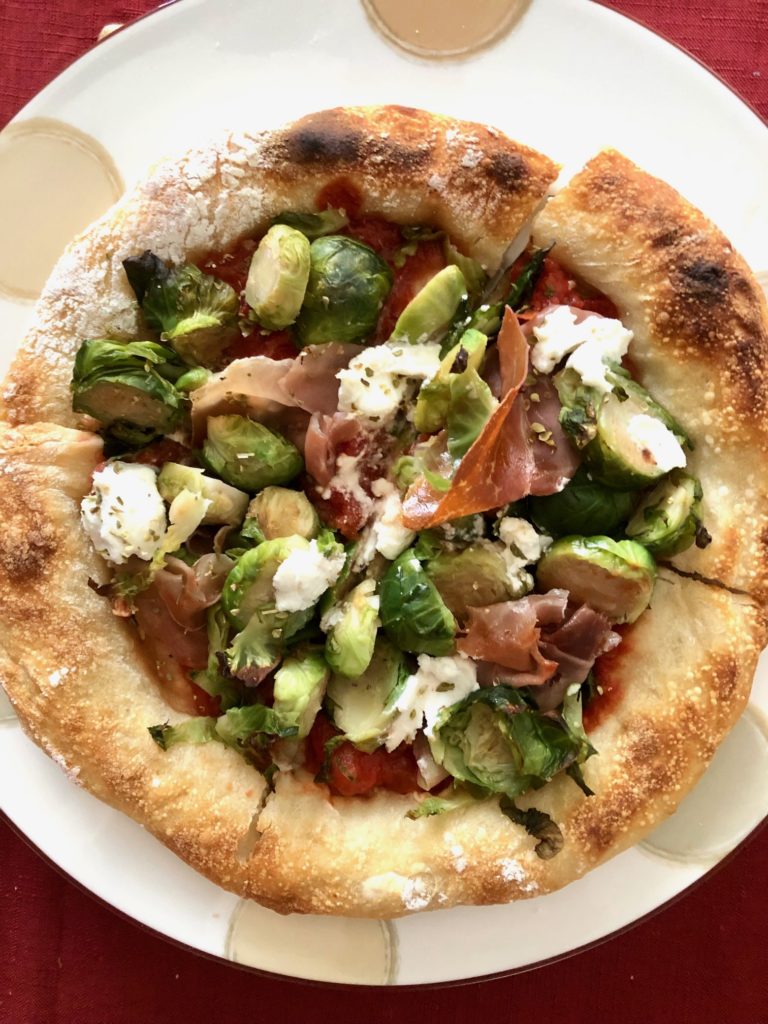
I always thought sleep was the best thing ever. Better than sliced bread (which I’ve replaced with homemade bread loaves and airy pizza crust with anti-inflam Brussels sprouts 🥬…that’s not a healthy fad.)🥖
…And sleep isn’t a trendy fad.
Amazing sleep is on my daily bucket list. We never know when will be our last day, and sleep is wellness time spent well.
When you look like a Sleeping Beauty sound asleep, you’re at peace.
…Your conscious mind isn’t running where you have to act or make any decisions.
And even if you don’t love sleep… we HAVE to sleep as part of survival, so our bodies can restore and reset. With all the functions our bodies do second by second, it needs a rest.
And after a good night’s sleep, you naturally have more energy to be productive during the day. You run more efficiently as you gain minutes because you get more done in fewer hours.
And that leaves you less stressed. And to your body, less accumulated stress cuts down on oxidative stress (one of the reasons why we work so hard to eat healthy).
We also know we prevent diseases when we prevent chronic inflammation. And long before I became an advocate for anti-inflammation, I was uneasy with the idea of running on lack of sleep.
Sleeping in occasionally was a weekend luxury (that cost nothing!). It’s a happy feeling not having to look at the clock or having a blaring alarm to artificially wake up to. It’s freedom from a duty activity you have to do, like work or school.
But artificial alarm wake-up time is not the time your body wants to get up. If it’s super early or you had a rough night of sleep, that often shows up as bags and lines under the eyes.
And if giving a presentation was part of the new day, adding a few “get the red eyes” drops always came in handy.
We never wanted to show that we weren’t well rested. And I learned this as a child when school started way before it should be legal for a child to have to get up, LOL.
Before the sun rises is way too early, especially for our growing bodies (and adult bodies) that run best along sunshine/sundown circadian rhythms.
Night-time is nature’s way of preparing us for sleep…. and why in my youthful adult years I always felt tired out at social clubs. But the environment and friends kept me buzzing.
And even way back before those times, when waking up, I learned from teen magazines to take an ice cube and soothingly apply under each eye for a few seconds. Instantly that made you look well-rested even though your mind was still half-asleep…
This is how it felt eyes opened until the time my mind and mind-body caught up.
I wasn’t one of those kids whose parents introduced caffeine or coffee to them. My 90-year-old immigrant parents have still never had coffee or a soda EVER as far as I’m aware.
They didn’t grow up with it. And I didn’t either. I only started enjoying daily cuppa joes well into my adult years.
And this is my joyful daily routine over alarms.
…So as a schoolgirl, like many American kids in public schools, I had a bowl of cereal with milk and some juice for breakfast. That was supposed to tie me over until lunch.
By 8 am when I was at school, I plowed through the tiredness. There wasn’t another choice. From what I remember, putting your head down on your desk was only done when we had a classroom survey where we raised our hands anonymously.🙋🏻♀️ Or maybe used as a timeout tool that I never experienced. I was an obedient kid. 😁
And then after 11 am, my full day’s energy kicked in. 🤸🏻
But I noticed I was still alert for morning tests as you don’t need high energy to take tests. You need the answers from the mind. And sometimes our teachers gave us a Jolly Rancher candy for our veins so we stayed awake.
Then by the afternoon school lunch, the food that finally entered my stomach sunk like lead and I felt like crashing in the afternoon. (Now as an adult I know it was the heavy, processed carb meals from school lunches that caused the blood sugar rush).
And the change in pace from class and lunch socializing with friends didn’t help either to swing back into learning. Post-lunch, my mind was ready to shut down. (Today, we know it’s part of the gut-mind connection).
…It’s like going to a social event or a game where you’ve eaten party food and then trying to study. That doesn’t work too well if at all.😏
But that was the school’s schedule, and so that was my daily agenda. Priorities misaligned, they put school-age-kid bus schedules in front of the kids they serve.
…And if school started later in the day, school-age kids would have a better chance of getting enough sleep. We need a new sleep revolution in our society starting from a young age.
But that’s a whole ‘nother topic… and this isn’t a rant or discussion about revolutionizing schools.
Outside of school and those years, today we have better food and meal choices. And food is still one of the 4 basic needs along with water, shelter, and clothing.
And sleep should be on that list as a #5.
If you’re a naturally inconsistent sleeper, then likely you’re a natural Vata body where you wake up earlier one day over the next. Each night of sleep is an adventure as it varies.
We can’t change the way we naturally feel. So this stacks against us to be daytime productive unless we learn to use our natural bodies to our advantage.
These are some natural (circadian rhythm) times when we want to lean into each of our Ayurveda dosha “personalities”:
From 6 am – 10 am, if you’re up, that’s Kapha time. And from 10 am to 2 pm is Pitta time. (And as a child, a mind-productive time in the late morning thanks partially to the mind-body connection).
From 2 – 6 pm, Vata time kicks in. Naturally, Kapha-heavy bodies can want to take a nap while the Vata is still alert.
Example: I’m a dominant Vata body, so I enjoy working during those energy-filled afternoon hours (after I’m done with a Kapha coffee morning ☕️). But occasionally if my Kapha is imbalanced and high, then I can feel tired the whole day.
…Not revelationary, but an interesting perspective, huh?
And unless you feel imbalanced, daily tired, or low on energy, then don’t lose sleep over the Ayurveda time concept and idea that’s probably newer to you.
But if you do want to make changes as I do as life-healthy prevention and daily productivity, then you can try something new or a bio-hack that works…
Especially since winter and age are not on our side. We can be more sluggish to make changes. And our bodies want to sleep in but we want consistent sleep year-round to fit our schedules and lives.
…So what I did this month was I started fasting (time-restricted eating) a couple of days of the week on certain weeks of the month.
I sleep peacefully well on fasting nights ( like Sleeping Beauty described earlier). And my body needs less winter sleep (and the same 7, maybe 8 hours amount of sleep I prefer consistent year-round that’s also experienced in fall, spring, and summer).
And the day after fasting I feel naturally more energetic and more alert. Look forward to my fast day tomorrow! …and I’d love to know if that’s something you’ve tried or are doing (…maybe for the same reasons I’m doing or as part of a new year weight loss plan).
I’ll share more of my journey in the weeks to come. Until then, have a peaceful and blessed week! 🙏