
Amaranth vs quinoa is a good comparison for grains. They’re both actually pseudo cereal grains (seeds), and not from rice, corn, or wheat.
They’re both complete proteins, meaning they have all essential amino acids.
So they’re perfect breakfast starters to get you going on a fuller meal.
…Oh, and gluten-free.
…Someone’s ears just perked up.
Because if you’re trying to eat less gluten (or are allergic), amaranth and quinoa are more on filling you with protein. And filled with vitamin and mineral nutrients.
Quinoa for starters, is a popular whole grain.
I remember the 90s Friends episode where the trend took off. Move over rice and couscous in the pantry, quinoa became the household food newcomer.
As the world sped up from old fashioned times, people wanted quicker meals.
And quinoa fit the quick and easy to cook up profile, vs. other grains like some raw rices take much longer to cook and soften.
Today, decades later, you can add amaranth to the list as easier to source and quicker cook-soften.
It’s an ancient grain and known as a longevity booster to help your longer ancient-ability.
Farro, einkorn, and spelt are also ancient, but they’re wheats, so they have gluten.
Then there’s barley as its own grass category, like wheat.
But if you’re looking for gluten-free, try the pseudo-cereals like quinoa, amaranths and buckwheat.
Buckwheat is usually ground into a flour. You can bake into desserts and sweets like a buckwheat ginger cookie. You may have heard of them in soba noodles.
So now that we’ve cleared that up, we know different grains for a savory bowl cook differently.
And smaller pseudocereals cook quicker in 20 minute or less meals, with amaranth vs quinoa being the more practical choices.
So which is better?
Of course, that depends on you!
…I really like amaranth because it won’t burn-stick to your pan like quinoa if you’re deciding on amaranth vs. quinoa.
Amaranth is mushy with water and quinoa is more dry, so it can burn more easily if there’s not enough water in your pan at any heating moment.
With amaranth in water, you won’t lose a single grain as it can become a mushy ball and soft like creamed wheat, or a porridge you can spread out in your bowl.
Quinoa is usually more dry like fluffy wild rice that I like to compare it to as each piece stands on its own. Each piece looks like a small piece of thread hanging on each quinoa seed.
And because of these texture differences of amaranth vs. quinoa, cooked in liquid amaranth doesn’t linger in your mouth and end up on your teeth after you’ve finished your meal.
But don’t let that stop you from you quinoa.
Because as for healthy notes, both are still great protein options.
If you’re needing fiber and lower glycemic index options, quinoa is a better choice.
Amaranth is higher in calcium and minerals. Also, if you are looking for easy to digest foods like a temporary BRAT diet, amaranth is a great variety option to keep in your pantry.
You can also add a little amaranth to bread dough (like you would sourdough starter) in a healthy whole grain roll.
And the best part is the versatility of amaranth vs quinoa that you can mix up in your meals.
Amaranth can also be made more dry (instead of the mushy texture already mentioned), as you can make “popping” amaranth like stove popcorn.
Or you make quinoa more wet in a bowl, like in a quinoa cereal with your milk of choice. This is good for Vata balancing as your body is feeling dry and looking for more moisture that you can get through a healthy bowl.
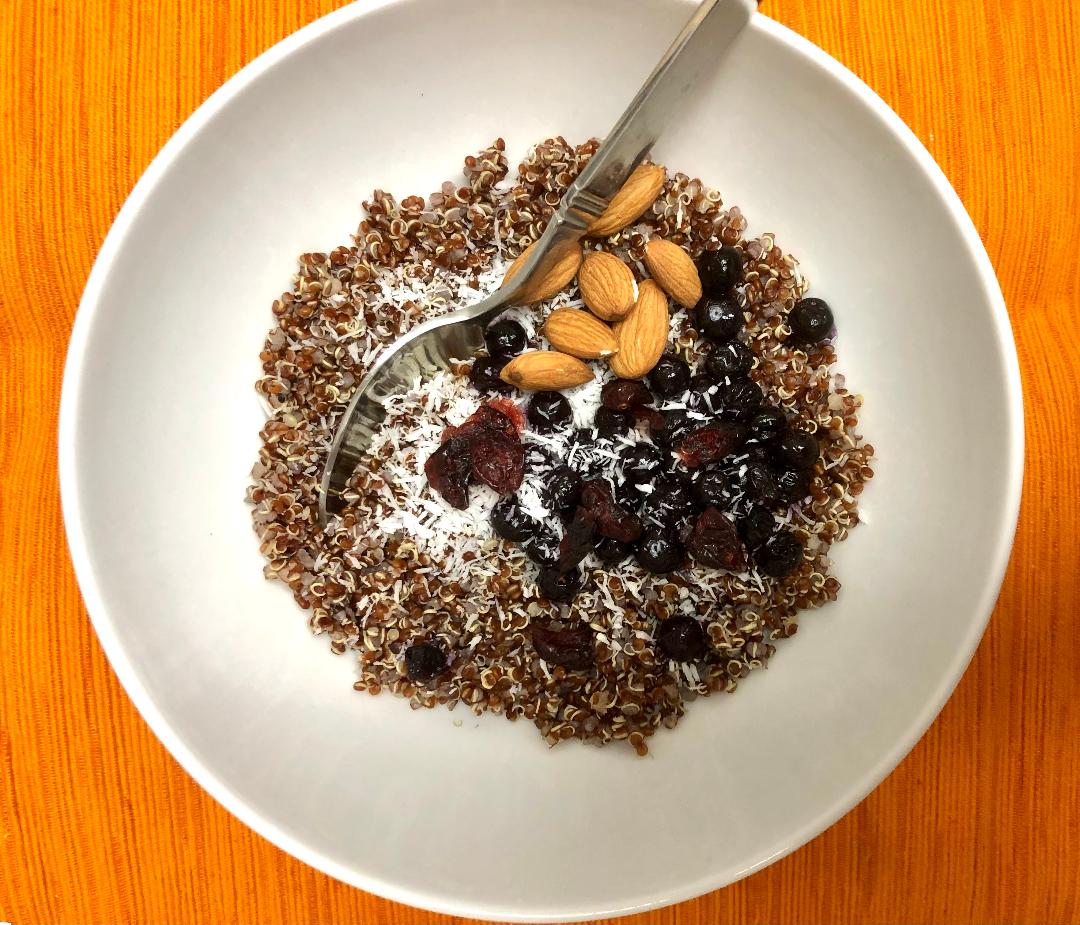
Add in your nuts and seeds. Oh, and how about a heart healthy quinoa bowl to start your day?
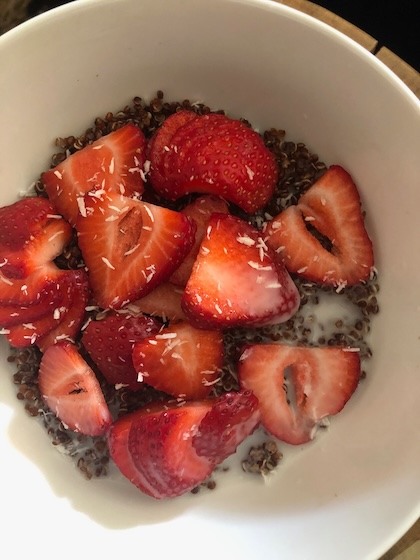
Heart Healthy Strawberry Quinoa Cereal
Ingredients
- Red quinoa
- Organic fresh strawberries
- Almond milk
Instructions
- Cook quinoa to soft. You can use red or traditional quinoa.
- Chop strawberries. Use organic and fresh strawberries. You can freeze what you don't use in a few days.
- Add milk.