UA-141369524-4

Healthy Baker – 13 Tips and Laughter from British Bake Off

Healthy baker recipes can be inspired by shows like The Great British Bake Off. And I share a healthy phyllo dough recipe for baklava below. Yes, you can make your own and have fun! 🤩

healthy baker lessons from The Great British Bake Off.

It’s no secret that 1) I’m a healthy baker, so I wanted to share some of my tips this week below. And 2) I’m a huge fan of The Great British Bake Off (or Baking Show). I’m loving this season’s debut and I especially love the baker’s use of unusual flavors and creative designs shown off under the big white tent so far.

It’s always fun to laugh along at Noel’s unicorn jokes and rainbow outfits. And to hear the judges pronouncing oregano like origami (I’ll never look at my spices the same again 😁)… or calling tacos like calling a taxi (…wait a New York minute, how did corn flour tortillas get in this past week’s technical challenge?)

Both are a sign that popular international foods and ingredients are making their rounds besides in tortillas. Plus, fruit shortages and inflation have us creatively sourcing foods and collaborating, which are helping to save our planet.

And being able to make your own anything anywhere is helpful, so you don’t feel helpless and rely on the world to produce. Thinking like a creative baker (or cook) is a helpful skill these days.

…And blends well with an anti-inflammatory diet full of healthy food ingredient variety, where you can lean into seasonal plant-based foods spanning the globe.

I look for international food sources that are everywhere and cropping up in leaps and bounds. Daily, the Earth is revolving AND evolving its own sustainable foods that we can appreciate especially in local gardening or farmer markets. So, be expectant for food births of new kinds 🍓

And actually… I picked up my own local international flavor combinations with fresh blackberries, and chokeberry-prune purees, as I work my way into fall (… both my feet aren’t into the pumpkin season just yet 🎃).

I did get some blackberries squirted in my eye… but luckily no black eyes, as that would make it a challenge to make this week’s cinnaroll full of Ceylon and cassia cinnamon for anti-inflammatory sweetness 😊

Fall fruit plate (kiwi, blackberries, and apples) with Ceylon cinnamon rolls

…When I was growing up, kiwifruit was considered an exotic fruit that today is as common as year-round pineapple juices.

And when I come across 2 sticks of butter or a cup of sugar in a cookie or pastry recipe, it reminds me of my younger years. These days, I tend to steer away (…as growing up will do that to you!) and find healthy substitutes for both mind and body.

I’m a sugar lover by nature (most of us Vatas are) and I remember when I was a child and I would reach into the sugar jar  (for baking of course!) and help myself to a few daily teaspoons of refined sugar. That set me on the path to an adult sweet tooth where I needed daily sweets to keep me going…

Despite sugar making more than just news feeds… the fact is that it’s also feeding the bad bugs in the gut.😏

And individually we all get body warnings from our skin and health symptoms. Everyone is different. So, for me, I can enjoy a couple of Twizzlers and be better off than a few squares of chocolate. God put the Twizzler makers on the earth for a reason 😉

And for you, it could be something else. And certain fruits or ingredients can throw others off. It’s good to be discerning and a little picky this way.

If you want to know what your body is trying to tell you through its daily symptoms, take the minute-and-a-half Body Balance Quiz and then take it again next season and compare the result.

So now that we got the body squared away, here are my healthy good-mood baking tips this week from me, the healthy baker…

First of all, some of us are messy bakers that can be part of the fun, and others of us are neat bench bakers. Whatever you think you are, it’s all good! 👍

I tend to be a planner and a neat healthy baker cleaning up as I go, so my tips come from that POV and can help you if you want to lean more into that.

Either way, you can still bake up a storm and change your bakes at the last minute. Why?  For creativity, and for the purpose of using baking to relax. …That can be a new reason to bake!

Oh, aannd if you’re a baking show addict, I’ve added some highlighted inspo from the Great British Bake Off… and hope I don’t come across too cheeky! 😉

So here we go!

Baking Prep Inspo Tips:

1.      Read your recipe and know the ingredients you need before the baking day so you know what you need to get from the store at least a day ahead.

2.      Prepare what you will bake in the morning and then bake later in the day. Healthy baker or not, often doughs need time to rest or rise (…sounds a lot like us peeps).

And I can’t tell you how many times I’ve forgotten to take the eggs out early  enough so they warm up. And if eggs are your way of giving a shine to your bakes, that’s critical because egg whites and yolks mix together better at room temperature.

3.      And if you pull out your tools that you’ll need, early in the day, you can rinse off and allow enough time to dry out, so you don’t have to do drying, prepping, and baking together which can feel like a real chore and take the fun out of baking.

And especially if you need to concentrate on counting your layers for lamination and making sure there’s not a drop of moisture that can affect your temperamental meringues.

4.      Bring out a convenient bowl or plate for all your used baking tools and baking trash so you don’t have to think so much. Ah, baking can be relaxing (when it’s not in the tent)!

5.      Keep a damp towel or a few moist paper towels nearby so you can use them whenever you need to wipe your hands or any fun spills… or when you need to reach for your phone or swipe to your recipe.

6.      Read your recipe a second time and then mark the dry ingredients and wet ingredients and write any notes you have. Then pull out the ingredients for baking.

…OR, If you’re not using a recipe, jot down what you need for your bake vision, and bring out the visual ingredients. Visual is also good for illusion bakes that the GBBO contestants often have to whip out! 🪄

When you’re using healthy baker ingredients, you especially want to use the most useful tool you have… your pair of eyes 👀 as a double check. Is the dough or batter too thick, thin or moist, or what do you need to add? If you use gluten-free flours they tend to collapse easily.

7.      For many sweet or bread bakes, I like to add the flour first to see how much water, other liquid, or moist ingredients are needed.

After the dry and wet, I add leavening agents last to optimize rise if it’s a cake or bread. Plus then you are less likely to forget, as now that’s Step 3 (e.g. dry, wet, and then leavening agent). That’s just the way this healthy baker found works best for “experimental” bakes.

Baking doesn’t always go as planned in the oven and depending on the weather. Chemistry in the kitchen can be tricky.

8.      While a whisk looks fancy and is one of my favorites (good chemistry there), it’s only good to use sometimes, as most of the time it’s not a good tool to use and is more of a hassle than its worth.

When to use a whisk: fluffing or whisking eggs, dry ingredients OR wet ingredients, but not both (like more flour than wet) that can make a sticky mess on your whisk. You can replace with a silverware spoon instead… or you’ll be spending time cleaning your whisk and risk a claggy bake (that Prue would point out and you wouldn’t want to inadvertently glue Paul’s mouth). 😁

9.   For multi-layer cakes, weigh your flour in grams (instead of measuring cups if you can) and then you can help prevent uneven lopsided cakes. The Brits have it right and as GBBO Prue and Paul like to say at judgment time, “it’s a bit wonky.” 😉 …or “it’s on the lean” like a Leaning Tower of Pisa cake.

Oh and if it’s a Printzregententorte Cake that most of us can’t pronounce (and barely fits written on one line), you don’t want to leave each layer to chance.

If you’re not a GBBO watcher, that was one of Judge Prue’s technical challenges last season when Judge Paul counted all the missing layers. 🍰 Now you’re up to speed on the show. 📺

10.   For recipes that have you separate dry and wet ingredients before mixing, it’s best to keep the salt away from the leavening agent (e.g. bicarbonate/baking soda, baking powder, or yeast). This can be easier to do if you follow tip# 7. Think of the flour as the soil and you want to add your other ingredients to different parts of the soil.

11.   Clean your bowls and tools as you wait for your desserts to rest or bake. That way when you’re done, you reward yourself with your dessert like you’re a guest and not the dishwasher.

.12.   Use your your oven light and timers to visually see and not forget. Depending on how much time you have (or how patient you are), low and slow can prevent soggy bottoms (that I don’t need to mention are a big no-no in the tent).

13.   I like to use long toothpicks to test baked doneness, but like Prue pointed out in one past episode, you could run into a piece of fruit and be deceived. My alternate way to test is to add a sample-size bake appetizer on a (or the) baking tray. And if the sampler isn’t done, then you know the prized bake is not likely to be either.

So… that’s a wrap or the end of the cling film for this healthy baker this week (…sorry, I couldn’t resist!)

I’ll stick to my job of cheering the contestants on! 🎉

And if you want to learn to make your own phyllo dough that was laughed in one GBBO episode, it’s more fun than a hassle.
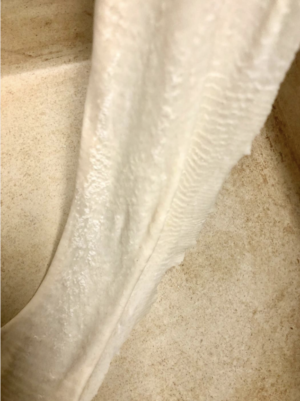

homemade phyllo dough recipe.
The baklava phyllo dough is opaque like pantyhose but free of holes.
Print

Easy Phyllo Dough For Baklava Dessert (Mediterranean Olive Oil Healthy)

Make phyllo dough from scratch! It's not as difficult as it sounds... and dare I say fun!
Course Dessert
Cuisine lebanese
Author Brandy @ Healthy Happy Life Secrets

Ingredients

  • 2 tbsp olive oil
  • 1 cup flour
  • 1 cup water
  • pinch of salt
  • honey
  • chopped nuts
  • dates, orange, and cinnamon (optional)
  • additional bench flour (to prevent sticking)

Instructions

  • Making phyllo is a lot like making homemade pasta, but much thinner.
  • Make a mound and a hole in the middlle where you can add the olive oil and slowly add water. Knead for about 5 minutes and then form a dough disc. Let rest.
  • Roll out as thin as possible and then you can slip into the pasta maker if you have one, adjusting until you get to the thinnest setting (e.g. 1). It will look opaque but the hope is that there will be no holes.
  • Cut into strips that you will use as layers for the baklava.
  • For the baklava, you can brush honey and top with chopped dates and nuts (walnuts or pistachios work well) on every other layer if you make 7 layers ending with the top layer with honey and nuts. Sprinkle each layer with cinnamon and orange zest if you like (good for Ayurvedic Vata balancing!).
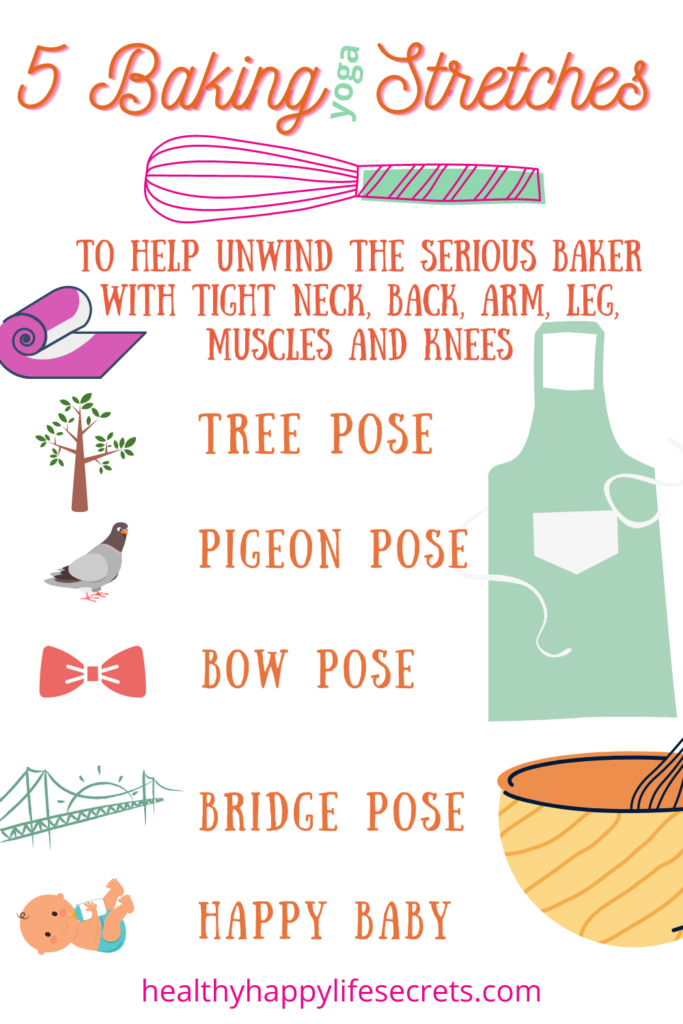
Flow Yoga Poses In 10-Minute Baking ⏲

Flow yoga is something you can add to your practice 10 minutes while you’re waiting and working on baking.

5 yoga flow stretches while waiting for your bakes.

For the next few weeks, I’m focusing on a new flow yoga mini-series to help you go from one pose to the next easily. Yoga means “union” and is the mind-body-spirit connection that we all can use.

And If yoga is intimidating (or it’s better) to you, you can call it modified stretching or something similar so you can remove the mental blocks (…and yoga blocks if you choose 😉).

Stretching is needed to reset our tight and daily working bodies. So I hope this will help you through the rest of the year whether you’re traveling or staying put where you are.

…And a flow yoga routine is something easy you can practice and do year-round and anywhere, so I’ll give you a flow yoga sequence below for someone who spends a lot of time in the kitchen (myself included).

This time I’ll focus on yoga for those who do regular cooking or baking. If you know anyone who spends a lot of time in the kitchen, you could share this with them.

Body Balance Quiz

Even if you don’t think you’re good at yoga, the benefits to your body outweigh the few minutes spent… and some benefits can’t be achieved with other exercises, as you’ll not reach those hidden body muscles and crevices.

We tend to use the same few muscles for everyday use like our biceps and legs, when in fact we have about 600 muscles.

And whether you’re in the kitchen, traveling, or in an office, it’s good to plan to have a yoga mat or towel nearby, so you can stretch every day.

A mat can be a good reminder, as we take for granted that our bodies work for us every day without missing a beat. 🫀

We can all use a stretch once in a while where we let our hair down and take off our shoes and socks.

So grab your mat and here we go!…

If you’re working in the kitchen often, you’re looking down most of the day at the kitchen counter or the baked items you’re preparing. This puts a strain on your neck and all the nearby muscles running down your shoulders and back.

This mini-series of poses, or flow yoga, would be great to help you unwind and restore as you wait for your timed baked goods to bake in your oven.

You gotta love the oven for that reason!…

And last time I mentioned how great your freezer is for storage (another great piece of equipment to be grateful for). And this week it’s all about optimizing your waiting on your oven.

With an oven, you can set and forget your food cooking for a few minutes. So you can get to your other tasks… and a few resetting yoga poses while your food is baking evenly.

What flow yoga will help you do:

🧡 Undo the tension and strain you put on your body from preparing your food and bakes, even if you don’t feel it in the moment.

🧡 You may realize you need more stretching which is exactly what your body wants. Note: you can’t do too much yoga, but you can overwork parts in yoga. And if you ever do, you realize how delicate and resilient your body is.

🧡 And the best part of yoga (I think) is you will feel like a million bucks when you get back to the rest of your day.

Most poses you can do while you’re watching television, but after you already know the correct posture and alignment. That’s why it’s good to get proper instruction from a studio. But if that’s not possible, then use this general rule:

1)     If it feels like a good stretch to your body in the moment, then you need more of it. It should never hurt (where you bite your lip in wincing pain).

Yoga is individualistic. Everyone has different bodies and nuance tolerances, so you have to use how YOU specifically feel as a guide and not what others tell you they feel when they’re in the pose even from one Vata to another (or from Pitta to Pitta, or Kapha to Kapha)…if you get my drift? 

2)     If you’re in a pose carrying any body weight, then do not move the body part that is carrying the weight if it’s a weak area.

For example, in Plow pose laying down where your legs go behind your head, your neck carries the weight of your legs and parts of your torso, so you wouldn’t want to move your neck when you get in the pose (and it’s easiest to stare at one distant spot or a light in the ceiling above).

Yoga is totally a personal journey where you get to know your body after you get the basics down.

Yoga has good body benefits even if you don’t get into your zen (and that’s a good mind benefit).

Determine Your Weak and Strong Areas

For each of us, we’re physically stronger in some areas and weaker in others, and that can be specific to specific poses.

For example, my strength is flexibility and balance. And the more I do yoga, the stronger the muscles become to support my weight (like in a Plank). It can be the same for you or you could be strong and want to work on balance, like in a Tree Pose. Or flexibility and balance in bird yoga poses. It’s all just practice.

And in yoga, endurance of how long you can stay in a pose is mostly determined by your patience and the strength of specific muscles.

If you’re newer to yoga, find out what your strong areas are. And what the weak ones are. We all have them and sometimes we don’t know what they are until we make a small mistake in yoga that shows up as a ‘lil pain a day or two later.

…That teaches us for the next time and also lets us know we’re alive!

Baking Flow Yoga Poses

So to start, practice some Cat-Cows to loosen up.

Then you can rest in a Child’s pose (or Hare pose if you want to really tuck in). There’s no hurry in yoga (except when your buzzer goes off for your bakes! ⏲)

…And so when you’re ready, then lie on your front like you would on a beach towel laying face down or reading a book.

Then reach back and grab your ankles if you can, or just alternate one ankle with the same side arm at a time, if that’s too much of a stretch initially.

You’d be surprised that you can change pretty quick in flexibility after a few minutes or sessions! The longer you hold the pose, the easier and better it is and becomes.

…Remember when you tried the splits and you could stretch even more the longer you stayed in the pose? …And don’t raise the bar too much, like a gymnast who’s built for that!

So then after grabbing your ankles, look up and peel your shoulders and thighs off the floor if you can. Lift off. Look upward. This is really good for your back and neck. And this pose is called Bow pose. Stay there for as long as you can and let go and then try again a few more times.

And from there you can move into Pigeon pose, where your forearms are perpendicular (straight up from the mat), and then  hinge one leg forward, and the other leg straight back behind you.

You’ll feel a nice stretch in your thigh, back, and legs that withstand so much weight when you’re standing. In your pigeon, look up slightly. And whenever you have the opportunity.

Pigeon pose is a really good stretch for your neck, back, butt, and legs. One side tends to be tighter than the other. And you’ll feel it as you alternate sides.

You can then get into a neutral Downward Dog as a flow yoga step for transitioning.

Then flip or turn over to your back on the mat (so you’re facing up).

It’s tempting to take a nap. And if you have time, go for it! But don’t forget about your oven if it’s on!

And then lift your bottom up off the mat into Bridge pose. You can feel relief in your back. This is a good one to use a yoga block.

You can insert the elevating block where your back ends and meets your tail bone. And then just comfortably rest on the block without doing anything. How nice!

The block isn’t preventing you from reaping yoga physical benefits as it helps you get stretched further in height. So it helps you and isn’t a crutch in case it feels that way!

You go higher (literally) than you would normally. Yoga is all about making your life easy… gotta love that! 🧡

And finally, when you come back down, get into your Happy Baby pose where you grab your big toes with your forefingers and thumbs (something monkeys can’t do!).

Happy Baby can leave you feeling relaxed without a care in the world for a few minutes and is a great way to end your yoga session. And you may just want to come back for more!

…And your bake should be about ready now or ready for you to check on. 😉

For more inspiration, take a look at these 100 yoga poses.

If you want to get more awareness about what your body is telling you, or would like to learn more about the Ayurvedic perspectives in the mind-body connection, you can take the body balance quiz.

Positive Thoughts To Start Your Healthy Day

Positive thoughts like “you got this” can make a positive impact in your day.

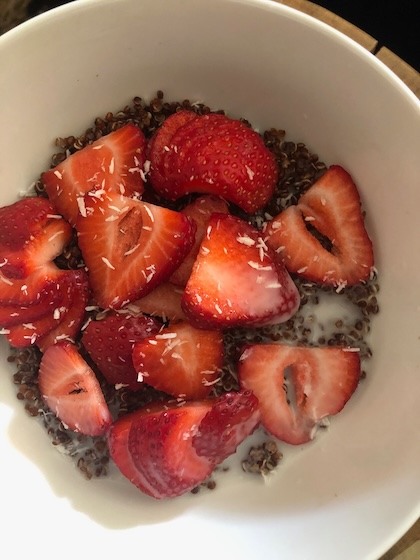
And starting your day with a heart healthy recipe (🍓 below) like this delicious quinoa bowl breakfast idea to get excited about.

strawberry quinoa cereal.
Easy strawberry quinoa cereal recipe below. 🍓

If you’re wanting a better day, you recognize the difference between positive thoughts and negative ones.

Thoughts all start in the divided minds we’re given, that’s either hurting or helping us. And if this is new territory for you, start there.

Maybe you recognize which bucket your negative or positive thoughts belongs in, but you don’t know how to toss out the draining ones.

They can show up anytime: when you wake up on the wrong side of the bed or when triggered by a memory, situation, or person.

And then the subconscious mind (ego) feeds off the nourishment of holding onto negative feelings or pain as a form of protection and masks its agenda from you. But now you know better.

Bypass the unnecessary time wasted in dramatic sorrow. Be proactive with positive affirmations, meditation, yoga, or healthy distractions that are great ideas to reset and get rid of thoughts that have no good business being with you in the first place.

Sounds like a plan, right?

But then going about your day or even seconds later, new thoughts occur from news headlines you read, someone offends or irritates you, a situation stirs an emotional chord, and then you’re right back to negative thoughts and moods. It’s daily and non-stop.

Your mind and the negative thoughts grow even if you think you’re living in a safe bubble.

The unhelpful thoughts never have a chance to go away until you decide the one thing you can change and have in common in every thought is YOU.

And so, I share in this detailed blog article what needs to change to get the happy and helpful thought life you want.

This is the second part of the article from last week on relaxing your mind for the best ideas.

Managing thoughts is essential for lifelong learners, and as a prerequisite to being your most productive self, unleashing your creative self, attracting people to your energy, and living your optimal life.

Years ago, I thought traveling to exciting, new places and feeling in woo would conquer negative thoughts, as they temporarily disappeared when senses were heightened (like when you’re newly in love or starting passion work). But those fickle feelings don’t last and things always change after the newness wears off.

So then I dipped my toe in collaborating and aligning myself with the Universe and how to manifest the best life (that’s woo woo to some).

For me, I was on the right path and things were looking up, but I still had to do the inner core work in my mind.

When all that eventually clicked together, then I could feel the woo hoo! And that’s what we all can celebrate in our lives if and when we get there.

It takes all the pieces–knowledge, process, and application. And if you’re feeling lost, it helps to have a guide.

These are a few guiding and starter points that helped me and hopefully can help you or anyone else who’s trying to figure out a better (thought) life.

The first part can be the hardest–knowing that it all starts in your mind and not someone or somewhere else.

This seems elementary after you learn this, but the ego wants to steer you in another direction like something else is the cause or problem.

So if you’re busy or not paying attention, that can happen and go on until you’ve had enough.

Another point is, don’t let nagging thoughts (or drama in your mind) that won’t leave you alone play out for longer than needed which is no more than a minute.

And in relationships, especially. It takes just one step to cross the invisible boundaries of another person with your words that originated from thoughts.

Walk away from your thoughts to give yourself more peace. Below I have some suggestions on what to do.

So, How to Change From Negative to Positive Thoughts…

Our thoughts are natural to us, and they cause us to take action that can appear inconsistent or as disconnects to others.

To change this, operating from awareness is imperative. Initially, this may feel like work and working harder (like walking uphill with heavy boots instead of sliding downhill). But it’s totally worth it.

You learn a life skill to purge those unwanted thoughts that pop up impromptu and when triggered.

I think there should be a required course on this that you learn early on (and would solve some of the world’s problems as people are the problem or solution).

But anyway… changing thoughts gets easier when you’ve learned the skill and it becomes more automatic.

The negative thoughts won’t disappear immediately, but much quicker than before in your thought choice, and you’ll be wise enough to know you don’t have to act out or say aloud negative thoughts.

Which btw, doesn’t change your personality. It makes you more attractive to the right people.

And that’s part of what separates our discerning brains from animals, young children, or when we were younger…

We all started out immature compared to who we’ve become today.

So here’s how you can reset and get your loving daily juice. To promote loving thoughts, witness your thoughts (I’m sure you’ve heard of this).

Practice being aware of what’s coming in. If it’s garbage, then reject or walk away.

If it’s something that you have feelings about and need to process or work through, then allow yourself that grace.

Again, you don’t have to air your thoughts to anyone, and not putting energy into negative thoughts is going to help you avoid wasted time.

Let them pass through and find the loving side of those thoughts (i.ehow can these thoughts help me?).

In the beginning, as you’re learning or practicing, you want to draw a line in the sand and separate thoughts as helpful or hurtful, good, or bad.

Make it easy on yourself and not leave thoughts in the confusing gray zone that’s part of the baggage carried around.

And let’s be clear, these are thoughts and not the actions that could follow. We want to nip them in the bud.

The good thoughts you accept and the bad ones you reject for your own good. If it hurts others, then you toss in the reject pile and you figure out a win-win or kinder way to confront if that’s needed.

Ask yourself daily and often: What just came out of my mouth and what’s going on in my head? Hit the archive button if it’s a worry thought until you can find answers, and hit the delete button if it’s a harmful thought to you or anyone else.

Know those thoughts will still be there if you need them, which you won’t, but your brain tries to convince you that they’re important to protect you when they’re not needed (for survival). You can blame the ego (yet again) on that.

So, after you start to live life this deliberate-thinking way and focus on positive thoughts, you can see the difference in the quality of your life and the better air that’s there.

You’ll feel more peace, and that helps your stress level and health.

You allow room for ideas to come in, and you become more useful to the world with your abilities. You become part of the solution.

Find A Mantra for Positive Thoughts

Pre-social media days, we were not part of an aware culture like we are in today.

In those days along my journey, I came across these words: “Whatever the question, love is the answer.”

I don’t know who the author is that wrote that, but I knew back then that I wanted that. So  I printed out and framed those wise words that are now ingrained in memory.

With intention, I used that as my mantra. And even though I didn’t know how to apply it in every difficult situation.

I knew that if I aspired to the meaning behind the words, it would one day catch up with me and my self-actualized desires.

So, if you have similar aspirations of a learner mindset, find a mantra or intention (or use the one I used) to go to if you’re trying to change to more positive thoughts and aspirations.

It can be used as a distraction from negative thoughts. And you eventually become your words and what you think of.

Use Your Internal Guide

As mentioned, it can be helpful to have a guide and for those ahead of us in certain areas and times in our lives.

But the best overall guide is your internal compass.

Sometimes our moods are body-mind imbalanced or off track for a season and we can restore them much quicker if we know what to do.

Our daily and busy lives can do this to us.

But we want to change them because sour moods can crowd out positive thoughts and exacerbate our need to judge, be critical of others or ourselves, and get easily irritated, which can cause our negative words or actions.

Being in healthy alignment with yourself is better because, in the end, you and your caretakers are the only ones that will be with you.

You’re the only one that’s with you (and your thoughts) always, wherever you move or travel to.

Sometimes, listening to your internal guide can be countercultural and a bit uncomfortable when you make decisions that aren’t popular or go with the flow.

And especially if you’re a harmonious or extroverted person who just wants to get along or people please.

That can make it difficult to live in integrity (doing, saying, and thinking the same thing).

Robots will have it easier than us in this way, but sadly the tin man is missing a heart. 🤖

As humans, when our thoughts don’t align that’s when we have a new chance to re-adjust.

Years ago, no one talked about mental health or wellness as part of the daily talk. Now we embrace “knowing better” in our lives.

We don’t have to just take our thoughts (or others at face value) that turn into actions that don’t always get good results and can even get us in trouble in a hyper-sensitive society.

Plus, we have more options to change the channels in every sense. And we’re more accountable.

We need this accountability. It makes us better as individual people and all together in our complex world.

So these are some accountable thoughts and maybe some personal growth homework  (should you choose to accept the mission?) for turning sour cherry thoughts into sweet ones.

As a bonus, you’ll become a better person as a byproduct. I know because this is all stuff I went through. It takes one to know one, and we’re all here to figure out our best life and selves.

So, no judgment here (and actually that’s one of the assignments) 🧡 That’s a balanced Pitta way.

Pause on the gossiping:

Here’s the better way: if you wouldn’t share the news with others and the person you’re gossiping about in the room, then find a way to filter and say less.

If you’re not sure, ask.

More likely you’ll just zip your lip and that’s fine too. It’s really that simple. But even simpler is just not gossiping at all.

That becomes an automatic, better way.

When you find you can’t sit and talk in the same conversations with those who gossip, then you know you’ve changed that about yourself.

You end up productively filling your time with better ways that lead to better things.

Learn to not judge:

We never know the full picture of what’s going on with anyone else no matter how much we think we do.

Take the objective and loving-kind stance.

If you want to have an optimal life, the sooner you learn to let go (of judgment) and to stop controlling so much, the sooner that will start.

A prerequisite for this type of freedom (that it is), is to stop judging others at the first judgmental thought that enters and let the negative thoughts pass through.

Quit complaints:  

If you say negative things, then you become a negative person when what you really want is happiness.

So if the first thought that enters your mind is to emphasize complaining, that hurts you.

Maybe you’re used to complaining to get your way (and learned the squeaky wheel gets the grease).

But also what’s happening in the process is you’ll be seen as a complainer.

People who don’t complain will stay away from you, so you’re in company with complainers or those who want you to complain for them or their causes, bringing more negativity in your life and less in theirs.

…If you can make these 3 life changes, you’ll be well on your way to a more peaceful life. It’s simple, but not always easy in the beginning.

It takes desire, self-control, and holding yourself accountable. Be patient and easy on yourself. The good news is these traits are changeable with practice.

And if you find people to support your efforts (and let go of the ones who aren’t), it’s easier.

Your supporters are your best allies.

Ultimately you decide what type of life you want to live. You get to decide what thoughts you keep. Copy that. 😉

strawberry quinoa cereal.
Print

Heart Healthy Strawberry Quinoa Cereal

Course Breakfast
Cuisine American
Author Brandy @ Healthy Happy Life Secrets

Ingredients

  • Red quinoa
  • Organic fresh strawberries
  • Almond milk

Instructions

  • Cook quinoa to soft. You can use red or traditional quinoa.
  • Chop strawberries. Use organic and fresh strawberries. You can freeze what you don't use in a few days.
  • Add milk.

Low Sodium Healthy Soup Recipes

Low sodium healthy soup is easy when you make your own!  

I have 3 recipes below with carrots, mushrooms, and potatoes that you can make (with  low sodium and sea salt if you like).

Before 2020, I never made my own soups. And today, I only keep a backup can in my pantry.

low sodium healthy soup recipes

And you can too!… if that’s what you aspire to even if you don’t know how JUST YET.

But with delicious plant-based ingredients, you can make soup broths that you easily turn into clam chowder with a potato soup base.

You impress yourself and everyone you make the soup for!

After you learn to make homemade soups in simple steps, you’ll probably not go back to store soup cans as these have delicious natural flavors without all the sodium!

And you’re doing your body healthy good. And probably saving a few dollars if that matters.

And these are the 3 easy healthy soup recipes I’m sharing below:

1. Mushroom soup (with old-fashioned but not-out-of-style oats)

2. Carrot soup (with digestive-wonder root, ginger) 

3. Clam chowder (New England style that’s my personal favorite made from potato soup)

At this time, I’m involved in a Beta chef’s cooking healthy eating group collaboration with RDs that provides culinary teaching and recipe input to a healthy strategy program.

I love food, and my background includes working with thousands of party planning events (and started my career in hotel catering that you already know if you’ve been reading some of my previous blog posts).

I’d hardly consider myself a chef-ette, but I have always had an adult culinary arts interest. 🧑‍🍳

…after hotels, I left the hospitality industry and went into more traditional Corporate America work, and then came back to the hospitality working world doing  Mediterranean-cuisine (Lebanese, Spanish, and Italian) event planning for about a dozen foodie restaurants.

That’s really when my good food (gastronomy) tastes and senses were re-ignited and I had a chance to re-marry with my “food is medicine” approach to life.

And marry salt from two food worlds.

Salt Talk For Your Low Sodium Healthy Soup Making

For soups, I avoid iodized salt. I don’t usually add table salt (like the ones in the packets) unless that’s all that’s available and the food isn’t already salted.

I alway buy “unsalted” ingredients when given an option.

If you eat out or eat prepared foods from groceries and restaurants, then you probably get enough salt. And probably more than enough salt in our highly processed foods.

On a DASH diet, lowering sodium is the recommendation.

When I’m cooking, I use sea salt (non-iodized) for everything and everyday use.

And then I use coarser natural sea salts like Celtic sea salt (or Himalayan or fleur de sel) for preparing meats to be baked in the oven, and for certain cooked vegetables.

Celtic sea salt is great for your rubs and on top as a garnish (not so much in mixing). The crystals are larger so they don’t blend as great as smaller salt granules. And I also Himalayan sea salt for additional healthy minerals.

And the gastronomic person in me, says coarser salt is absolutely necessary for the right flavor and texture on veggies like Brussel sprouts and edamame if you want a culinary meal experience (and not a bland one). Salt is as important as the veggie itself.

You can get away without using salt on certain veggies like broccoli or okra that hold their own tastes. If you add them to soups, the salt is usually already added.

So here are the 3 easy healthy soups that’ll help you with your salt cravings…

Easy Healthy Soup Recipes

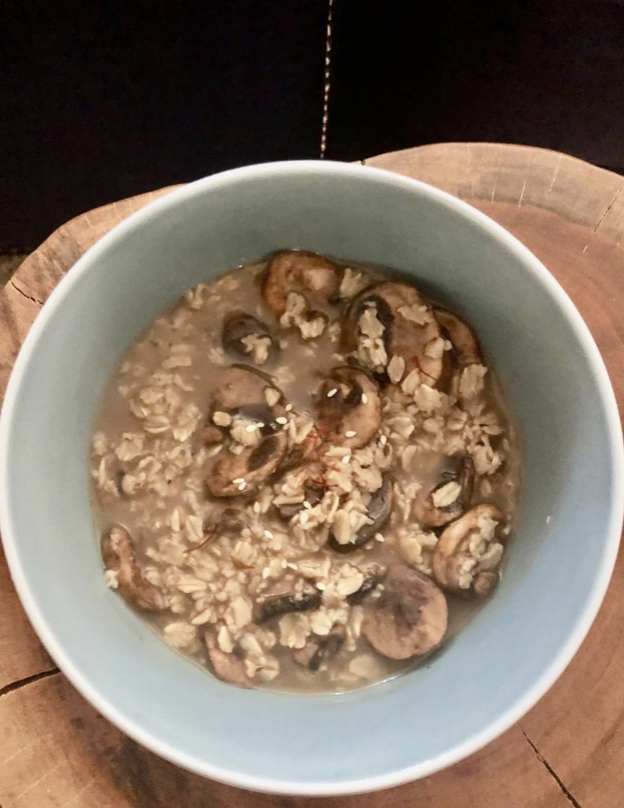
Easy Low Sodium Healthy Soup #1: Mushroom Oat Soup

Cook mushrooms in a pot of covering water until soft, and add slow-cook oats. Mushrooms are immune-boosting and are alkaline. Cook until mushrooms are soft.

If you want, add a drizzle of cooking sherry, truffle oil, and saffron to get culinary fancy and balance umami tastes.

For more umami, add a dash of white pepper.

mushroom soup

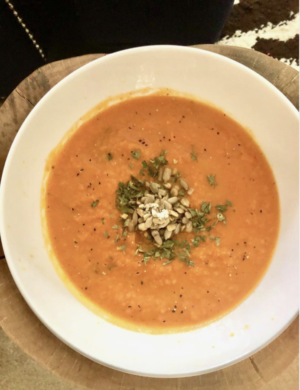
Low Sodium Healthy Soup #2: Carrot Ginger Soup

Print Recipe
carrot ginger soup recipe.
Print

Carrot Ginger Soup

Course Soup
Cuisine American
Author Brandy @ Healthy Happy Life Secrets

Ingredients

  • cooked carrots
  • ginger juice
  • ginger spice
  • ginger, chopped
  • sunflower seeds (optional)
  • dried parsley (optional)
  • cumin and Old Bay (optional)

Instructions

  • Cook carrots on medium heat. When soft, mash carrots. For smooth and easy-to-make soup, sdd to your Magic Bullet or blender and pulse a few times until it's to your smooth texture liking.
  • Add ginger spiced and chopped ginger bits (if you prefer for a more pungent bite good for Kapha). You can also use ginger juice for less chunks, and spices.
  • Zhugh with sunflower seeds and dried parsley if desired.

Cook carrots in water until soft, then mash and grate or squeeze ginger juices in the soup. You can finish off with alt-milk for a creamy-effect or  just leave as is. That’s probably the way a.k.a. without ginger I would’ve preferred as a child 🧒🏻).

healthy soup recipes

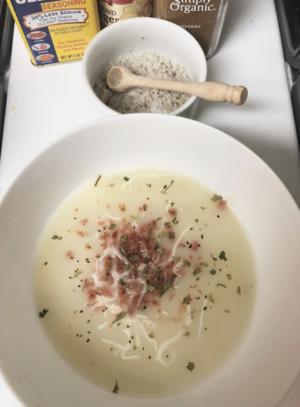
Easy Potato Soup or New England Clam Chowder

This low sodium healthy soup is easier to make than you may think! You can make delicious chowder from a simple potato soup base.

Peel and cook common Russet potatoes in a pot with water. You would do the same step if you were making mashed potatoes.

Then decide if you want a creamy soup. And if you do, pour out some of the water and then mash potatoes in the same stovetop pot.  Still with the stove heat on, add in your ready-to-eat clams (3 large potatoes to about 5 ounces of clams you can cook or use a can).

I like to zhugh up with aromatic herbs, either fresh or with ground herb spices like cilantro, parsley, oregano, and/or basil.

If you’re not sure if you should add any herbs into your soup (if you’re feeding others), then parsley and thyme spices are less strong (more universally likable) and can be added in of left to individual tastes.

potato healthy soup recipes
Potato base soup

If you’re looking for a few easy-to-make snack ideas to go along with your healthy soup recipes or just to eat on their own, you can try…

Baked kale chips…

Or, homemade baked crackers – zesty za’atar crackers…

Or, popcorn…

Another different twist and take on changing up tastes, is this idea… instead of adding salt, you could add a ‘lil vinegar to your potato snacks and soup.

I like to add ACV vinegar but you could also try malt, red, or white vinegar…  they’re healthier and also give the food a bit of a tangy bite.

I like to also add my daily spices (turmeric, black or white pepper once in awhile). I skip needing any salt after all those changes 😉.

So hopefully you are soup-er excited to make your comfort homemade and easy healthy soup recipes, and maybe you even choose to change up a way that you snack.

How Ayurvedic Habits Are Useful (Part 1)

Ayurvedic habits was introduced to me 13- years ago to date when I embarked on a new healthy way of doing life. Yoga was still a new concept to the western world. And I was about to start my first blog.

ayurvedic habits

Those were the days before personal awareness, #metoo movements, and before western Ayurveda ways caught on with some (like me and maybe you?).

I’d been striving for balance ever since the day I realized I didn’t have any, and in my memory as far back as when the popular Friends sitcom show first came on.

Those were pre-internet days where you never saw a laptop at the Central Perk television set or anywhere for that matter ☕️

You and I can laugh at the wired phone cord that would be fun to untangle now. Phones back then weren’t wireless or smart. And watches were used to just tell time.

Technology and life are interesting in how it’s constantly evolving, and never going backward. Along the way, your tastes and wants can also change as you grow up.

I’m not a traditionalist,  so I lean towards growth and doing things differently. 

…but I started out on a traditional college to the corporate work-life path (with no work-life balance). And through life’s swerves, hidden turns, and purposeful career switching, I gradually turned around the tide.

You know when you don’t have the life you want when you run into dead ends, and that makes you search for the unknown. You know there has to be better if you use the right optimistic attitude. That btw, teaches you to steer away from sarcasm and Murphy’s Law thinking that was common during the Friends and Seinfeld show era.

Starting out in my career in hotel catering management taught me that not filling hotel rooms with guests was the biggest (opportunity) cost to the bottom line. I carried that way of thinking into my life even back then when I wasn’t aware. I realized not doing my highest and best use (that was taught in college) was my biggest loss.  

That concept became my motivator to leave jobs I was unhappy or miserable with that had no rewarding path I could see for personal growth or in their business improvement.

In my late 20’s I wanted work-life balance, and to end the 50-60 hour workweek rut I was in walking around like a zombie in my downtime, that I started out with. 

I kept the mantra running in my mind that I would not get my time back…and when I saw no way out, I found a way out. 

And that’s how I switched industries into corporate tech office work. There I experienced newfound balance, and after I got a taste of that, I wanted more.

I went from not-so-healthy to balance, healing, and eventually wholeness. It was an overnight change that took over a decade.

And somewhere in that mix, the economic downturn hit where I went back to where I began in hospitality work. I had changed but the industry had not, so I moved on yet again.

And that’s why I believe for everyone, Life is meant to get better despite the curve balls thrown at you.

Yes, you age, but you grow wiser and smarter. And you can adopt the right attitude if you help yourself to get there. I would never want to go backward in time.

…and I know now time can be underrated, and that it’s our most valuable asset (especially as you enter your 30’s and beyond).

I also now know that time is well spent when all 365 days of the year, I practice healthy and happy balance (that means green smoothies, food variety, and never changing Strawberry Twizzlers!). Plus, daily reset and renewal, and Ayurveda prevention and restoring ways.

….And that last one is what I’m most proud of for taking care of my body and mind.

Learning Ayurvedic habits was a new concept for me as a mid-adult who had lived around suburban malls and eating prepared foods in popular restaurants (and some that I couldn’t resist as I marketed their foods).

So then when I switched to Ayurveda I had choices (it’s not a diet, as I don’t believe in those). It encourages you to lean into your body’s natural desires, and often those are against the popular culture desires or what you think you want, like restaurant food (where you have no control over the cooking and ingredients).

I like to think of modern, western Ayurveda as a flexible lifestyle where you choose balance. You have a healthy plan and you enjoy what you like that you don’t regret.

For example, you won’t see me ordering or drinking a coffee drink with 53 grams of sugar. If it starts out that way, I will order most of the fat and sugar off, or just choose a black cold brew. That’s how I roll.

And that’s an ingrained habit.

But someone may say, “that’s no fun.” And I would say, “it is for me. I want to feel and look good, and for a long time. Then I can have more fun!”

We’re a much more health-conscious society now, but you still have critics and that can be the one sitting on your shoulder giving you internal debates on choices. 

These days, I prepare at least 80% of my meals (and 100% in the past year). And Ayurvedic habits have helped me with balance, prevention, and restoration. And they can help you too!

Western Ayurvedic Habits

The Ayurvedic habits I do are not new to our western culture like they would have been a few decades ago. Like: the neti pot works for preventing sinus infections and doing regular yoga helps with balance, flexibility, and strength building.

Sanskrit is not my native or secondary tongue, so some rituals I’ve walked into that I wish I didn’t. Like: incense (…you might as well smoke a pack of cigarettes.. thankfully you rarely run into either and if it’s a certain church occasion where incense is, you know to expect it).

Another less than desirable one is chanting, like in a new yoga class that gives me an eerie feeling. I don’t participate.  The mystical woo stuff doesn’t woo me.

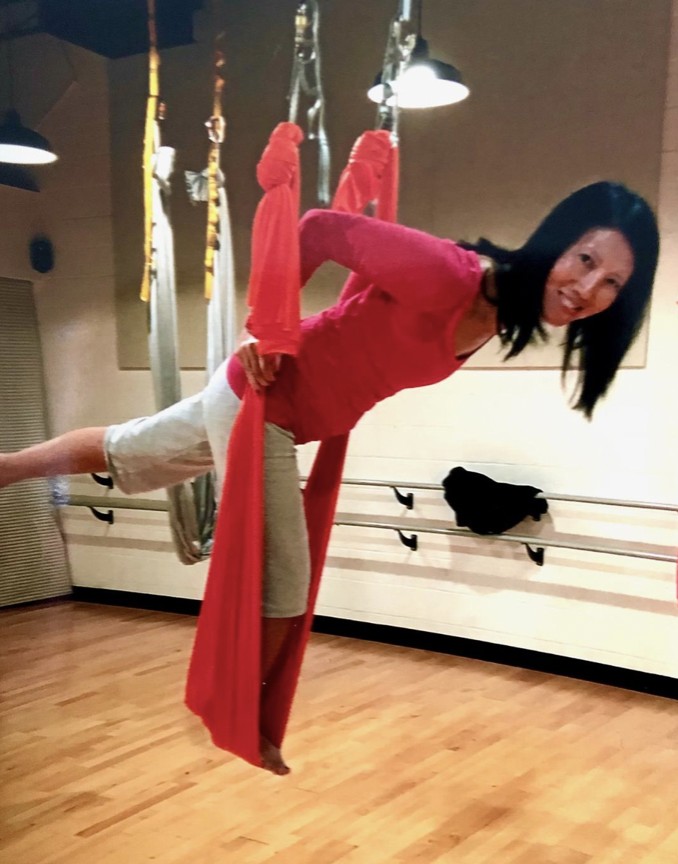
I like to have my feet planted on the western ground unless I’m doing fun acrobatics (photo up top and here). Just kidding.

ayurvedic habits

So some Ayurvedic habits and ways stuck with me and some didn’t, and from the beginning so I knew that they were meant (or not meant) for me.

And if you’re trying to figure out what Ayurveda or healthy lifestyle works or would work for you, then you can use your preferences as a natural guide if you don’t have a coach or someone helping you.

Essentially, Ayurveda is what’s healthy and natural to you, your body, and mind-body, so you can’t go wrong if it’s a healthy choice you like.

And when creating Ayurvedic habits, some habits need more practice to fully adopt than others.

In his NY Times bestseller, Atomic Habits, habit advice expert, James Clear, describes that habit stacking is an easier way to have a habit stick.

An example of this is: I conveniently have a yoga mat rolled out near my bathroom with a side door, so that I can do a few yoga stretches before I start my day and after brushing my teeth (habit stacking). For some people, that’s enough of a reminder to create a habit.

But for a heavy Vata mind-body where routine (and sticking to the same way) is not a natural friend, I tweaked this idea to work for me…

A few days later after the novelty of the yoga morning activity wore off (and the habit broke), I rolled up half the mat, which triggered me to see the mat change when I had to look down so I didn’t trip over it.

That reminded me to do yoga. And then slowly but surely I didn’t need to look down anymore because I knew where the roll ended. So I then took the half-rolled-up mat, and rolled it back down, and then rolled it in a different way several days later. I mixed it up. And now I have a mat under the mat to keep things interesting… and to keep me interested. That forced the habit to start, so it had a chance to stick. 

I then reinforced the habit further with a set alarm. ...Phew! That was a lot for just one habit. But it’s worth it.

And you know what’s worth it for you, what works, and what it takes for you to create a habit! The harder part I think is figuring and finding out what habit to even start. And, knowing why you’re creating a habit.

Overall in the long run, when you do better habits, this keeps the healthy balance. You also improve and run your best marathon.

This is also how you keep growing. Keep trying new things (a Vata’s motto) until it becomes unhealthy or non-serving. Then in awareness of what you previously tried and want to improve, tweak again. 

A good goal is to find what makes you happy, healthy, and whole, because without good physical and mental health, you can’t really optimally grow and contribute in your highest and best use way (maybe this is important to you too).

In the beginning, when I was forming Ayurvedic habits and concepts, I still felt stress or anxious even though I knew how to restore those feelings. I just hadn’t practiced enough. 

And then I learned what worked for those symptoms and that became old hat like learning to ride a bicycle. And then I would feel other emotional symptoms like feeling irritated or judgmental. So then I fixed those.

While the symptoms were obvious, the changes were subtle (going in and out of moods). In those cases, I could’ve chosen to do nothing.  And that’s what I think most people choose.  

But that my friend (if I can call you that)…  is not the highest-quality life, and maybe even semi-existence. I know because I lived that way in my no work-life balance-joy-robbing time that I will never go back to…

Feeling down, self-(fill in the blank ____),  or negative thoughts and other big mood swings taking up mind real estate during prime leisure time and at night. But, I guess I was aware enough to do something about it. There’s always a silver lining. 

For me, it would start with getting internally upset, angry, or irritated about something… and on and on it would spiral out of control spewing in my day and mood. 

And I know that’s how a lot of people operate some of the time. And, that’s too much time!

There’s a much better way. 🎉

Transforming these ways has been worth going through the trials (to not lose any more valuable time), so that some of the time, becomes rarely or never when we learn better habits and ways.

These days, I choose peace. It’s a habit. Like most people, I have emotions running all the time and even more thoughts. And you can’t control how others behave towards you and some situations that happen to you. But you can control how you respond and react. So that’s what I do (and I encourage everyone to do that, so we can live our best lives now).

Ayurvedic habits allowed me to tap into daily peace, joy, and love that I already knew was there. That sounds so cliché and Hallmark card-ish, but that’s the nitty-gritty truth and what good habits can do for you.

You can get happiness (joy). Because if you find those things in you, your wants and feelings change. So the secret ingredient is getting healthy control over your thoughts and feelings. Letting go of the negative, and holding on to the good. And you can more easily get there if you’re healthy and balanced.

When you can remove (and nip in the bud) non-productive or toxic feelings and moods as soon as possible, you can avoid mental stress and stress on the body that can lead to inflammation.

And maybe that’s why I’m passionate about a balanced life. Because I know it’s in the palm of each of our hands and the ticket to true life’s success and happiness.

It took me not having it to discover it in a much deeper way.

So when I tested out new habits from the better information I gathered, I found it worked like a magic wand over the imbalances I had. It was like a magic pill without any pills or drugs. I didn’t know I had so much power to control.

Thirteen years in, it’s very easy for me to tell what’s happening in or out of balance for the mind by actions, and for the body by symptoms. And since my 20’s I’ve always been discerning and aligned with living balanced as my compass pointing north.

But I know not everyone is like this and many do better with boundaries and strict rules. And some do better with something they can relate to, like this car and body analogy…

Car and Body Analogy

Your Body is Like a Car (except it’s so much more valuable and you only get one in your life).

When you’re getting your car regularly maintained, the car shop can ask a few questions, and they can tell what’s wrong based on the slight off-ness.

All cars are not exactly the same as no one body is alike, even though you and I could both be Vata.

And all cars have wheels and need energy to run. And all our bodies alike have the same running parts like a heart, brain, and skin, with different product needs. Like, we all need moisturizers but in varying degrees to our dry vs. oily skin, and the ingredients that our specific skin likes.

And certain things happen as we travel around, like our bodies age and a car gets out of alignment with mileage and wear and tear. But the symptoms can appear the same. That’s why a doctor or a mechanic can diagnose ailments from inflammations or problems down the road.

And we humans living in our bodies can diagnose and restore our non-serious body irregularities.

When you have Ayurveda habits, you are intentionally preventing stress or letting your body get aggravated.

Next week, I’ll share my specific ayurvedic habits and routines and talk about the Ayurvedic body type habit nuances. If you want to be notified when that and future blog posts come out, you can sign up in the upper right-hand corner of the main/home website page.

And, if you want to get information about how to restore your current body imbalances, take my  What is Your Imbalance Type? 2-minute body balance quiz.

ayurvedic habits