
Anti-Inflammatory spices is something I can’t live without in modern living… they’re rainbow food-as-medicine. And nature’s supplements.
They prevent conditions and in some cases, they natural Rx heal right away like medicine if you know what to take and when!
And they add cooking and baking flavor to dishes.
They’re also dirt cheap, comparatively. Even a $10 spice costs less than most medicines on insurance. They also don’t expire as soon as most pills.
You can tell it’s time to replace when the scent disappears if it had one to start with, because that’s a hint at its taste value and its healthiness… if that’s what you’re after.
Taste is subjective, but their effectiveness is not.
Anti-inflammatory spices aren’t good substitutes for fixing a health problem that needs medical attention.
But the right ones are often good for prevention, that doesn’t get talked about enough.
Sometimes you can dodge an infection bullet before it starts a war in the body. But once it grows, it’s too late for spices.
Where they would have been ideal to take, and are natural.
Spices don’t cause gut havoc.
They support restoring the body.
And that’s what Ayurvedic food-as-medicine is all about.
Plus, your body is your advocate as it knows what it needs.
It’s only downfall is it lacks communication.
Instead you have your senses to give you clues.
…And if you take a spice whiff and it smells good this season for you, then your body is telling you that’s good for you.
That’s obvious to us as we like what we like.
But it’s even more intuitive than that.
Your nose knows!
Being intuitive to supporting your good health, the body tells you what it is lacking by making it a preference to you. Remember, the body lacks communication skills, so it can’t straight up tell ya!
And that makes visiting spice stores and candle sections (that are also healing) all the more intriguing. I’ve been intrigued for decades.
Aromatherapy is good for wellness.
And with spices and herbs (the leaves) as aromatics in cooking, we’re off to a good start!
If we like how it smells, it’ll be even better when we get to taste what we’re making.
The taste buds will confirm that.
And we’re doing our body a world of anti-inflammatory good as most plant-based foods like spices and herbs have phytochemical, polyphenols. and antioxidants.
Which is why people all over the world use spices as medicine potions, and have been for centuries.
And this people, me, 😊 has spices in a third of her pantry… with food ingredients and tea filling the remaining space.
But I count teas sometimes as spice blends for baking. And if you look at each of your tea’s ingredients, you often find spice bits (like bits of plants from seeds, fruit, bark, or root). Chai is a great example. And you can use a tea bag to make no-bake dessert chai balls.
Others common ingredients include chicory and licorice roots. Or coriander and cumin seeds. And celery seed.
But teas make better answers for tea drinks or a cup of tea. Because the spice blends are often sweet and subtle.
Spices are usually as subtle, as they punch you in the face.
So you won’t find dill or cayenne often in a tea bag, because they’re not sweet. And mint tea is too subtle compared to fresh mint herb (leaves).
And if it’s too subtle, their culinary purpose is diminished. So if you’re taking turmeric or cayenne for (preventative) health reasons, look for fresh ones.
An exception is ginger. It plays well with sweet tastes like chocolate, so it’s good in a drink or gingerbread cookie (my preferred way 😋). .
Spices should come alive in scent on their own. Or in a spice blend (different than a tea with a blend of spices).
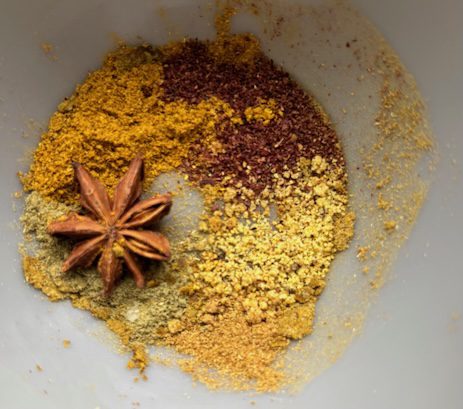
Today, out in markets you easily find spice blends like Five Spice (usually with cloves, star anise, Sichuan pepper, and fennel seeds, cinnamon) and garam masala (cumin, coriander, cardamom, cloves, cinnamon, and black pepper).
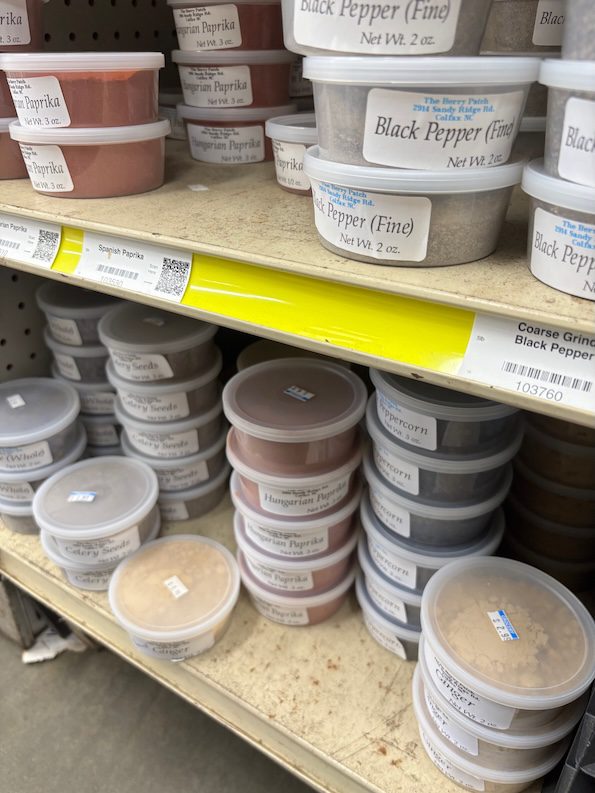
This is a short list of what I look for in spices for taste and food-as-medicine:
Capsaicin – found in some spices like paprika is the mild version of spices that have chili peppers like cayenne pepper. It’s especially noted as good for nerve damage.
Try a Cajun spice blend that has more than one kind of capsaicin spice like paprika and cayenne. Plus other healthy ingredients like black pepper, garlic, and onion. 5-in-1, gotta love that!
Cardamom – Baharat is a Lebanese 7-spice that brings me back to managing busy parties for some popular DC Lebanese restaurants. Often the blend has black pepper, paprika, nutmeg and the 5 C’s (cumin, coriander cinnamon, cloves, cardamom). Chai is another source.
Turmeric – curcumin is so good for inflammation and joint pain. I have found so many good uses. It gets better and better. And the turmeric taste is smoky good for savory dishes that makes up for its pitfall as a spice that stains clothing.
Cloves – eugenol is in an allspice with cloves. It’s more potent than in other spices like cinnamon. And that you can tell by the powerful smell and taste… making my point above as medicine is in the aroma strength. Cloves are noted as good for taming potential gum infections.
Ginger –gingerol is another punchy spice. Adding this to sweet tastes and drinks are easy ways to take in ginger. That the spice is known to be better at some things than whole ginger that can be too strong of a taste for some. And the spice is much easier to add than the awkward shaped ginger root.
Oregano – thymol is found in many spices like thyme and is part of the mint family, but oregano has powerful antioxidants. It goes great in Italian dishes and a low-sodium healthy soup like clam chowder.
You can also go French bistro vibe with a Provencal or French blend that usually has parsley, chives, dill and tarragon at a minimum. And blends like this save time because it’s one spice instead of 4.
But you’re addicted to spices like me, you still have each of the spices on their own. 😁
You and I don’t have to wait for an occasion like Thanksgiving dinner spices to break out the anti-inflammatory spices. You can get in the healthy habit today.