UA-141369524-4

How Ayurvedic Habits Are Useful (Part 1)

Ayurvedic habits was introduced to me 13- years ago to date when I embarked on a new healthy way of doing life. Yoga was still a new concept to the western world. And I was about to start my first blog.

ayurvedic habits

Those were the days before personal awareness, #metoo movements, and before western Ayurveda ways caught on with some (like me and maybe you?).

I’d been striving for balance ever since the day I realized I didn’t have any, and in my memory as far back as when the popular Friends sitcom show first came on.

Those were pre-internet days where you never saw a laptop at the Central Perk television set or anywhere for that matter ☕️

You and I can laugh at the wired phone cord that would be fun to untangle now. Phones back then weren’t wireless or smart. And watches were used to just tell time.

Technology and life are interesting in how it’s constantly evolving, and never going backward. Along the way, your tastes and wants can also change as you grow up.

I’m not a traditionalist,  so I lean towards growth and doing things differently. 

…but I started out on a traditional college to the corporate work-life path (with no work-life balance). And through life’s swerves, hidden turns, and purposeful career switching, I gradually turned around the tide.

You know when you don’t have the life you want when you run into dead ends, and that makes you search for the unknown. You know there has to be better if you use the right optimistic attitude. That btw, teaches you to steer away from sarcasm and Murphy’s Law thinking that was common during the Friends and Seinfeld show era.

Starting out in my career in hotel catering management taught me that not filling hotel rooms with guests was the biggest (opportunity) cost to the bottom line. I carried that way of thinking into my life even back then when I wasn’t aware. I realized not doing my highest and best use (that was taught in college) was my biggest loss.  

That concept became my motivator to leave jobs I was unhappy or miserable with that had no rewarding path I could see for personal growth or in their business improvement.

In my late 20’s I wanted work-life balance, and to end the 50-60 hour workweek rut I was in walking around like a zombie in my downtime, that I started out with. 

I kept the mantra running in my mind that I would not get my time back…and when I saw no way out, I found a way out. 

And that’s how I switched industries into corporate tech office work. There I experienced newfound balance, and after I got a taste of that, I wanted more.

I went from not-so-healthy to balance, healing, and eventually wholeness. It was an overnight change that took over a decade.

And somewhere in that mix, the economic downturn hit where I went back to where I began in hospitality work. I had changed but the industry had not, so I moved on yet again.

And that’s why I believe for everyone, Life is meant to get better despite the curve balls thrown at you.

Yes, you age, but you grow wiser and smarter. And you can adopt the right attitude if you help yourself to get there. I would never want to go backward in time.

…and I know now time can be underrated, and that it’s our most valuable asset (especially as you enter your 30’s and beyond).

I also now know that time is well spent when all 365 days of the year, I practice healthy and happy balance (that means green smoothies, food variety, and never changing Strawberry Twizzlers!). Plus, daily reset and renewal, and Ayurveda prevention and restoring ways.

….And that last one is what I’m most proud of for taking care of my body and mind.

Learning Ayurvedic habits was a new concept for me as a mid-adult who had lived around suburban malls and eating prepared foods in popular restaurants (and some that I couldn’t resist as I marketed their foods).

So then when I switched to Ayurveda I had choices (it’s not a diet, as I don’t believe in those). It encourages you to lean into your body’s natural desires, and often those are against the popular culture desires or what you think you want, like restaurant food (where you have no control over the cooking and ingredients).

I like to think of modern, western Ayurveda as a flexible lifestyle where you choose balance. You have a healthy plan and you enjoy what you like that you don’t regret.

For example, you won’t see me ordering or drinking a coffee drink with 53 grams of sugar. If it starts out that way, I will order most of the fat and sugar off, or just choose a black cold brew. That’s how I roll.

And that’s an ingrained habit.

But someone may say, “that’s no fun.” And I would say, “it is for me. I want to feel and look good, and for a long time. Then I can have more fun!”

We’re a much more health-conscious society now, but you still have critics and that can be the one sitting on your shoulder giving you internal debates on choices. 

These days, I prepare at least 80% of my meals (and 100% in the past year). And Ayurvedic habits have helped me with balance, prevention, and restoration. And they can help you too!

Western Ayurvedic Habits

The Ayurvedic habits I do are not new to our western culture like they would have been a few decades ago. Like: the neti pot works for preventing sinus infections and doing regular yoga helps with balance, flexibility, and strength building.

Sanskrit is not my native or secondary tongue, so some rituals I’ve walked into that I wish I didn’t. Like: incense (…you might as well smoke a pack of cigarettes.. thankfully you rarely run into either and if it’s a certain church occasion where incense is, you know to expect it).

Another less than desirable one is chanting, like in a new yoga class that gives me an eerie feeling. I don’t participate.  The mystical woo stuff doesn’t woo me.

I like to have my feet planted on the western ground unless I’m doing fun acrobatics (photo up top and here). Just kidding.

ayurvedic habits

So some Ayurvedic habits and ways stuck with me and some didn’t, and from the beginning so I knew that they were meant (or not meant) for me.

And if you’re trying to figure out what Ayurveda or healthy lifestyle works or would work for you, then you can use your preferences as a natural guide if you don’t have a coach or someone helping you.

Essentially, Ayurveda is what’s healthy and natural to you, your body, and mind-body, so you can’t go wrong if it’s a healthy choice you like.

And when creating Ayurvedic habits, some habits need more practice to fully adopt than others.

In his NY Times bestseller, Atomic Habits, habit advice expert, James Clear, describes that habit stacking is an easier way to have a habit stick.

An example of this is: I conveniently have a yoga mat rolled out near my bathroom with a side door, so that I can do a few yoga stretches before I start my day and after brushing my teeth (habit stacking). For some people, that’s enough of a reminder to create a habit.

But for a heavy Vata mind-body where routine (and sticking to the same way) is not a natural friend, I tweaked this idea to work for me…

A few days later after the novelty of the yoga morning activity wore off (and the habit broke), I rolled up half the mat, which triggered me to see the mat change when I had to look down so I didn’t trip over it.

That reminded me to do yoga. And then slowly but surely I didn’t need to look down anymore because I knew where the roll ended. So I then took the half-rolled-up mat, and rolled it back down, and then rolled it in a different way several days later. I mixed it up. And now I have a mat under the mat to keep things interesting… and to keep me interested. That forced the habit to start, so it had a chance to stick. 

I then reinforced the habit further with a set alarm. ...Phew! That was a lot for just one habit. But it’s worth it.

And you know what’s worth it for you, what works, and what it takes for you to create a habit! The harder part I think is figuring and finding out what habit to even start. And, knowing why you’re creating a habit.

Overall in the long run, when you do better habits, this keeps the healthy balance. You also improve and run your best marathon.

This is also how you keep growing. Keep trying new things (a Vata’s motto) until it becomes unhealthy or non-serving. Then in awareness of what you previously tried and want to improve, tweak again. 

A good goal is to find what makes you happy, healthy, and whole, because without good physical and mental health, you can’t really optimally grow and contribute in your highest and best use way (maybe this is important to you too).

In the beginning, when I was forming Ayurvedic habits and concepts, I still felt stress or anxious even though I knew how to restore those feelings. I just hadn’t practiced enough. 

And then I learned what worked for those symptoms and that became old hat like learning to ride a bicycle. And then I would feel other emotional symptoms like feeling irritated or judgmental. So then I fixed those.

While the symptoms were obvious, the changes were subtle (going in and out of moods). In those cases, I could’ve chosen to do nothing.  And that’s what I think most people choose.  

But that my friend (if I can call you that)…  is not the highest-quality life, and maybe even semi-existence. I know because I lived that way in my no work-life balance-joy-robbing time that I will never go back to…

Feeling down, self-(fill in the blank ____),  or negative thoughts and other big mood swings taking up mind real estate during prime leisure time and at night. But, I guess I was aware enough to do something about it. There’s always a silver lining. 

For me, it would start with getting internally upset, angry, or irritated about something… and on and on it would spiral out of control spewing in my day and mood. 

And I know that’s how a lot of people operate some of the time. And, that’s too much time!

There’s a much better way. 🎉

Transforming these ways has been worth going through the trials (to not lose any more valuable time), so that some of the time, becomes rarely or never when we learn better habits and ways.

These days, I choose peace. It’s a habit. Like most people, I have emotions running all the time and even more thoughts. And you can’t control how others behave towards you and some situations that happen to you. But you can control how you respond and react. So that’s what I do (and I encourage everyone to do that, so we can live our best lives now).

Ayurvedic habits allowed me to tap into daily peace, joy, and love that I already knew was there. That sounds so cliché and Hallmark card-ish, but that’s the nitty-gritty truth and what good habits can do for you.

You can get happiness (joy). Because if you find those things in you, your wants and feelings change. So the secret ingredient is getting healthy control over your thoughts and feelings. Letting go of the negative, and holding on to the good. And you can more easily get there if you’re healthy and balanced.

When you can remove (and nip in the bud) non-productive or toxic feelings and moods as soon as possible, you can avoid mental stress and stress on the body that can lead to inflammation.

And maybe that’s why I’m passionate about a balanced life. Because I know it’s in the palm of each of our hands and the ticket to true life’s success and happiness.

It took me not having it to discover it in a much deeper way.

So when I tested out new habits from the better information I gathered, I found it worked like a magic wand over the imbalances I had. It was like a magic pill without any pills or drugs. I didn’t know I had so much power to control.

Thirteen years in, it’s very easy for me to tell what’s happening in or out of balance for the mind by actions, and for the body by symptoms. And since my 20’s I’ve always been discerning and aligned with living balanced as my compass pointing north.

But I know not everyone is like this and many do better with boundaries and strict rules. And some do better with something they can relate to, like this car and body analogy…

Car and Body Analogy

Your Body is Like a Car (except it’s so much more valuable and you only get one in your life).

When you’re getting your car regularly maintained, the car shop can ask a few questions, and they can tell what’s wrong based on the slight off-ness.

All cars are not exactly the same as no one body is alike, even though you and I could both be Vata.

And all cars have wheels and need energy to run. And all our bodies alike have the same running parts like a heart, brain, and skin, with different product needs. Like, we all need moisturizers but in varying degrees to our dry vs. oily skin, and the ingredients that our specific skin likes.

And certain things happen as we travel around, like our bodies age and a car gets out of alignment with mileage and wear and tear. But the symptoms can appear the same. That’s why a doctor or a mechanic can diagnose ailments from inflammations or problems down the road.

And we humans living in our bodies can diagnose and restore our non-serious body irregularities.

When you have Ayurveda habits, you are intentionally preventing stress or letting your body get aggravated.

Next week, I’ll share my specific ayurvedic habits and routines and talk about the Ayurvedic body type habit nuances. If you want to be notified when that and future blog posts come out, you can sign up in the upper right-hand corner of the main/home website page.

And, if you want to get information about how to restore your current body imbalances, take my  What is Your Imbalance Type? 2-minute body balance quiz.
ayurvedic habits


Emotional Wheel: 3 Case Studies

Emotional wheel is something you’ve probably heard about. Daily, we are bombarded with triggered emotions. If we process them when they happen or within the week, that’s healthy for us so we don’t assume trauma that hurts our happiness. I learned the hard way, but lessons learned gave me wisdom to end the madness even if it was delayed by years.

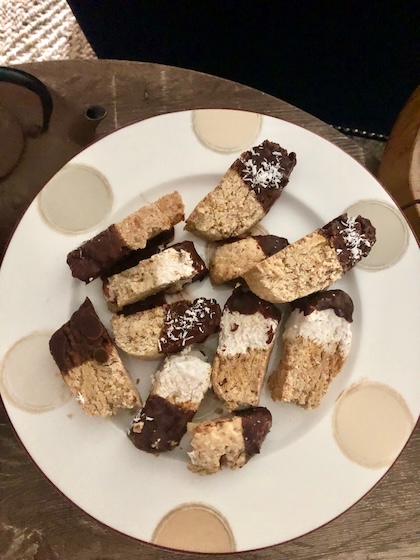
And these healthy black and white chocolate dipped biscotti (recipe below) ⬇️ represent the refining process of going through (the oven) again to get to the optimal finish line bake. You can make these when you’re working on your emotional wheel feelings, and not sure if you’re feeling up or down or all around that life can serve up.

Jump to Recipe

Black and white chocolate dipped biscotti.
These black and white chocolate biscotti that are duo chocolate and twice baked, went through the process. So you know they’re healthy! 😅

I was on a recent webinar presentation watching a respected leader and expert I have been listening to for years. She’s usually always on point except for this one display of being on an emotional wheel.

Consequently, her mind jumped all around, from one thought back to another. I felt for her. Like a trouper, she just went on like the professional she is.

Halfway through, she mentioned her forgetful mood was because she didn’t have anything to eat as a result of a hectic morning. But I could see and feel through the screen that the turmoil she was having was from a temporary Vata and Pitta imbalance, simultaneously going on at the same time.

I know that because I’ve been there and I’m sensitive to those imbalances.

We often try and associate our off-ness with a routine missed, or else we just let the moments pass and resolve themselves.

But what if it doesn’t? …and those moody feelings go from a day into days or weeks?

In this webinar I was on, this expert was also more impatient than usual. She didn’t usually point out when she had answered a question already. She typically just graciously found a new way to answer with additional ideas and value. She’s usually very calm and in control in mind-body connection ways.

I’m using this as a case study, as this can happen to any of us in our human-ness, no matter how put together or skilled we are. We’re not robots, thank goodness!

And this helps explain tennis pro, Naomi Osaka’s performance this week in the U.S. Open tennis match (and previous matches) where she has shown signs of frustration, throwing her racquet to the hardcourt. She was up and winning in the first set and then her mind-body turned on her, and she ended up going on a losing streak to a younger underdog player.

This is why they play in professional sports, because mostly if they can contain their emotions and control with a focused, coordinated mind-body, then they shine. But no matter how pro they are, they can lose it if they get inside their heads, and their bodies don’t perform in the tip-top way they want.

Anxiety is one of those emotions that can be crippling. And anger (or irritation as a subtler form) is another. You can go from one undesirable emotion to the next in the spectrum of the emotional wheel.

In my wholeness journey (as a 3rd study case), I’ve learned how to remove and calm those emotions that used to play a regular or seasonal role in my life. I just thought that was the way I was. I didn’t know back then I could do something about it that would change my life.

Then on top of those emotions, I used to think SADD (seasonal affective disorder) was what I would experience all my life from a teenager on, when every February I would feel hormonally imbalanced or slightly depressed. Do they even talk about this anymore as there are so many other known disorders in our more open, aware society?

I knew once March rolled around I was good and chipper again. But not everyone bounces back that way.

As I grew up, I learned to get the right vitamins, minerals, and herbal supplements, and that helped along with all the other healthy and daily practices I implemented to enjoy every day.

In this similar way of seeking knowledge, I learned how to restore anxious-irritated feelings. We all have some feelings we have running on the surface or as undercurrents in our life, and are sometimes stronger based on our life situations.

In my desires and awareness, I learned how to faster restore those symptoms from the body-mind perspective, so that even the inward expression and feelings disappear. That’s a big transformation. And  I realized it’s possible to improve your life with better wisdom and practice.

Emotional Wheel: Anxious Vata vs Angry Pitta Imbalances

There’s a varying spectrum of symptoms or descriptions you can use for Vata vs. Pitta imbalances on the emotional wheel.

An anxious Vata imbalance can show signs of being worried, scared or fearful (like if you will lose something valuable or if you feel uncertain about an outcome).

An angry Pitta imbalance can feel hot-tempered, irritated, annoyed, critical, or impatient (or feel a need to be more right about everything than usual).

In both cases, you want to get back to your calmest self as soon as possible. We all know stress causes havoc on our bodies and minds. And when you’re calm, you make better decisions when you can think and act clearly.

But each specific imbalance needs a different remedy.

If you have a Vata imbalance, you can first more notice your symptoms in your heartbeat, stomach, and sweaty hands (before it impacts your mind). You want to control those with your thoughts. You want to change that, to feel fearless and confident.

In a high-pressure situation like in a world-is-watching-your tennis court performance, that’s not easy to do and to revert back right away. At home or in your life, that’s what you want to do.

If you have a Pitta imbalance, your mind can often be impacted first. Triggers can set off your mind, and then your actions create your behaviors that lead to body stressors.

We all are born with a split mind that I won’t get into here, but this can be part of a personal growth journey you take to have one productive, loving mind in your higher self-space.

It’s the stuff I breathe, share, teach (and stand for). I believe your health and happiness are dependent on your growth and based on your choice and decision to take a better path than how you started or were given.

And in either case of Vata or Pitta imbalances, if you’re not calm then you’re stunted momentarily until you can restore and get back to your balance. You’re frozen from being creative and fully productive as your mind is distracted and can be racing, and that can impact your physical health like getting enough sleep and functioning optimally in the waking hours.

…Such as sitting still can be a Vata challenge and getting motivated to do calming yoga can be something you need to convince your body to do if it will cooperate. And a Pitta challenge can be to not express knee-jerk reactions, opinions, or interrupt. These subtle occurrences are emotional wheel signs that can be balance restored. Just like you get your tire wheels balanced (in alignment) on a car, your body-mind needs addressing, tune-ups and check-ins, so it runs optimally for life.

If you have a Vata imbalance you can witness your jumping from task to task more than usual.

When you have a Pitta imbalance you can also be jumpy, but you may want to interject more often.

You can go from one imbalance to another quickly, the same day, or as often as the weather changes (along with the storms in your body), and naturally can go away.

But, a better goal is you don’t want to be jumpy at all. You want to get off the emotional hamster wheel. There’s no good benefit being on it. You want to be cool, calm and collected. Or happy, and your excitement is contagious so you can be your BEST YOU.

If you let go of the unwanted feelings, then that’s victory. But if these hindering feelings spin out of control in your thought life, then you can end up lashing out at others, being angry, or running away. And these can in a usually-delayed way show up on your body in some form.

When your balance is restored, you know because the feelings of calm and peace wash over, and you can find the joyful moments to keep you productive and happy at the moment. You are free and own the most important thing you have, Your Life. You feel on top of the world and your emotional wheel is balanced.

So now you know about the Vata-Pitta differences (or are getting a little more aware). What do you do about restoring your emotional wheel of undesired feelings?

It’s not exactly one size fits all as we have different bodies and minds (biodiversity), but since we’re all born with a body and mind, there are similar specific remedies that work for these imbalances.

For a Vata, ginger, and cinnamon in black teas can be your magic tea. Orange is one of your magical scents.

If you’re a Vata or have a Vata imbalance, you won’t want grassy tasting green teas (green smoothies are okay all the time 😊) or to do the creative activities, as your mind will still want to protect you like you’re being chased by a tiger.

If you’re a Pitta or have a Pitta imbalance, you won’t want sweets. You’ll prefer a plummy-sour fruit flavor or green tea, and you’ll want to get active. You can want the grassy cologne scents that you won’t normally be attracted to if you’re not a naturally dominant Pitta.

From anxiety to anger, you can easily go into a distracted fight-flight-frozen mode.

You get to know which imbalances you have when you like certain scented lotions and perfumes you like sometimes but not others. All that information is connected to your body-mind intelligence and imbalances.

Your body naturally knows what it wants and needs. It’s fascinating. That’s why I’m passionate about restoring imbalances that lead to better daily happiness and long-term health.

You can learn how to do this for yourself and others. As a first step you could take the body balance quiz to get some quick tips on how to restore your dominant imbalance and get advice for deeper insight on your body-mind imbalances. I love this mantra:

“When you know better, you do better.”
-Oprah and Maya Angelou

Break your patterns, stay curious, and with a growth mindset, you can make tweaks and improvements that affect your health and happiness. Let your emotional wheel of feelings help guide you. Be well.

Print Recipe

Black and white chocolate dipped biscotti.
Print

Healthy Biscotti (No Butter No Sugar) - Black and White Chocolate Biscotti

A healthy biscotti is great for dunking in your healthy beverage.
Author Brandy @ Healthy Happy Life Secrets

Ingredients

  • 2-1/2 cup flour
  • 3 tsp baking powder
  • 1-1/2 tsp aniseed, crushed
  • 3/4 tsp salt
  • 1/4 tsp cinnamon
  • 1/4 tsp nutmeg
  • 1/2 cup coconut oil
  • 1-1/4 tsp almond extract
  • 2 eggs
  • 1 cups blanched almonds
  • 2 tsp milk
  • finely choped dates, orange zest, dried fruits as sweet

Instructions

  • Make your dough with the ingredients. It should be cohesive and sticky enough to become a dough. You may need to add more oil or can substitute with yogurt or apple sauce.
  • Roll out one or two rectangular rounded loafs (for mini biscotti) about an inch thick for the classic biscotti shape.
  • Bake in 350°F oven for 25 minutes.
  • Let cool completely. Then use a serated knife to make even-cut biscotti pieces.
  • Flip over biscotti and bake for 10 more minutes (for "twice baked").
  • Let cool and dip in melted chocolate (optional).
  • Refrigerate and then dip in white chocolate for duo-chocolate.


Cold Brew Coffee – Homemade With No Machine

Cold brew coffee from scratch when you have no electrical power may seem impossible especially with your dead machine staring at you with no lights on.

Homemade cold brew coffee from scratch even when the power is out with a jar, filter, coffee filter, water, and your favorite ground coffee.

But not only is fresh coffee possible, it’s healthier.

I’ve been drinking cold brew coffee (or homemade coffee) from scratch coffee as my possible and preferred way since 2019 when I was in Italy. And lights were on.

Coffee shops are on every corner, but I couldn’t drink a coffee in the AM on an empty stomach or with a sugary something (customary in Italian culture). Empty calories don’t soothe the gut… and I’m not a drink-coffee-in-the-afternoon type-of-girl because the caffeine messes with me and my upcoming sleep.

So I made my own cold brew coffee from store bought ground coffee and a paper coffee filter.

This I’m convinced is how for centuries people have been drinking coffee before fancy coffee bars and Mr. Coffee machines existed. And before modern stoves and microwaves were invented..

With an easy homemade cold brew coffee from scratch, even a child can make the adult drink safely at home.

And if your power is out, unlike a pour over coffee, you don’t need heated water.

Below are the easy make cold brew coffee recipe steps to make an organic healthy batch you’ll enjoy. You may even find it preferable to your current way (when life gets back to normal).

Cold brew coffee is the easy coffee you can drink daily if you’re a cuppa joe in the morning type of person and want to be self-sufficient (without electrical machines).

But first, here are some cold brew benefits vs. brewing regular (hot) coffee and how to optimize…

Brewed coffee (or the regular coffee process) yields a more acidic coffee than cold brew in the process.

So if you want a lighter feeling coffee with a medium taste, then cold brew has its body health benefits.

…And why I do organic coffee cold brew daily. 

Organic coffee is preferred because the bulk of coffee is sprayed with pesticides.

So if you’re noticing brain fog or blips in short-term memory has got you these days and you don’t know why, if you drink coffee, then the non-organic coffee could be the offender.

Just something to consider switching to organic coffee for a month to see if you feel a difference.

Organic coffee to buy can be more expensive and slightly harder to source, but you get to ask yourself what your health is worth and if you want to make the additional search effort.

These are just a few organic homemade coffee from scratch (cold brew) benefits:

☕️ You can make and drink cold brew coffee faster than you can wait for hot coffee to brew (and wait for it to cool some).

☕️ Cold brew also has health benefits. It’s less acidic through the cold brew process than regular hot coffee or espresso. This is good especially if you have a sensitive stomach or gut lining, and feel heartburn effects from coffee.

☕️ With cold brew, you may not need to eat your first meal first before your first cup as it’s more gentle and doesn’t need the food buffer.

…Many of us wake up groggy and tired, and we want our coffee first thing. But first we need a soft pillow of food in our stomach, that’s not the preference when you’re not quite awake and ready yet for eating.

So that’s where cold brew ROCKS… and is ready for you as you can make the day before or batches days or a week in advance and refrigerate!

☕️ If you gave up on coffee because it tears up your stomach or gives you heartburn, then cold brew coffee could be a good option so you can bring the healthy drink back. This point can’t be emphasized enough. ‼️

Or if you want a lighter cup of coffee during your day that won’t affect your sleep at night, cold brew coffee could be the way to go!

☕️ Cold brew coffee is great for hot weather days as your coffee is served cold. You make at room temperature and then refrigerate.

Making homemade coffee from scratch at home is also a mindful, relaxing activity. And it doesn’t have to end there…

If you know me, you know I like to zhugh up any food or beverages (probably from my catering background), so I’ll share how I do that too below!

What you will need:

-Ground coffee

-Mesh catcher (with a lip or rim)

-Coffee filters

-Spoon

-Water

-Deep bowl at least 6” high/deep OR pitcher with a large opening almost or just slightly larger than the mesh catcher diameter is ideal (but as long as most the mesh catcher sits inside the pitcher, it’ll work).

If you use a pitcher, you won’t need another pitcher to pour your finished coffee into as your cold brew coffee can go straight into the pitcher and fridge.

Setup for how to make homemade coffee from scratch:

These are the simple items you will need (and probably already have in your kitchen or home) 😊:

Bowl: Find or buy a right-size mesh catcher that works comfortably for your cold brew coffee prep setup, where the coffee filter fits in easily.

Rest the mesh catcher to then rest on top of the bowl.

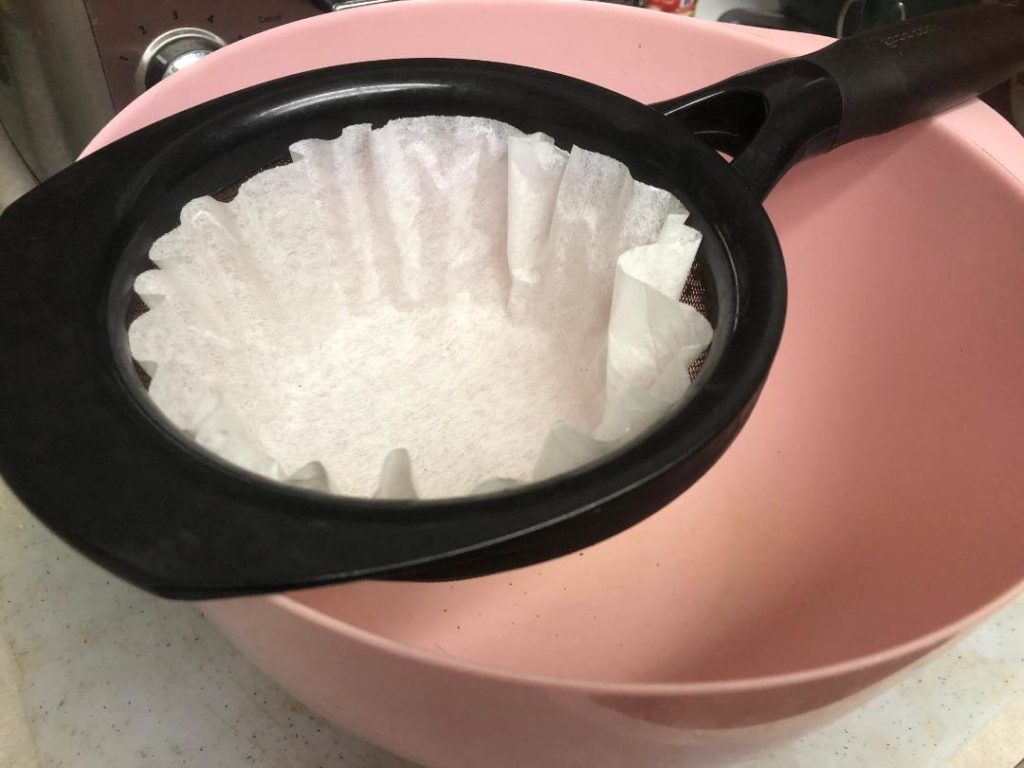
Set the coffee filter to sit in the catcher as flat or parallel to the table surface as best it can, so you don’t have coffee and water in the filter dripping or tipping over. Then you have your bowl setup.


Simple items you need for homemade cold brew coffee from scratch when your power is out: a deep bowl, strainer, and paper filter.

Or…

Pitcher: You can put your filter/catcher ontop of a wider-opening pitcher. If you use a pitcher, you want most of the bottom half of the catcher to sit inside the pitcher so your coffee brewing doesn’t spill over in the sides.

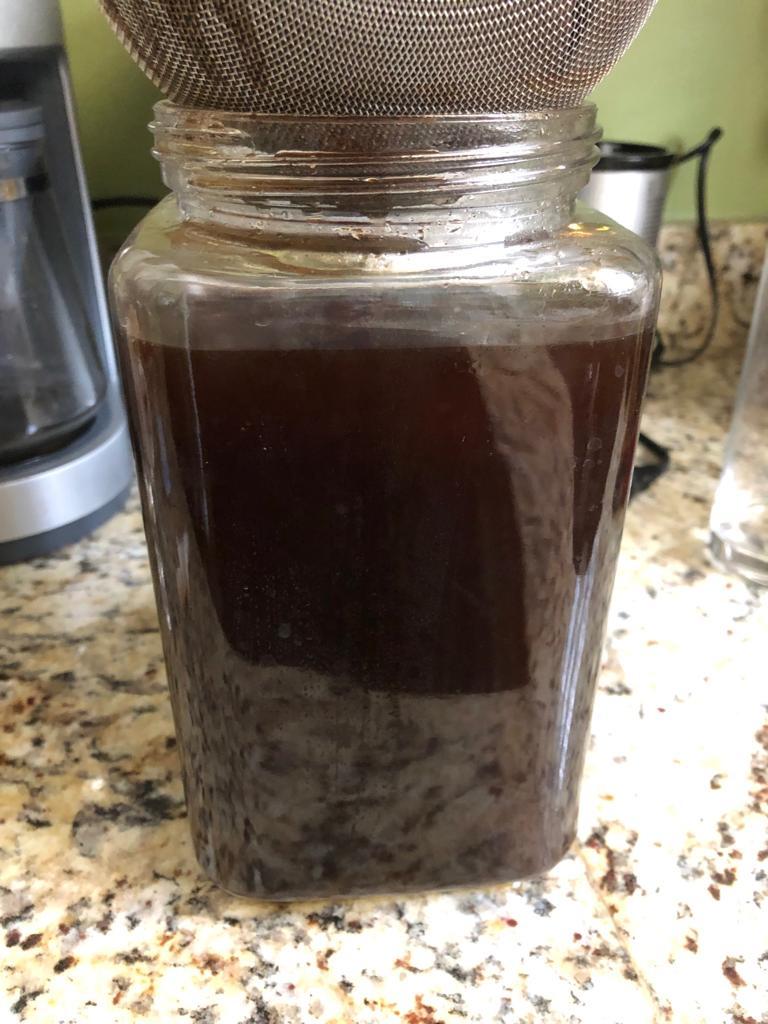
This is a setup example of how to make homemade cold brew coffee from scratch with a large jar that becomes filled with coffee.

So then you have your setup from one of the options above.

Good job!

Next thing, you can bring on the ground coffee grinds. See what I did there… ground grinds. 😊

I like to make homemade cold brew coffee from scratch in the morning to get a good whiff of the coffee grounds, and as a sensory experience and relaxing mindful activity. 🧡

You can even pull out your setup the day or night before if you just want to make a cup in the morning or a batch for a couple days.

Mind you, the fresh-made coffee will be room temps warmer than when you refrigerate, but that’s actually better for your stomach in the morning when you’re getting your day started.

The stomach prefers room temperature liquids, and preferrably a big glass of plain water first.

And then in choosing coffee types, use ground coffee types. It’s easy to get enamored by coffee flavors, packaging, and brands, but be sure it’s “ground” otherwise they’ll be “whole” and you’ll need to make the grounds.

It’s better to use a mix of superfine ground coffee and a coarser ground coffee so the grounds don’t fall through the filter. Or find one that is just perfect for you and stick with it.

They stay grounded 😉

Now, here’s how to make homemade coffee from scratch:

To start making cold brew coffee, pour your ground coffee mix (about 1/2 cup to ¾ cup coffee grounds total for a large batch) in the filter. Every coffee grind is different. You can use less if you just want to make a cup.

You can start with 1/4 cup coffee grounds to make a cup or two of coffee. These will be the strongest cups from the grounds.

With a spoon, mix the ground coffees up a little in your catcher-filter setup before you pour in water to possibly prevent fine ground coffee from falling through the filter.

Pour cool water over the coffee grounds. Filtered water is good. The cold water is the process secret to keeping the coffee from becoming more acidic (healthy benefit). You can use room temperature water and it will be fine.

After you refrigerate, it will be served “cold brew.”

In the beginning, the water will go through the filter fast and you will get a light brown/caramel trail of coffee water in your pitcher or bowl.

That won’t be the final coffee you’ll be drinking.

But if it does, start over. In other words, get another vessel (or mug of any kind), and pour the cold brew made through a second time. This usually does the trick (or else add more coffee grounds). You’ll get the hang of it with your favorite coffee grinds after a few tries!

When you keep pouring into the catcher-filter, then the darker coffee color comes out that you were probably expecting.

Troubleshooting: If your ground coffee mix sends some of the grounds through the filter or you accidentally spill some grounds in your ready-made coffee, then you can simply start over with a new coffee filter in a second bowl.

The second bowl can catch the second round of cold brew coffee being made that sometimes can turn out better. Pour your first setup coffee and coffee grounds into the filter of the second.

So back on track… from time to time, take a spoon and stir the coffee ground and water in your filter, trying not to have coffee water overflow.

Keep pouring water as it filters down. And if you pour into a cup, watch it drip  darker coffee after the first half of a cup or so.

More Cold Brew Coffee ideas and tips…

You can make and enjoyed iced cold brew coffee that’s different than iced coffee.  Learning the difference between cold and ice is in the preparation and process of making a cup of coffee even thought they can be the same coffee beans and grinds.

And with your coffee grinds, when you’re thinking ahead for tomorrow…

If you want to prepare a cold brew coffee batch for tomorrow and possibly the next few days, add more ground coffee to your setup.

This less potent coffee is good for lighter coffees.

You can make lighter cappuccinos with foam froth after the first two cups of stronger cold brew coffee that you can enjoy as black coffee if you like.

Or add a dash of healthy cocoa, cinnamon, pumpkin spice, or cardamom to change the coffee flavor.

If you make homemade cold brew coffee from scratch, you’ll never again be without coffee on-hand with flavor of your choosing if a coffee machine doesn’t work! And the power goes out. 🔌 It’s a backup plan too.

You can always make your own instant coffee without a machine as a coffee insurance policy 😉

As a planner-at-heart and former catering planner, this gives a sense of relief and keeps the relaxed vibes soaring and the panic anxiety down.

You can also pair your plant-based coffee habit to some great plant-based breakfast ideas to break away from the sugar breakfast habits or adding sugar to coffee. Sugar we know accumulates and works to destroy the biome.

So learning how to make homemade cold brew coffee from scratch and healthy eating together can be a better morning and daily habit. ☕️ Enjoy!

cold brew coffee
Print

Easy Cold Brew Coffee - Without A Coffee Machine (Good for When the Power is Out)

Course beverages
Cuisine American
Prep Time 10 minutes
Servings 2 cups
Author Brandy @ Healthy Happy Life Secrets

Equipment

  • 1 regular paper coffee filter
  • strainer for filters
  • pitcher or large deep set bowl

Ingredients

  • ¼ cup ground coffee for 2 cups of stronger coffee
  • water

Instructions

  • After you have your cold brew coffee setup, pour water through. The first 30 seconds of water pours will go right through. Examine if you're getting the medium to dark brown coffee color (if not, pour the watered down coffee into a temporary glass and then pour through again). If the coffee is too finely ground or too coarse, this can happen. If too fine, add/blend about a tablespoon of a slightly coarser ground coffee to the filter. This should even out the coffee grinds.
  • Keep pouring water and pour your first cup of coffee (will be the strongest). You can keep going until the cold brew coffee is weaker strength or turning lighter color.

Pizza Crust Recipe (How To Easy Step-by-Step Make)

Pizza crust is easy and fun to make as homemade pizza dough. And it can be made with any gluten flour like bread flour that I love as more universal to use. You can make other bread types and not just pizza like with 00 flour.

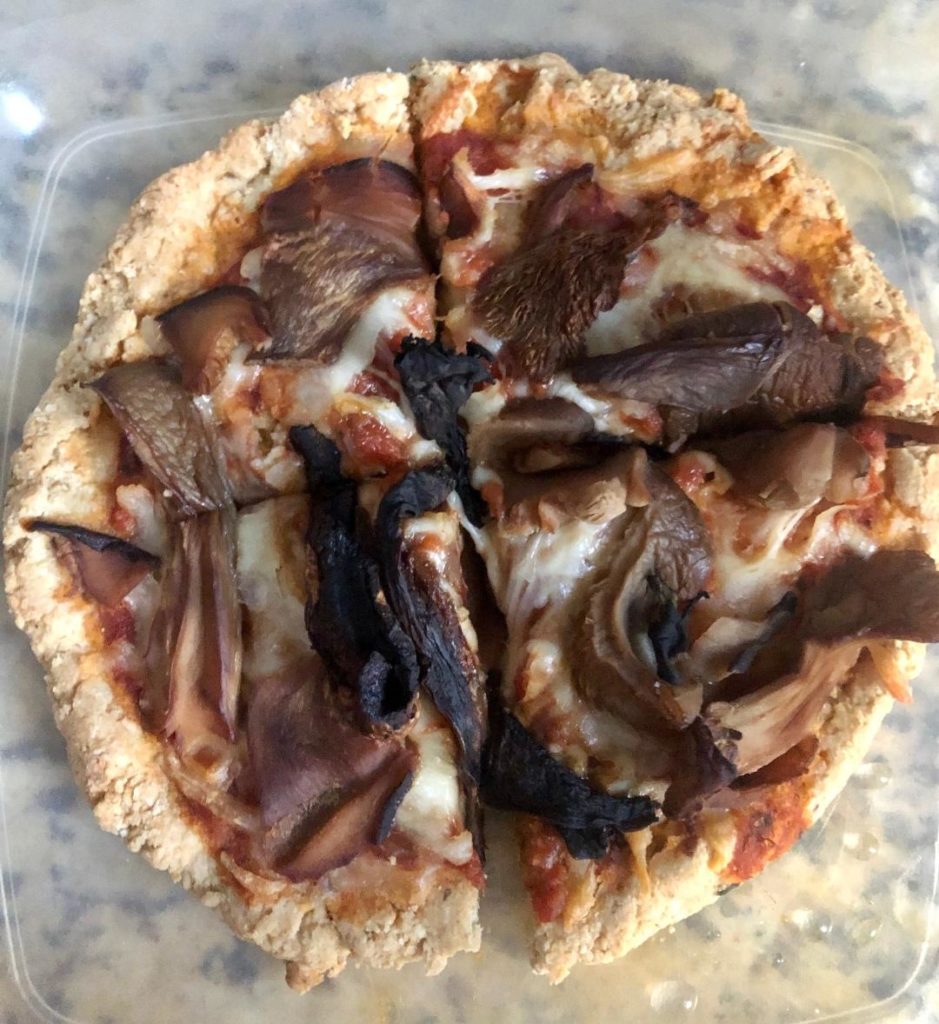
Home oven made Neapolitan style pizza crust with mushrooms.
Neapolitan style pizza crust that looks wood fire oven charred, but is baked in an apartment oven.


Below you can learn step by step how to get the pizza crust you want including a Neapolitan style crust that’s popular in restaurants with wood fire ovens… but that you can make even from an apartment oven! 👇

…Without waiting for one to be delivered.

This is impressive to your friends and learning how to make your own pizza crust is rewarding. 😋

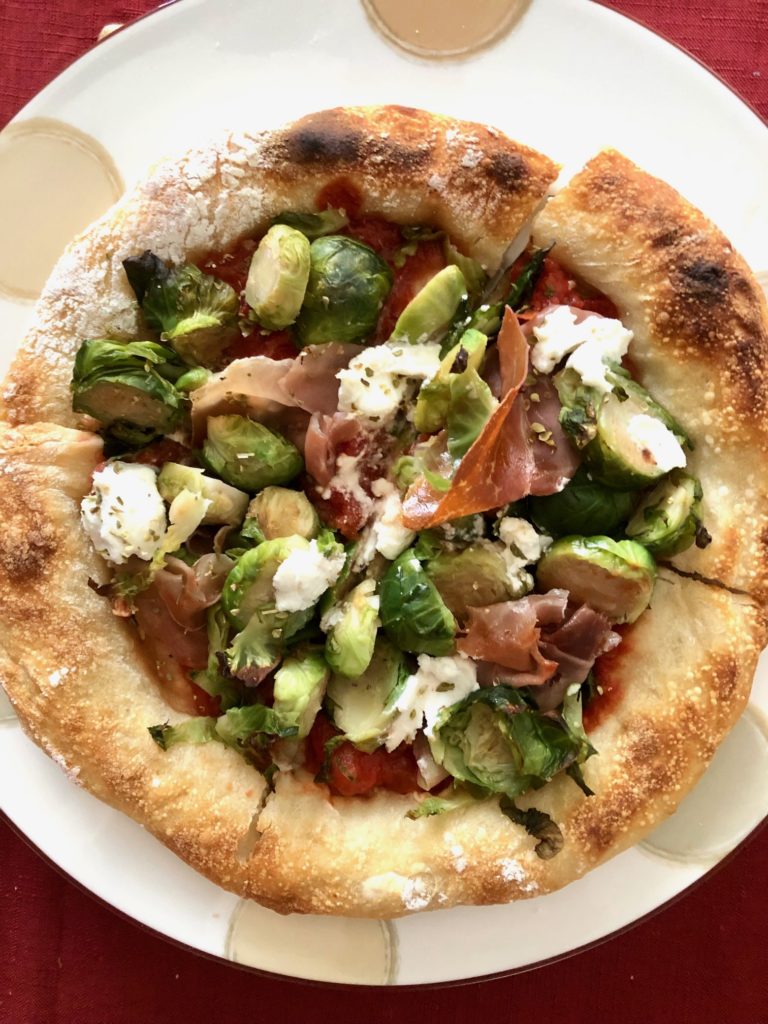
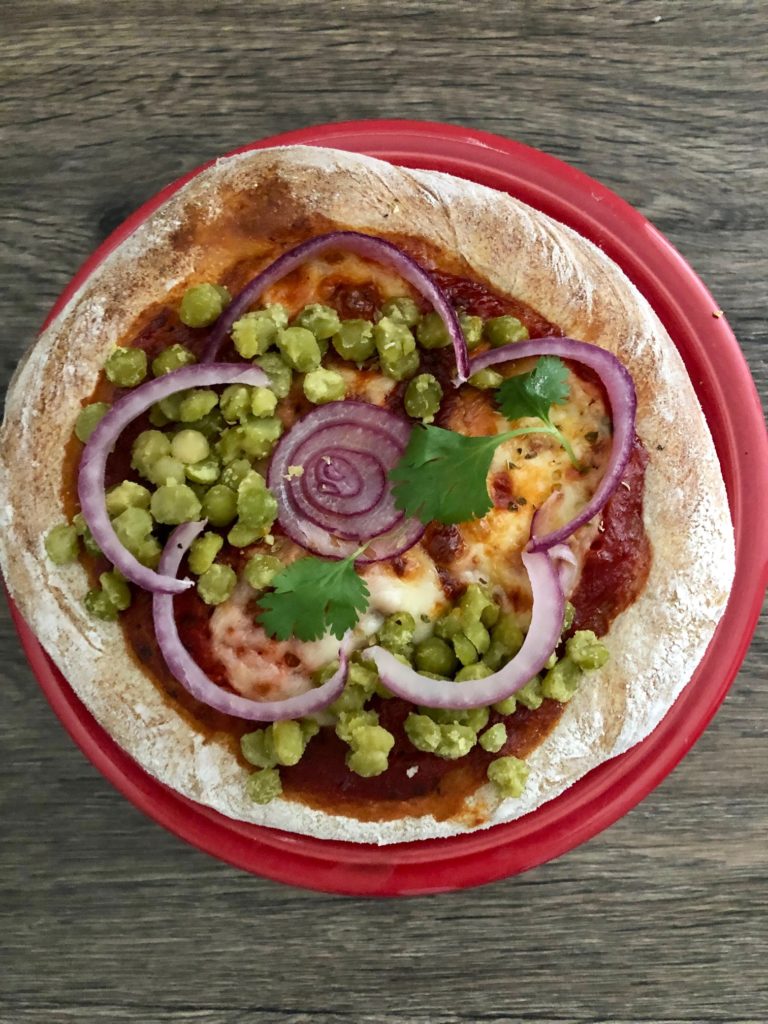
…Pizza can be a healthy meal that’s filling for all ages. I have a homemade pizza recipe you can try along with all the detailed steps from scratch below…

And you can learn techniques from me, a once-upon-a-time  pizza maker teenager for 4 years who worked at the busiest Domino’s Pizza store and franchise in the world 😊… yes, in the world. 🌎

Back then, we would crank out over 200 pizzas an hour on any given Friday or Game Day Sunday. This was when the 30 minute guarantee still existed and then became a well-known business case study.

It was the funnest job I ever had… and very memorable decades later where I use my pizza learned skills to make home pizza today. Like these thin crispy or regular chewy pizza crust styles.


Crispy cracker pizza crust example.
Thin and crispy cracker-like crust.
Thick, soft chewy pizza crust.
Thick chewy crust more like a pan-pizza style with a toasty bake.

And which btw you can make your own special pizza masterpiece from start to finish, faster than you can order a pizza and have it delivered.

So let’s begin…

First, you don’t need a pizza kit.

To make homemade pizza, you just need two essential simple ingredients (flour and water) you already have in your house (or can easily get) to make the dough.

Plus 4 ingredients if you want a bigger crust rise (flour, water, instant or active yeast, and salt). Or you can let room temperature act as the growing yeast (like in sourdough).

Homemade pizza needs no long prep time like pulling out ingredients in advance, like in other baking recipes. So it can be making and baking EASY.

It also has an advantage over breadmaking: you don’t need to wait for hours for the pizza dough to proof.

Making homemade pizza dough needs only a few minutes. You can simply prepare, bake, and enjoy in less than an hour.

If you’re not a planner this can be a winner.

But then again, you’d probably buy store-bought or order delivery. …but then that would be no fun, and you wouldn’t get the healthy, homemade pizza.

So I’ll assume you’ll give it a try at least at some point. You’ll be glad you did! 🎉

Here’s how to make homemade pizza…

Before you do anything, there is one area to plan. You should consider what you’ll add on top of your pizza crust.

If you load with gobs of cheese, then you’ve added fat and dairy (…that isn’t always a bad thing as cheese has vitamins, calcium, other minerals, and satisfies cheesy craving…).

For a healthy recipe, use fresh shredded mozzarella cheese or sliced buffalo mozzarella like on a Margherita pizza. It’s one of the healthier (less greasy) cheeses if your stomach is sensitive and end up sopping up the cheese grease.

Now you’re ready to start and pull out all your homemade pizza dough ingredients.

Instant yeast. I buy the small Red Star packets. The yeast balls look like microscope-tiny, perfectly round khaki brown color beads.

Water. 1 cup warm or room temperature tap water is fine. You may want to experiment as you know what they say about the famously delicious New York pizza crust (the rumor is that it comes from the water).

I’ve used seltzer and filtered water for pizza crust, and I find tap is still the best all-around.

Flour. You have options. Bread flour is the one for Neapolitan-style airy pizza. You don’t need special “00” flour even though you’ll find many recipes with this.

With bread flour you can use for other breads and it’s generally less expensive.

And if you aren’t doing an airy crust, other options are:

You can use a mix of regular or all purpose flour with whole wheat flour (that has a higher bread protein content). Whole wheat flour dough will be less sticky.

And if you use semolina flour for your bench flour, then that will help your dough from sticking to the metal pizza pan you use.

Another reason to choose whole wheat flour is the slightly higher, healthy fiber content. There are also gluten-free options.

In total, use about 2-1/2 flour total, but you will need more when you’re working with the dough.

You get better with practice and experience. You may be able to later eyeball how much you need.

Salt. 2 teaspoon table salt. You can use a little more salt if you use sea salt or if you plan to use fresh mozzarella (or buffalo mozzarella) that doesn’t have as much salt as some other cheeses. Kosher salt or a coarser salt will work well.

Optional: 1 tablespoon EVOO (helps with adding taste and less sticky dough).

Here are the 5 easy homemade pizza crust steps (broken down in detail):

Step 1: Make the pizza dough.

Add the yeast to water and let it settle/dissolve for about 5-10 minutes. The mixture will have a milky color and consistency. Set aside.

Separately, add the flour or mixed flours of choice to your mixing bowl (I like half and half whole wheat and regular or all-purpose flour). Add 1 teaspoon salt or you can use 1-½ teaspoon sea salt (if you want to use non-iodized salt as I use). Then add EVOO if you’re using, and the water-yeast mixture.

Dough by hand method: You can make the dough by hand, and if you do it that way, I’d recommend creating a neat flour mountain on a shallow baking pan where the flour won’t stick to everything.

Using semolina flour as a lightly floured surface is a preference.

Then add a dip in the middle of the mountain where you would add the liquids, like you may have seen or done at home making pasta the old-fashioned way (except there are no eggs needed in pizza making).

Dough with machine (recommended): It’s easier to use a mixing machine with the dough hook, like the Kitchen Aid mixer (I have a pink Cadillac color one… Paris Hilton and I have something in common, lol).  

With a machine, in a few quick minutes, the dough should be ready. You’ll know when it’s done when it’s not too dry, and not too wet, and has some good elasticity. Pizza dough is forgiving and is only part of the pizza pizzazz (say that 10 times).

Remember to scrape down the flour from the sides of the mixer. As you’re waiting for the dough to finish mixing, generously flour your pan.

I recommend a mix of coarser semolina flour and regular all-purpose flour for the bench flour.

When it’s ready, pull the dough out of the bowl. You’ll be able to form a small ball with the dough, and you may need to add more regular flour on the outside if it’s too sticky.

Form a dough ball and let it rest on the pan you’ve floured. Leave it sitting or resting at room temperature for 10 minutes.

Note, you don’t even need a plastic wrap or another container you’d have to clean like in bread making!

Step 2: Prep the toppings and the sauce.

While the dough is still resting, I get the topping ingredients ready.

I open the tomato sauce can (many restaurants use San Marzano tomatoes that I recommend), and I add finely chop anchovies with a serrated knife to the sauce as my secret ingredient (that’s not a secret anymore).

It adds salt and another flavor dimension (or you can just add a teaspoon of salt to the sauce if you prefer a saltier-tasting pizza).

Tomato sauce will add sweetness back. You can make your own tomato sauce but since it’s not the star of the dish, canned will work just great.

If you want a chunky style, Marzano tomatoes are plum tomatoes which are the kind commonly used in Italian restaurants. Or else use any tomato sauce or paste.

If you are using fresh cheeses like buffalo mozzarella, slice the cheese into smaller bits.

And if you use basil leaves, wet them a little like with a wet paper towel as they will settle a little better on the pizza. Alternatively, you can use spinach leaves like I use as healthy-alternative inspiration.

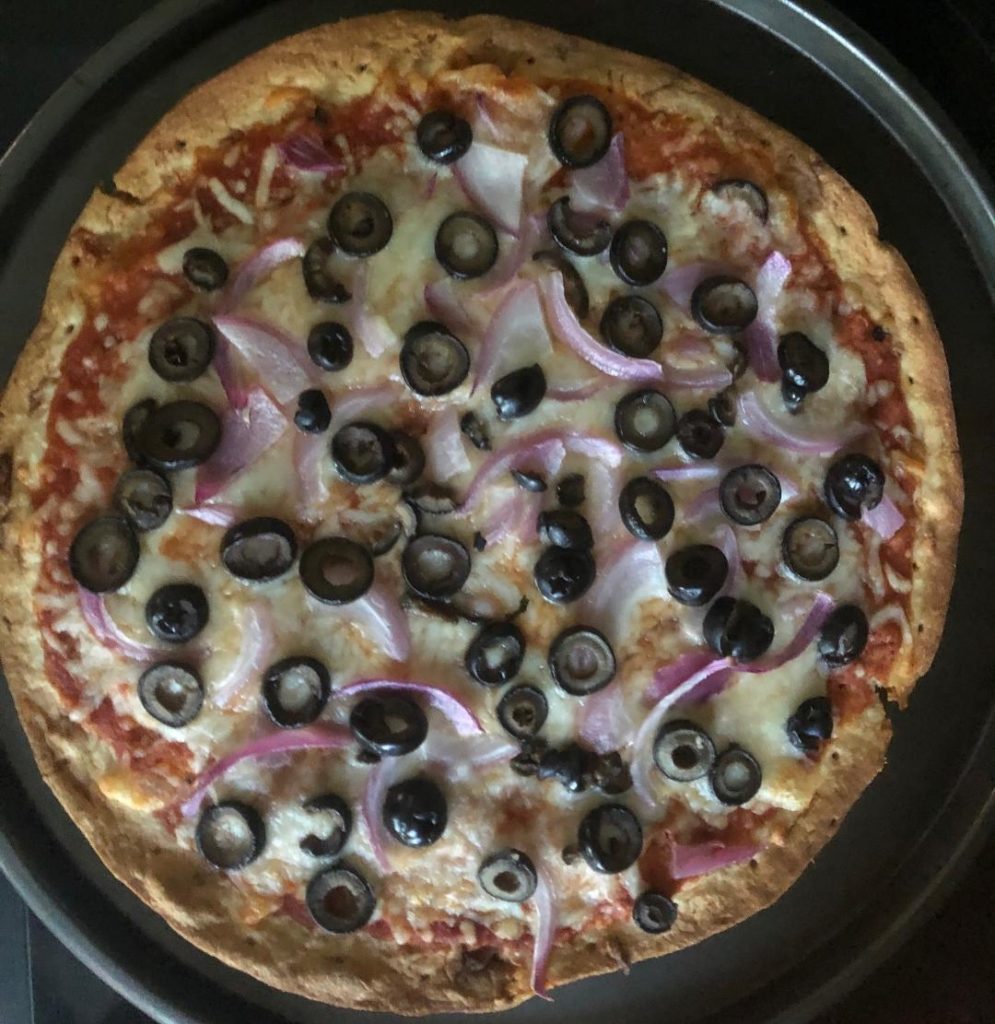
For any other wet ingredients like black olives, drain any excess liquid and dry them with a paper towel if you need to (as that would be a damper to your pizza… sorry, I couldn’t resist. Today is a fun day.).

By the time you finish this step, your pizza dough should be ready to work with.

A quick back story: I used to be a pizza maker (or pie maker as they referred to) as a teen before I could drive, and for the busiest Domino’s Pizza… not in the country, but in the world (yes the world! that is becoming smaller every day). 

I stuck around for 4 years until I took on other food-related jobs in college.

So, I still make the dough the way I learned from the modern pros!

We used to crank out 300 or so pizzas in an hour as a team during the busy football nights, and during the 30-minute guarantee years (you probably don’t remember!).

Our heads were down but it was fun energy in the shop![OK back to the business of making your homemade pizza]…

Equipment you need:

-Pizza pan. Any metal pan will work.

-Pizza cutter or pizza wheel (optional)

You don’t need a pizza peel.

Step 3: Flatten the dough into the pizza pan, to get it ready for the oven.

You can turn the oven on to pre-heat or you can wait if it’s your first time or so baking pizza.

Regarding temps, if you want to use 425 degrees (Fahrenheit, just to clarify for my Brit friends), that will give you a crispier bake like a pizza oven would.

If you prefer to cook under 400 degrees because it’s a hot summer day or your fire alarm can go off in apartment living, then you can bake with standard 350 degrees/180°C.

So anything in between 350/180°F and 425/218°C degrees will work. Remember pizza crust is forgiving (and I dare say easy).

OK, so here’s how to make the crust…

Fancy hand way: Take your dominant eating hand and place ontop of your weaker hand. Put your dominant index finger and middle finger below your weaker hand index finger and middle finger (crossing your thumbs). 

Or…

Simple hand way: Place your hands side-by-side, index fingers touching.

Either way, using your fingers, put pressure into the dough as you’re making hand imprints. Use enough pressure to make a dent, but make sure you’re not making holes in the dough, and it’s thick enough to hold the amount of sauce you plan to use.

If you get a hole in your dough, simply start over like you would with Play-doh. Roll the dough back into a ball and then flatten the ball with the palm of your hand (that you can coat with a little more flour as needed).

Push down on the dough and make handprints on every part of the dough.

Keep turning the dough 90 degrees while you move along and your hand is at a 90-degree angle (or at 3 o’clock clockwise or 9 o’clock counter-clockwise if you like clock descriptions).

For a right-handed person, you can turn the dough clockwise (and counterclockwise for a left-handed person).

Then flatten down the middle of the dough with your fingers and palm of your hand to get out all the trapped air bubbles.

Do this once and then flip the dough to the other side (back side), and do the same process. Add more bench flour underneath the dough as needed.

Keep working with it until it’s the right crust size for your pan or toppings.

If you want a super smooth dough crust without your handprints or blemishes, turn the dough with your gentle palms while lightly kneading, smoothing, and stretching the dough with palms (like you’re sanding it down).

I skip that part as a handmade-looking pie to me is part of the fun.

For basic round or irregular shapes, making the dough can take one minute or less with practice.

I know my instructions are descriptively long, but once you get the hang of it, it can be fast and easy!

In the beginning, take your time learning. It can be fun and maybe even a ‘lil therapeutic especially if you have some good music going on!

And, then here’s another important step/option that I recommend:

When you’re satisfied with your pizza dough that will be your topping base and crust, pre-bake the pizza crust first (without toppings) especially if you are using lower baking temps.

This is necessary if you are using lower 350-degree temperatures, but you can skip this step if you want if you use much higher temperatures.

I use the prep-baking crust waiting time to clean off my dough hook, mixing bowl, and other supplies I’m finished with, so I have minimal cleanup later.

After 10 minutes (a magic number for pizza step waiting times), pull the slightly toasted pizza crust out of the oven.

Let it cool for a few minutes, but you don’t have to wait until it’s room temperature again.

Then you can add your sauce with a spoon or ladle and spread evenly starting in the middle and applying less and less pressure towards the crust.

That’s the way we use to do it in the pie shop 😉

Btw, you can make other sauces like pesto, barbecue, or balsamic (that are other personal favorites of mine)! Maybe you too as you get to be a pizza pro?

…But here I’ll keep it super simple with the tomato sauce.

Wheat pizza crust example.Step 4: Then lay your toppings on.

The secret for better baking through is to put the quickest to cook items on the bottom. So any thin, flat veggies (like black olives and mushrooms) and flat meats like anchovies, and then add the lumpier foods on the very top layer.

If you use buffalo mozzarella (the white ball kind), treat it like a topping instead of cheese. For shredded cheeses like regular mozzarella cheese, add as the first layer over the sauce.

If you want to use tomatoes that aren’t finely diced (tomato concasse in fancy Italian restaurants), bake them on the side in another pan as they could be too wet and create a mess on your pizza in the oven or prolong your baking time (sundried tomatoes are ok on the pizza).

For any meats, cook them through in advance especially if you’re baking your pizza on 350 degrees.

Now you’re in the home stretch! You just have one more step.

Step 5: Bake your pizza (or cook your pie 😉).

When you’re happy with your fully loaded Picasso-pizza art, put it back in the oven on your lowest or medium rack, and if you’ve pre-baked the dough then you don’t need the pizza pan anymore if you want.

You can just set your pizza right on the baking rack. Sometimes I leave the pan baking just depending on the crust I want. Try it both ways.

And then bake for another 20 minutes to your crispy done liking (all ovens are different and depend on your dough thickness, ingredients, etc.).

Check the crust bottom to determine doneness and if it’s not yet done, but toppings are done or shriveling/drying up, then add a piece of aluminum foil on top and keep baking until the crust is done.

Don’t leave the pizza in there after you’ve turned off the oven, like you could in baking other goods, as this can dry out the toppings and the fiery heat will be gone from the crust which usually takes the longest to bake.

When done, pull out of the oven. Presto! Let it cool and then cut and enjoy.

If you want to add individual flavors, like if you’re feeding a larger group, you can have side parmesan-reggiano cheese, oregano spice, red pepper flakes, garlic, drizzle or olive oil, or caper ingredients (just to name a few ideas)!

…And then you will have 100% impressed your friends with your rock star homemade pizza baking skills ⭐️

The sky’s the limit! And while you’re waiting on your baking oven, you can do a few baking yoga moves, if you’re so inclined.


shittake mushrooms homemade pizza.
Shiitake mushrooms and apple cider vinegar cracker pizza crust.

And then when you’ve made easy pizza crust, you can make your own mushroom neapolitan wood fired pizza from your home oven.

homemade wood-fired pizza with mushrooms recipe.
Print

Neapolitan-Style Pizza Crust

You can make this Italian style pizza crust at home with mushrooms or any of your favorite toppings.
Course lunch, Main Course
Cuisine American, Italian
Author Brandy @ Healthy Happy Life Secrets

Ingredients

  • 1 cup bread flour
  • 1 tsp salt (coarser kosher salt works well)
  • water (start with 1/4 cup and add more)
  • 1/4 tsp instant yeast
  • toppings (e.g. mushroom, buffalo mozzarella cheese, and sauce).
  • 1 tbsp extra virgin olive oil
  • bench flour (e.g. semolina flour or bread flour)

Instructions

  • Make the dough. Add flour, water, salt, and yeast ingredients to a mixer bowl or bowl if you are making the dough by hand. You will use about 1/2 cup water per 1 cup flour.
  • Knead the dough, until a cohesive pizza dough ball can be formed. With a bread dough hook on a mixer, this will be about 5 minutes on high, 7 minutes on a medium setting (and about double time by hand).
  • Add some olive oil to a plastic container with a lid.
  • Place dough in container and let proof for at least 2 hours. Can be left overnight in the refrigerator and be sure to not let the dough dry out.
  • Then add some bench flour to your pan to prevent sticking (semolina flour is classic for Neapolitan pizza but any flour will do). I suggest a baking pan with a Silpat setup ontop to prevent the pizza crust from sticking to the pan.
  • Flatten the dough into the shape you want with your hand and fingers. Avoid the crust edges to create a more airy crust.
  • When you're happy with your pizza shape pre-baked, then place in center of the oven bottom rack and bake for about 20 minutes on 350°F/180°C oven. The pizza crust will not be finished but it will be hard enough on the crust bottom to be able to broiled without a pan.
  • Add sauce, cheese and pizza toppings.
  • For the airy crust and charring pizza crust marks, broil your pizza. For preparation, remove Silpat (if using)and your baking pan, and slide the pizza to the top oven shelf at least 6-8 inches away from the top of the oven where the oven heat will be coming from (not the bottom like baking settings). In most common ovens, the 2nd rung down for the top adjustable metal rack works well.
    Turn on the broil (caliente hot!) setting for 2-5 minutes until crust is slightly charred giving the wood-burned fire "effect." You'll see the heating source from the oven lines above that could take a minute to heat up (indicated by the top red heating element).
    Safety tips: Be careful and watch the broiling the entire time with the oven light "on," so you can be fully safe. Do not open the oven door at any time that the broil setting is fully heated or turned on. And do not turn your pizza without turning the broiling setting off and waiting for the oven to cool down before opening the oven door (and then turning back on). Test your oven for the best broiling time for your pizza crust, and do not overcook.

Notes

You don't want your dough to dry out, so be sure to add enough water so it's more like an elastic smooth skin versus stringy dough. And be sure to cover the dough.

Fresh Orange Juice (No Juicer Needed)

Fresh orange juice is a popular, year-round favorite. In the winter, oranges are in season, so you can find an abundance of oranges.

orange juice

That’s also when most people load up on Vitamin C that they associate with orange juice, and why orange juice grocery shelves can be full or running empty.

And summer is a popular time too as it’s served in vacation towns and resorts.

I share below how you can optimize an entire orange in homemade fresh orange juice squeezed by hand.

If you’re inspired by fresh juices, this is a smart idea to save money, be healthy, and enjoy conveniently at home.

And speaking of enjoyment, last week I had a nice surprise.

I won a gift card to a local smoothie place I’m inspired by. They are my inspiration for tropical smoothies.

One day I saw someone coming out of a yoga studio in my town who was carrying this mermaid blue color bowl that’s the size of a large yogurt container.

I had to find out what this healthy ingredient is!

I learned it comes from an ingredient called blue majik (that’s the magic in the blue bowl). 🥣

The South Block smoothie chain also uses ingredients like camu camu and maca root.

You feel like you’ve been invited to a new array of rainforest superfoods shipped from an exotic locale in the world and infused in your made-to-order bowl or smoothie.

It’s dreamy, no?

OK, I could go on and on excited!…

But, today I also wanted to share how you can optimize oranges in a house-made fresh orange juice.

I’ve become super sensitive to how much sugar I consume and that’s healthy motivation.

And that hopefully inspires you to think healthy food and drinks at least most of the time (as it does for me).

Vatas are attracted to oranges and sugar so this is perfect for satiating sweet cravings.

Next time you think about getting orange juice from the store, consider making your own fresh orange juice from whole oranges where there’s no added sugar.

Fresh Orange Juice

organic navel orange peel for fresh homemade orange juice.
Look for heirloom, organic, or local farmers market produce as in season (free of pesticides, good for us and the environment)

And oranges are one of my favorite fruits as I love the smell of oranges. Here’s why…

They are good for calming anxiety, aromatherapy, and if you’re leaning into the Vata mind-body ways or  wanting to restore any Vata imbalance.

If you can’t get the work life balance or life is stressful, keeping an orange near you to sniff and that’ll help calm you.

And making fresh orange juice will also in its healthy-balancing effects.

And if you feel it in your nervous digestive tract, you can try an orange elixir like this recipe:

organic navel orange peel for ayurveda drinks
Print

Orange Digestif Juice

Course Drinks
Cuisine American
Author Brandy @ Healthy Happy Life Secrets

Ingredients

  • 1 orange (pulp, zest, peel)
  • Apple cider vinegar (amount adjustable to liking)
  • 5 Spice blend (Five spice is star anise, cloves, cinnamon, fennel, and black pepper) - (amount adjustable to liking)
  • water (dilute as needed)

Instructions

  • Zest and peel an orange. Keep all the parts. Tip: use navel, Cara Cara, blood, or heirloom oranges. They are good for the calming (and good for parasympathetic nervous system also affecting good digestion).
  • Squeeze the pulp into your orange juice container (or enjoy).
  • Add your zest and peels to the container.
  • Add five-spice blend.
  • Add apple cider vinegar
  • Fill up with water. Shake and refrigerate. Enjoy when you have an upset stomach.

There are so many orange varieties to choose from. I love the Cara Cara sweetheart orange variety (common around Christmas) that can be juicier and sweeter than a California navel orange that’s in season a little earlier.

Plus fresh orange juice makes me think of my second home, staying in nice hotels! Once upon a time I worked in hotel catering management where I got my first taste.

And you may have seen out and about those gigantic commercial machines that crank out fresh orange juice from whole oranges. That would be a fun job for a day!

You may have seen one of these at selective grocery stores if you live in a larger metro area.

Fresh orange juice definitely ruined me for any added sugar orange juice that comes from a carton (like I grew up drinking).

Concentrated is high sugar and harsh on the stomach, and especially along with a morning coffee routine that Americans commonly do. That’s double acidity.

Plus ontop of that, most common foods are usually acidic.

And if that’s your typical morning routine…

👉 You can opt for making your own organic cold brew coffee and  diluting orange juice with water.

So let’s begin and get your fresh orange juice-on!

For equipment, you can use a citrus squeezing tool, which is one of my favorite kitchen tools because it’s bright yellow so I have no choice but to be sunny with the brightening citrus when I use it 😉.

And a zester microplane tool that looks like a zester.

Orange zest from a fresh orange juice.

These are the parts of the orange.

Orange Zest (essence). Before I cut into the orange for orange juice, I go around the orange peel, grating, and capturing all the outside orange zest as essence for zhughing up other sweet morning smoothies, dishes, and garnishes (that’s where my former-catering mind goes and yours can go wild too!).

Orange Pith. Most people throw the spongy, slightly bitter part out, but consider keeping.

This would good in the orange digestif recipe mentioned already.

The orange pith is high in Vit C (as is the juicy pulp) and anti-inflammatory flavonoids. For those reasons alone, it’s worth considering mixing in foods and drinks/smoothies.

Plus leaving no traces of fruit is good for not attracting critters. 😉

Orange Juice and Pulp. Then cut the orange in half (perpendicular to the top or the stem or from left to right).

I know it’s tempting to cut the orange any which way since it’s perfectly round, but cutting the right way lets you cut through each orange segment to maximize juice.

Otherwise you could get stuck on a pillowy-feeling orange segment.

Now you’re ready to squeeze each orange half or use a citrus squeezer tool, and squeeze away the juice into a tall glass.

Let go of all your stress squeezing oranges. Activating calming oranges around you is a relaxing sensory exercise.

Keep repeating until you have the amount of juice you want. Add back pulp as desired if you like high pulp juice.

You can also add some water to dilute some or stretch the juice out for more.

And enjoy!

No-Waste Eco-Friendly Ideas: Save the orange pulp if you prefer high-pulp OJ and add small orange pieces to your drink.

Save the seed to grow a plant. Save the pulp and zest for cooking and baking recipes. Save the pith that has the most nutrients for digestifs and foods. Save the orange sticker as a reminder for getting the Produce LookUp (PLU) item again. 😉

If you like fresh juices, you may want to give Fresh Peach Juice and Mango Juice other sunny yellow inspiring fruity juices a GO.