Sheep’s cheesecake can be made into a protein-filled dessert that tastes like your favorite cheesecake desserts. I know because that’s what’s in this recipe. And the sheep’s cheese cake is lower fat and sugar, for a healthier cheesecake. It’s easy to find in stores (see below tips).
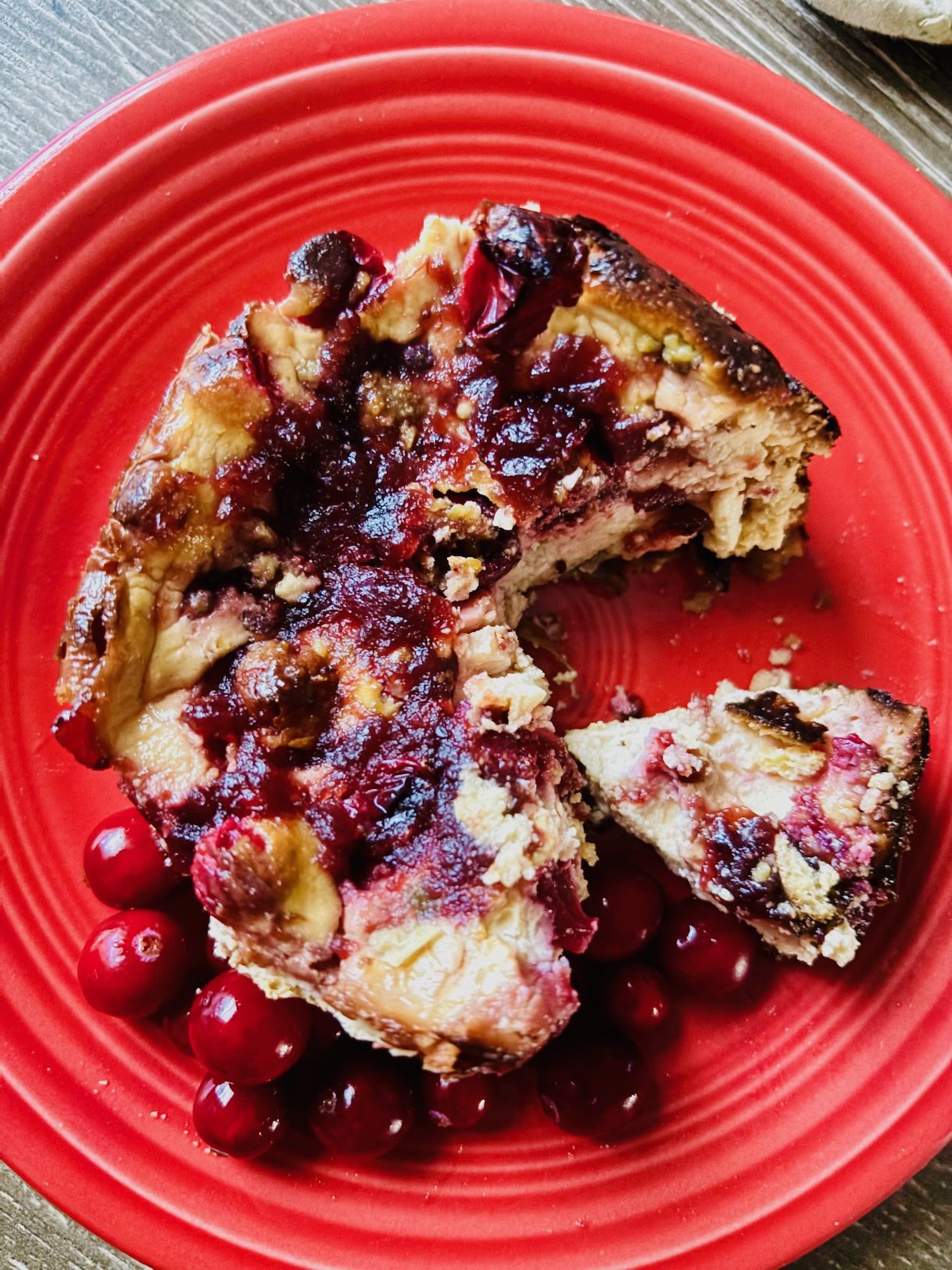
This sheep’s cheese cake plate has cranberries that are also mixed into the cake batter. Cranberries are high in Vitamin C and are good for an anti-inflammatory diet during the holidays (and year-round).
Cranberries are uniquely good for preventing UTIs and seasonally they add a red pop of festive color – that ranges from the bright fire engine red to burgundy shades.🚒 ♥️
You can buy whole cranberries and freeze them for when you want to use them. So the shiny and red fruit berry jewels are hard to turn down.
As is this protein cheese cake.
What makes this cheese cake protein-rich are the ingredients that include sheep’s cheese.
You can expect to easily find 5 grams of protein per sheep’s cheese ounce. At many stores, you can find packaged grocery sheep’s cheese logs, that come in smaller 4 oz size packaging these days. And that will make this regular size 8″ shareable cheesecake.
Or you can use 2 ounces per individual 4″ cheesecake. Doing the math, that’s 10 grams of protein for an individual cake (or 20 grams per 8″ cake).
If you compare the protein in regular cream cheese (commonly used in cheesecake recipes), sheep’s cheese is more than double the protein.
Regular cream cheese has about 1.7 grams per ounce. That’s about 1/3 of the protein as ordinary sheep’s cheese in national grocery store chains.
I found pre-packaged sheep’s cheese in the cheese section at national grocery store chains like Aldi’s and Trader Joe’s.
So that’s a good start (in case you didn’t think it was easy to source).
…And of course, sheep’s cheese comes in all shapes, sizes, pasteurization types, etc.
We’re not talking Blue Zones’ (100 years) healthy living sheep cheese here… which is where this all began for me when I studied up, researched, and wrote about the superfood cheese.
Since then, the idea has wildly grown in popularity and you can find all kinds with the label. Sheep’s cheese is easy to find like pre-packaged Brie or buffalo mozzarella cheeses in stores.
Because otherwise you’d have to pay a pretty penny (or accepted currency) to source sheep’s milk cheese, and/or fly to rural areas like the Sardinian regions to find high-quality, grass-fed sheep’s pecorino cheese.
But the kind you bring home, you can pair with Greek yogurt to get probiotics added back. And even more protein added.
The healthy idea that works in a sheep’s cheese cheesecake like this, is to find a thicker Greek yogurt that has no additional sugar. You can also find a lower fat content yogurt.
And then when you bake the sheep’s milk cheese and yogurt into your desserts like this holiday cheesecake, this helps support a happy and healthy lifestyle.
In an hour, you can have a nice Greek yogurt healthier cake ready.
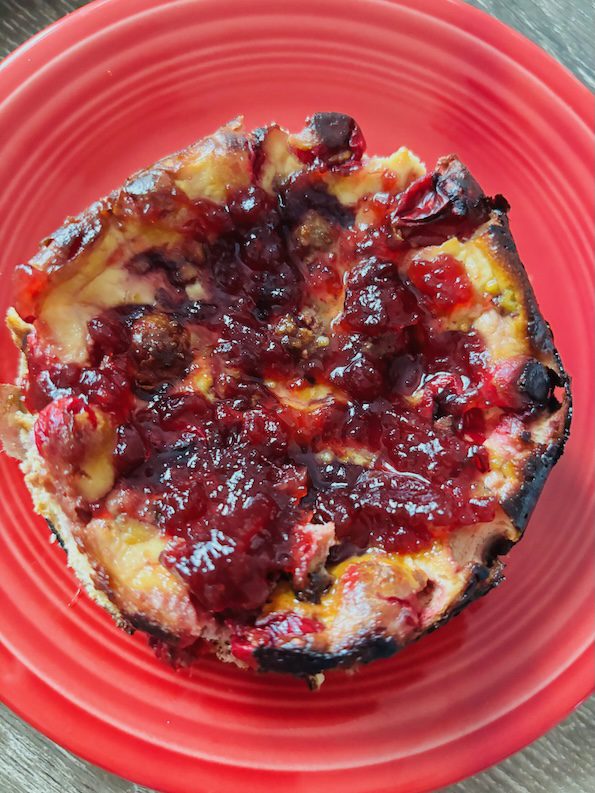
Since this cheesecake has no crust (like a graham crust on a New York-style cheesecake) and has no flour baked in, you can get baked Basque-style sides that are more decadently burnished-brown without using high baking temps.
This happens when you use a metal spring form cake pan where you can release the sides after the baked cheesecake is cooled.
If you cover the sides entirely with parchment paper (that you may have learned to do with Basque cheesecakes), the cake will be more easy to pull out, but it won’t be connected directly to the cake pan heat. So you compromise the end result bake.
The better way I suggest is to brush neutral/light olive oil (or butter) on the sides. And after baked, don’t release the cake from the spring form until it’s completely cooled when the cake is more stable, and will more easily stay together in one piece, as it firms up.
For interest (I have a catering background), I also added softened ripe pears to the bottom of the cake pan for additional sweet flavors and textures. It helped release the cake and gave a burnished look to the bottom (similar to poached pears 🍐). But that part is optional, as you’ll get the Basque-inspired cheesecake style either way.
But surprisingly by using regular 350°F/180°C temperatures and not the higher Basque cheesecake temperatures, to save energy (but also low and slow is easier to not burn in the oven).
But if you leave it in these lower oven temps for 55 minutes, I think you’ll be happy with your bake’s doneness.
Your cheesecake will have an Old World charm look.
And when you bite into the sweet and tart cheesecake (made even tart-er with cranberries), it’ll be a delight. With a rustic crumbly feel on the tongue as a satisfying texture that’s distinctly baked (no half-bake here 😊).
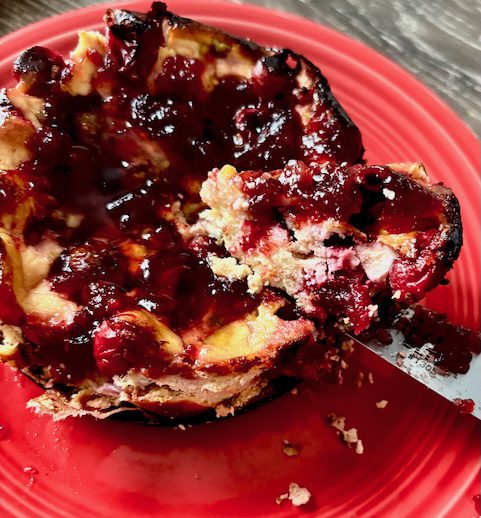
But if you prefer a more creamy cheesecake with less small cheese-yogurt chunks, then add more milk (liquid) to your batter, or use a less thick sheep’s cheese and/or yogurt.
You have so many options to make your (maybe?) NEW favorite cheesecake 😋
But no matter what you choose as actual ingredients and final texture intent for your high-protein cheesecake, this is a daily cheesecake you’ll have no regrets making. Ready to try?
If you like this, you may also like a cranberry pumpkin trifle, blueberry-peach cheesecake smoothie, and other low-sugar dessert bites.
Basque-Style (No Crust) Cheesecake - High Protein and Low-Sugar
Equipment
- spring form cake pan
Ingredients
- 2 oz sheep's cheese
- 2 oz Greek yogurt (no-fat and no-sugar added)
- 1 Tbsp milk of choice
- 1 Tbsp raw honey
- 1/4 cup seasonal fruit (or jam) of choice or cranberries
- cranberry sauce or fruit jam as spread on top (optional)
Instructions
- Brush neutral olive oil or baking spray on bottom and sides of (spring form) cake pan.
- Combine ingredients in one bowl. Reserve some fruit for the top, so they don't all fall to the bottom of the cake pan. Option: add softened pears to the bottom of the pan.
- Bake at 350°F/180°C for about 55 minutes. This will give a Basque-cheesecake feel as the sides turn a darkened brown (pleasantly burnt-ish) color.
Hi! I don’t have a spring form cake pan. Can I use a baking dish for this recipe? Any changes I need to make? Looking forward to trying this out!
You can brush neutral oil fully at the bottom and sides of the cake pan you choose to use. Then you can add 6 little long strips of cut baking paper (or aluminum foil) that you stick snugly from the bottom and up the sides, and spread evenly around the pan and to extend beyond the cake pan height, so you can gently pull the strips out like handles along with the cake after the cake has completely cooled. If you were to use one big piece of paper/foil (without cutting) instead, of strips, that could save time, but your baked cake may not be as side-burnished and shape-defined as you like. Let me know if you have more questions. I love cake-talk (and using scrapbooking ideas!).