
Ragweed allergies and dry symptoms are becoming more relevant with climate change. It’s not just autumn or fall anymore. And while it’s dry out in my neck of the woods, it’s also humid daily. I find dew on my window in the AM. And I’m seeing how this affects my new plant.
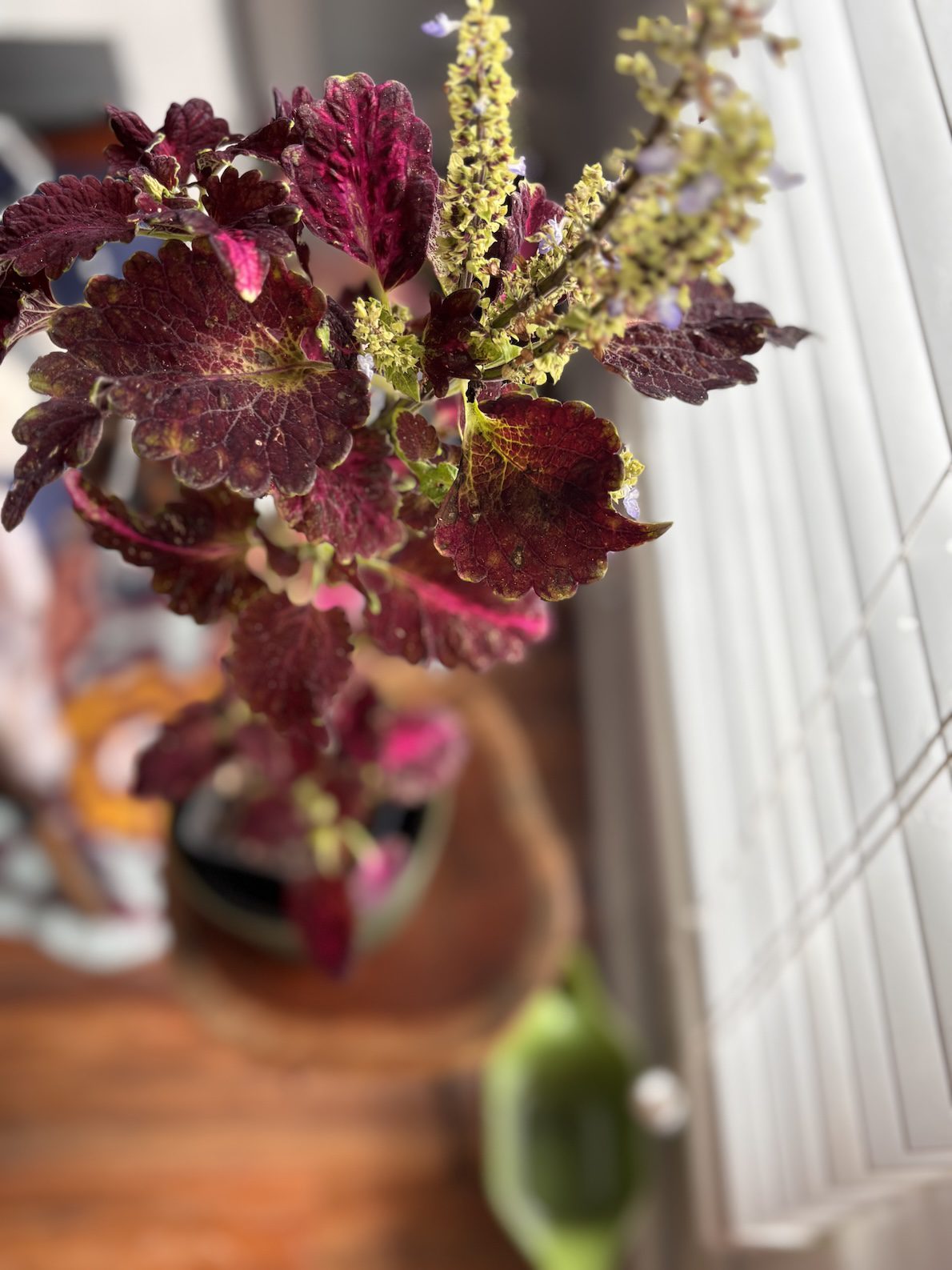
We are all part of one living ecosystem. And ragweed season affects our local environment, home, plants, and bodies.
While high humidity is breeding ground for mold toxins. And a dehumidifier would be helpful to smolder prevent.
Because being inattentive can create more chaos in the body than just ragweed allergens.
Fall season ragweed in the air causes watery, itchy and sinus-related symptoms. Ragweed allergies can be often confused for colds and flu, especially with COVID-19 that has similar and often strange symptoms.
They build up to exacerbate Vata, Pitta, and Kapha imbalances.
We’re all made of some amount of wind, fire, and earth in us that need tuning up restoring. If restoration is something you’re needing, you can take the body balance quiz for more awareness.
8 Healthy Ways to Calm Your Ragweed Allergies
1. Steam. Steam over stove with peppermint oil in a pot. Also, releasing a few drops of eucalyptus oil in the shower is good for clearing sinuses.
2. Neti pot. This is by far the best allergy invention yet! By cleaning out nasal passages with natural sea salt and (boiled or purified) water, you can prevent sinus infections. Do this every week at a minimum, but I like twice a week during allergy season (or year-round).
And a natural saline spray can help to clear out the sinuses. This is good for convenience, if you’re super stuffed up, and the neti pot scares you because you think it’ll reach your brain somehow.
Even though in truth, the nasal passage is on a different track, so the likelihood is slim.
But a natural saline spray is still a healthier way than taking daily medicine that accumulates.
And if you want to give the neti pot a try, this is what I do:
I take about 1/4-1/2 teaspoon of natural sea salt and add ½ cup of boiled water. If you’re a beginner, you may want to start with 1/4 tsp salt and you can always add a little more based on the severity of your congestion. You can also buy pre-measured saline packets.
Let the hot water cool to warm or lukewarm. I usually set the timer for 20 minutes after boiling the water for 10 to 15 minutes.
Then you take your neti pot solution and pour it into one nostril, and then the other. Streams of water will come out the opposite nostril.
And you can instantly feel better like I have felt when allergies were getting the best of my energy.
If you’re taking a shower, it’s practical to perform the neti pot regimen there. But over a sink is fine too. Just be sure to have a towel nearby, as water can still run from your nose after you’re finished.
I usually look face down to the floor into a regular or paper towel (afterward), for several seconds just to get rid of any excess water that can be delayed in dripping.
Tip: I don’t do the neti pot regimen if I’m going to a yoga class that day because Downward Dog likes to be downward dripping nose dog if ya know what I mean! 🧘🏻♀️ And that’s awkward dawg! 🐶
For cleaning the neti pot: use a small amount of soap as you may not remove every soap trace. There’s also probably still traces of salt sitting at the bottom of your vessel if you use a clay one like I do. Plastic is easier but not as pretty.
Salt is a natural cleaner, so you can rinse with water thoroughly and using soap cleaned fingers or a clean toothpick to remove any lingering residue (as sponges can harbor bacteria).
The time and effort you spend on your entire neti pot regimen is worth it and a TOTAL life game changer especially if you are prone to sinus infections.
You also can rid of uncomfortable tension in the face from ragweed allergy congestion.
3.Apple cider vinegar. When I take ACV, I use an eyedropper in a vial/bottle and add mixed up water with apple cider vinegar that has the “the mother” (milky substance). This is the good stuff that you should invest in for your medicine is food cabinet.
When you apply, put it to the back of my throat to protect the teeth. ACV is acidic but (counterintuitively) good for a high acidic stomach, as it stops the stomach from producing more acid.
And sometimes in the mix of allergy season, there’s chest congestion. That’s when I will boil apple cider vinegar over the stove, and inhale the steam into my chest. This is a last resort as I don’t know about you, but I think the ACV fumes doesn’t agree for my Vata body.
But ya do what you gotta do!
I use the cheap (not organic) ACV for boiling, otherwise the good stuff is wasted.
Apple cider vinegar also helps heart burn feelings (that’s associated with acidity and often eating too much in the acidic foods categories). It’s one of Mother Nature’s gift. Maybe that’s why the super kind has the “mother.”
4.Drink green and peppermint tea. Ragweed often brings on symptoms and headaches that warm tea is good for.
Add raw honey for congestion.
Peppermint tea is good for headaches. Herbal teas are caffeine-free so they are good any time and at bedtime. They also calm stomach aches.
AND for the home, it’s a common bug deterrent.
5.Air purifier. A machine like this in your bedroom where you spend many hours, helps to clear the air some. When you’re laying down, chest congestion build ups easily.
Tip: make sure to get the HEPA level filter for allergens, molds, and spores (much smaller particles to capture than a filter for dust only) that are common during ragweed season.
6.Nettle or turmeric tea. Nettle tea doesn’t have a culinary use flavor, so you can add other tea that will add flavor. With turmeric tea, you can add black pepper that has a synergy effect with the curcumin compound that’s in turmeric.
Black pepper can help you sneeze. And that is our body’s natural mechanism to clear out some dust and pollen.
7.Menthol vitamin drops. If you have sinus pressure, menthol drops are good for the Kapha congestion symptoms and tiredness. Keeping them by your eye drops is a good reminder to take them.
Dry or irritated eyes are a common ragweed symptom.
8.Raw honey. If you find the right raw honey from local beehives, this can help a little or a lot to break up sinus and chest congestion.
It’s also an amazing moisturizer and does wonders for inflammations like itchiness. It’s an anti-bacterial.
…Maybe that helps to look at the sticky goodness and your local bees in a different way? 🐝🍯