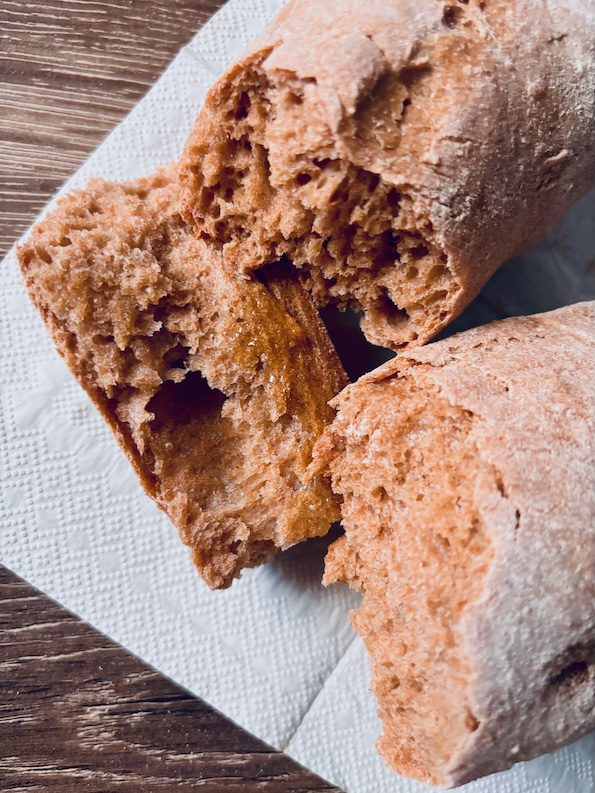
Whole grain roll with whole wheat and amaranth is a hearty bread loaf. It’s a little like ciabatta or French country bread with the slightly crunchy crust shell on the outside from whole wheat and soft bread inside from amaranth (like candy melting-in-your mouth).
These look like the hearty fresh loafs in brown paper bag sleeves you see in country or farmers market baskets. 🧺
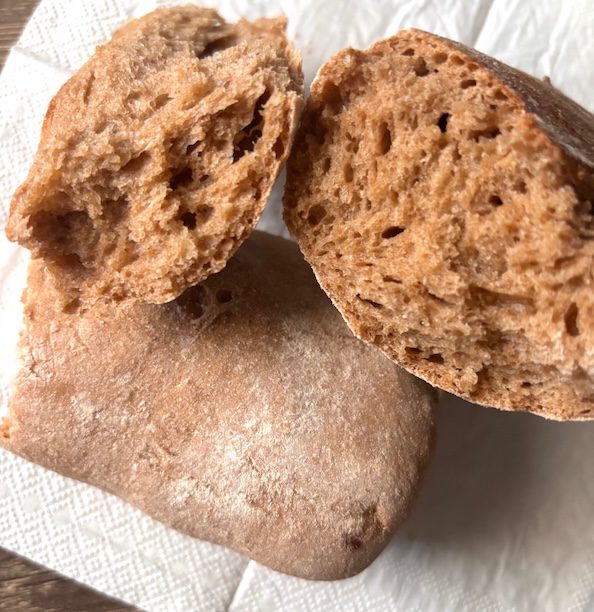
Whole wheat and amaranth are the best of two grain worlds…
Because amaranth is a gluten-free ancient cereal grain with added healthy benefits: like, lysine amino acid protein that’s not found in most flours.
Lysine supports collagen production. Lysine is also found in quinoa, but amaranth is higher in protein! ⭐️
Amaranth is also high in phytate (phytic acid) that helps absorb certain minerals. So it’s an antioxidant source making it a good anti-inflammatory food for recipes. Phytate is also found in certain legumes and seeds.
So adding in a little bit of amaranth in your bread dough is no ancient healthy secret!
Amaranth is a cereal grain food that babies can be introduced to and since it’s easier to digest, if you’re having a stomach ache… it’s a filling complete meal.
I know when I have an upset stomach, I think of the B.R.A.T. diet. Banana, apples, toast (bread), and instead of rice for the “r”… substitute for amaranth. It works.
And if you’re not already making your own whole grain roll, following an easy fresh, homemade bread recipe (👇) is going to make your meals so much better… without having to run to the store.
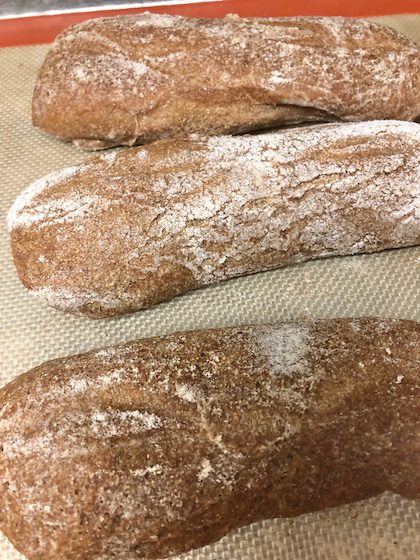
And you can make a whole grain roll easily at home with the steps below using healthy whole grain flours like whole wheat flour and amaranth.
Amaranth is more like a millet-size and shape whole grain, more like a Cream of Wheat (if you’re familiar).
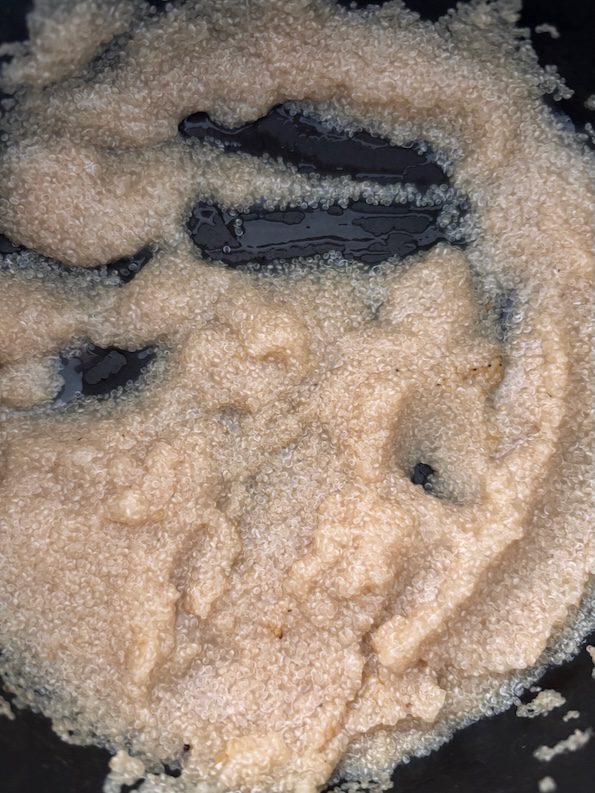
Amaranth makes a great meal builder for lunch and power breakfast.
…Plus, a great healthy add to multi whole grain rolls!
Bread rolls make great meal and food accompaniment… and especially as sandwich bread.
A whole grain roll especially holds up well on its own at room temperature, and you don’t have to separately toast sliced bread roll.
And the whole grain roll can stay fresh for a couple days without hardening (a lot like a store-bought French bread loaf would). 🥖
Below are the steps on how to make this whole grain loaf…
It’s not fancy food, but grains was something I learned along the food journey I was on.
I was doing catering, marketing, and planning food parties in American hotels, and Mediterranean restaurants (Lebanese, Spanish, and Italian cuisines) where the chefs and staff trained came from different parts of the world speaking English in their interesting accents… that transported me to the fresh Mediterranean healthy eating regions without leaving my world. 🌍
But then my food experiences inspired me to spend months abroad in northern Europe and mostly Mediterranean countries where healthy family style meals are made daily that included passing bread at the table. 🫓
And after working in hotels and restaurants, I continued to appreciate international cooking and baking shows like The Great British Bake Off that inspired my home baking. And did healthy food and nutrition research writing for publications.
Each bread has a story… and just to complete mine, my sur name even means bread in some languages. 😊
These broken bread whole grain rolls look a little like ciabatta rolls or cobbler’s shoes (not ballerina slippers). 🥖
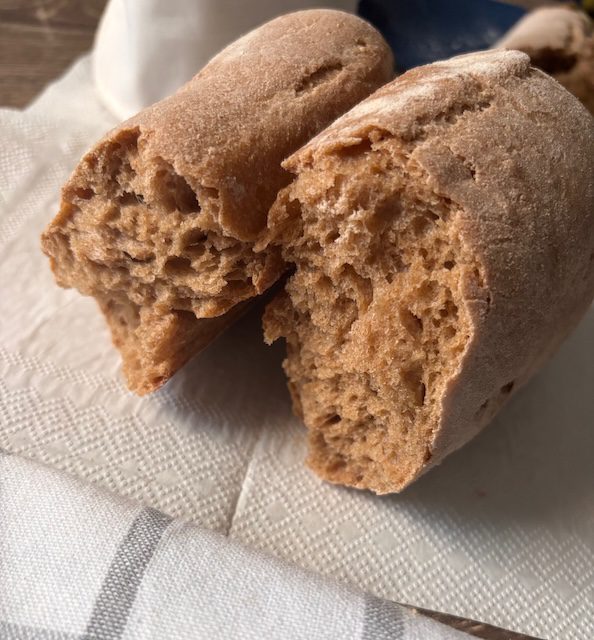
And in Romance languages like Italian, ciabatta means slipper.
Ciabatta Bread Origin Story:
Ciabatta originated in the northern Veneto region of Italy. 🇮🇹
Unlike many Italian food traditions that have passed down since ancient times, ciabatta is a fairly new bread variety.
In the early 1980s, French baguettes were popular and spread into Italy.
Some Italians sought to make their own versions called ciabatta.
South of Venice and the Lombardy region, Tuscan and more southern region ciabatta versions are crispier.
Because southern Italy is a drier climate that’s good for thriving flour, pasta, and olive oil making.
And ciabatta bread that caught on and grew in popularity in the U.S. and U.K. by the late 80s. They started selling ciabatta in mass production.
How to Make a Whole Grain Roll:
It’s so simple to make with just 4 ingredients that many loaves of bread (and easy to make pizza crusts) use.
I first tried making bread with regular flour and realized that to get the right bake, you had to turn the oven on to higher 400°F temperatures (beyond common 350°F/180°C degrees) that’s not ideal for hot summers or apartment living.
When I switched to using whole grain flours, I found that I could bake in 350 degrees (Fahrenheit) without losing the texture and well-baked done-ness.
I also found whole grain flours like whole wheat and other whole grains added in the dough stage (like amaranth) isn’t messy on your hands like a bread flour or all-purpose flour (that also would make great tasty textured ciabatta bread).
But with whole grains like whole wheat, you get to pick up the dough (or slip off the dough hook on your machine) and move to the proofing container easily.
It’s a clean move, especially if you need to reach for your phone.
Adding in 1/4 cup cooked (on stove) gluten-free amaranth whole grain that had some water moisture, I only needed 1/2 cup water (170 grams) instead of the 1 cup if you only use whole wheat flour.
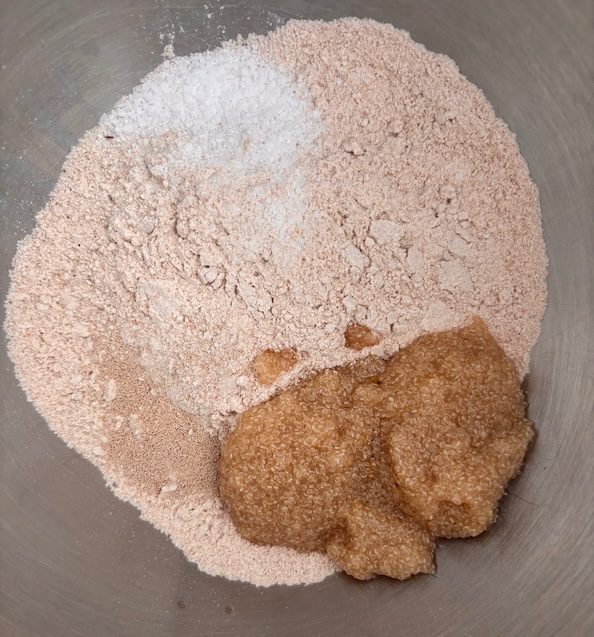
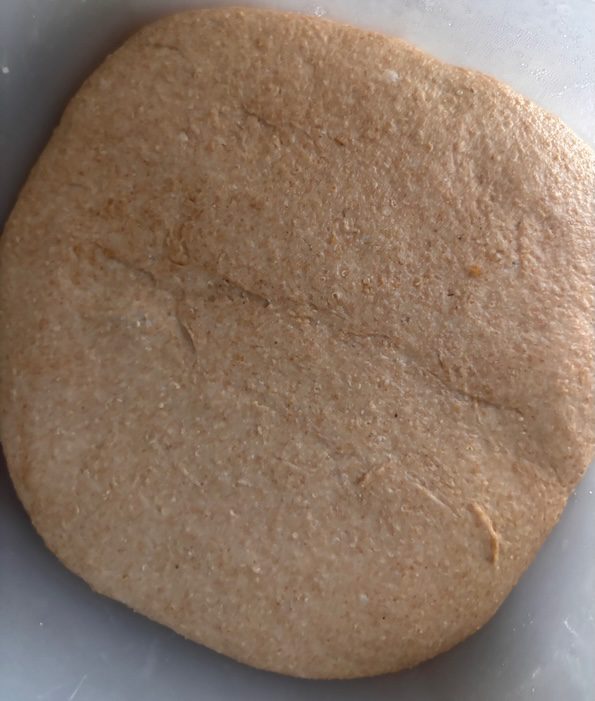
After kneading dough with the mixer dough hook (for about 7 minutes with this dough), I formed it into a flattish disc ball that I set in a plastic container bottom lined with EVOO. I left on a table in a warmer (but shaded) room spot so it would proof faster. For me in the morning, that’s close to the eastern side window.
After 2 hours, it’s ready!
I added some whole wheat flour (as the bench flour choice) that gave some texture.
And then formed into one long roll, or you can make a few smaller whole grain rolls.
On the table, this can be served breaking bread and passed family-style that I was used to in restaurants.
Or they can be made into dinner-style rolls for individual rolls that was more common when I working in hotels.
I made a few of those too with the same dough.
The simple bread shapes could’ve been baked after hand rolling and cutting… but I wanted to put some personality into them.
To get a cool textured design in each loaf without any fancy tools, you can use this trick:
Make a sharp knife-cut slit (serrated knife works well) in the pre-baked dough top of the roll, and then roll the dough forward. Don’t overthink, just do!
You’ll see some air pockets come through pre-baked…
And it’ll look something like this on the other side (baked) where you can drizzle some olive oil in the valley…
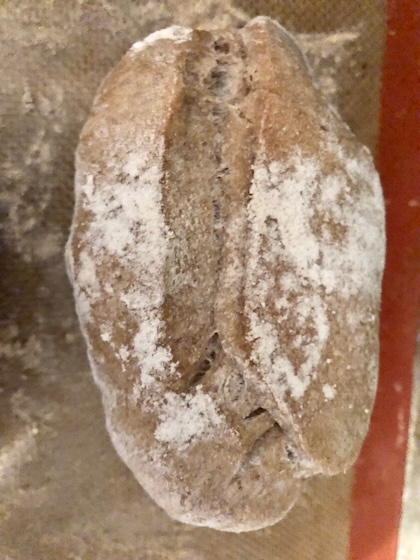
No matter if it’s an individual whole grain rols or a sharing family style loaf, they will get gobbled up.
Amaranth Whole Grain Bread Roll
Ingredients
- 2 cups whole wheat flour
- 1 cup water, plus 1-2 tablespoons as needed
- 1/2 tsp instant yeast
- 1 tsp kosher salt (or any salt will work)
- 1/4 cup cooked amaranth
Instructions
- Add the flour, yeast and salt to a mixing bowl with a dough hook. Keep the yeast and salt on separate sides of the bowl when you add.
- Then gradually add in water and start mixing on medium speed with the dough hook (or blending and beating up with pressure by hand if you don't have a mixer with dough hook). Gradually turn on higher speed to break down the gluten in gluten grains. With a machine, it will take about 7-10 minutes.
- While waiting, prepare a square or rectangular plastic or glass container (a 4″ square all around will work well). Lightly line coat the bottom of the proofing container with olive oil before proofing.
- When the dough has been mixed and worked enough (after the wet slapping stage against the mixer), it's ready for proofing. Slip off the dough hook and place dough directly in the proofing container. Close the lid or put a piece of plastic wrap on top and let the dough proof for 2-3 hours (or more at room temperature.) You can also leave overnight in the fridge covered so it doesn't dry out (adding a little more water to compensate for the moisture that will be lost).
- After proofed, prepare a baking sheet with sprinkled whole wheat flour (or any flour for bench flour). If you use a Silpat or liner sheet to the pan, then there's no sticking.
- Shape the dough as rolls or one long loaf shape. Add your personality!
- Bake at 350°F/180°C for about 25 minutes or until bottom is golden to medium brown. Enjoy while still warm!
- Tip: If you would like to add 1/4 cup cooked amaranth for your multi whole grain ciabatta bread, you'll need about 1/2 the water (about 1/2 cup of water instead of 1 cup).